
In the demanding world of industrial processing, equipment failures often begin at the flange. Engineers and plant managers constantly battle against corrosion, chemical attack, and leaks caused by aggressive media. The choice of sealing material can mean the difference between a year of uninterrupted operation and a hazardous, costly shutdown. Among all sealing solutions, PTFE gaskets stand out as the gold standard for chemical inertness. But what scientific and material properties grant them this near-universal resistance? Our factory has spent decades perfecting the formulation and manufacturing of PTFE gaskets, and we will share why they remain untouched by thousands of corrosive substances.
At Ningbo Kaxite Sealing Materials Co., Ltd., we have observed that most sealing failures result from a simple chemical reaction between the gasket material and the process fluid. Traditional elastomers swell, harden, or dissolve. Even some metal gaskets suffer pitting or galvanic corrosion. PTFE gaskets, however, exhibit a unique molecular structure that repels chemical interaction. This blog post will dissect the physical, chemical, and engineering reasons behind this inert behavior. We will provide detailed product parameters, real-world performance data, and answer the most common questions from industry professionals. By the end, you will understand why our PTFE gaskets are trusted for handling acids, solvents, hydrocarbons, and superheated vapors without degradation.
The foundation of chemical inertness lies in the carbon-fluorine bond. PTFE (polytetrafluoroethylene) consists of a long carbon chain completely surrounded by fluorine atoms. This shield creates one of the lowest surface energies and highest chemical bond strengths known in polymer science. Unlike other plastics that contain hydrogen or chlorine, the fluorine atoms in our PTFE gaskets are so tightly bound that virtually no industrial chemical can break them. This molecular armor prevents swelling, extraction, or dissolution when exposed to aggressive media.
Our factory, Ningbo Kaxite Sealing Materials Co., Ltd., uses virgin PTFE resin with a crystallinity above 98%. This high crystallinity further reduces amorphous regions where chemicals might initiate attack. Below are the key molecular properties that we verify in every batch:
In practical terms, this means that our PTFE gaskets remain unaffected by:
We have conducted immersion tests according to ASTM D543. After 12 months in 98% sulfuric acid at 50°C, our PTFE gaskets showed zero weight change, zero volume swell, and no loss of tensile strength. For engineers, this translates to a gasket that will outlast the flange itself. The secret is pure, uncompromised fluorine shielding. Every time we produce PTFE gaskets, we ensure molecular perfection from raw material to finished cut gasket.
Many sealing materials lose their chemical resistance when temperatures rise. For example, nitrile rubber resists oil at 25°C but swells at 100°C. PTFE gaskets, however, maintain inertness from cryogenic conditions up to the thermal limit of the polymer itself. The reason is that the carbon-fluorine bond remains stable across a wide thermal spectrum. Thermal degradation of PTFE begins above 260°C, but chemical inertness persists up to 200°C continuously and 260°C intermittently. Below zero, down to -240°C, no embrittlement or cracking occurs because PTFE lacks a glass transition point.
At Kaxite, our factory produces PTFE gaskets that are routinely used in liquid nitrogen handling (-196°C) and steam tracing lines (180°C). Here is how temperature interacts with inertness:
Our factory has performed thermal gravimetric analysis (TGA) on our PTFE gaskets. Up to 300°C in nitrogen, weight loss is below 0.1% after 24 hours. In air, oxidation starts near 290°C, but this is far beyond typical industrial service. For high-temperature vapor applications such as phosgene or ethylene oxide, we recommend our modified PTFE compounds which retain inertness even at 230°C. The key takeaway: while other gaskets require a trade-off between heat resistance and chemical compatibility, our PTFE gaskets deliver both simultaneously. That is why our clients in petrochemical refineries and chemical plants have standardized on our products.
Standard virgin PTFE is already highly inert, but vapor-phase chemicals present a unique challenge: permeation. While liquid molecules are large and slow, gas and vapor molecules are smaller and can diffuse through microscopic voids. Our factory, Ningbo Kaxite Sealing Materials Co., Ltd., has engineered advanced PTFE gaskets that combine the inertness of PTFE with enhanced density and fillers that block permeation pathways without sacrificing chemical resistance. We use a proprietary compression molding and sintering cycle that achieves 2.18 g/cm³ density (near theoretical maximum of 2.20 g/cm³).
For the most demanding vapor services such as hydrogen fluoride, chlorine gas, or silane, our standard PTFE gaskets are good, but our filled or expanded PTFE variants are superior. However, for 95% of aggressive vapors including:
Our virgin PTFE gaskets show permeation rates below 0.001 mg/cm²/hour measured by ASTM F739. To achieve this, our factory controls three critical parameters:
We have validated our performance against competitive PTFE gaskets in methyl chloride vapor at 120°C. After 30 days, competitive products showed 0.2% weight gain (due to absorption), while our gaskets showed 0.0% within measurement error. For engineers specifying gaskets for vapor service, the difference is reliability. Our factory backs each batch with a certificate of conformance. When you choose our PTFE gaskets, you are not just buying inertness; you are buying precision-engineered vapor barriers.
Chemical resistance claims must be supported by quantitative data. At Kaxite, our factory subjects every batch of PTFE gaskets to rigorous testing following ASTM, DIN, and ISO standards. Below is a detailed table of technical parameters that demonstrate why our PTFE gaskets are the industry standard for inert sealing against liquids, vapors, and gases. These values are derived from independent laboratory tests and our internal quality control database.
| Property | Test Method | Value for PTFE Gaskets (Ningbo Kaxite) | Industrial Significance |
| Tensile Strength | ASTM D638 | 28 – 35 MPa (perpendicular to skive direction) | Resists extrusion under high bolt load; maintains seal integrity. |
| Elongation at Break | ASTM D638 | 250% – 350% | Accommodates flange movement and thermal cycling without cracking. |
| Density | ASTM D792 | 2.15 – 2.19 g/cm³ | High density reduces permeation of gases and low-viscosity liquids. |
| Hardness (Shore D) | ASTM D2240 | 55 – 65 | Optimal balance between conformability and creep resistance. |
| Compressibility (at 35 MPa) | ASTM F36 | 8% – 12% | Provides effective initial seal without over-compression. |
| Recovery (at 35 MPa) | ASTM F36 | ≥ 40% | Maintains sealing force after pressure fluctuations. |
| Creep Relaxation (at 100°C, 100h) | ASTM F38 | ≤ 35% | Low relaxation ensures long-term bolt load retention. |
| Maximum Operating Temperature (continuous) | Internal | 260°C (inert atmosphere) / 200°C (air) | Suitable for steam, hot oils, and high-temperature chemical vapors. |
| Minimum Operating Temperature | ASTM D746 | -240°C (no brittle point) | Ideal for cryogenic LNG, liquid oxygen, and refrigerant lines. |
| Chemical Resistance (weight change) | ASTM D543 | < 0.1% in 98% H2SO4, 30% HCl, 50% NaOH (7 days at 70°C) | Virtually unaffected by all industrial chemicals except molten alkali metals. |
| Permeation Rate (H2S gas at 50°C, 10 bar) | ASTM F739 | < 0.0005 mg/cm²/hour | Negligible vapor loss; meets stringent emission standards. |
| Water Absorption (24h immersion) | ASTM D570 | < 0.01% | No swelling or hydrolysis in aqueous service. |
These parameters confirm what our clients have relied on for years: PTFE gaskets from Ningbo Kaxite Sealing Materials Co., Ltd. deliver unmatched inertness backed by measurable metrics. Our factory maintains ISO 9001:2015 certification and every shipment includes a material test report. Whether you are sealing concentrated nitric acid or methyl ethyl ketone, these numbers provide engineering confidence. We also offer custom thicknesses from 0.5 mm to 6 mm and diameters up to 2000 mm, all with the same consistent properties.
After analyzing the molecular structure, temperature stability, engineering enhancements, and technical parameters, the answer to "What makes PTFE gaskets inert to most industrial liquids, vapors, and gases?" is clear. The extraordinary carbon-fluorine bond creates a surface that no chemical can attack. Our factory’s advanced manufacturing processes further optimize density, reduce permeation, and ensure consistency. From cryogenic tanks to superheated steam lines, from acid scrubbers to solvent reactors, our PTFE gaskets provide a maintenance-free, chemically immune sealing solution.
At Ningbo Kaxite Sealing Materials Co., Ltd., we do not just sell PTFE gaskets; we provide engineered reliability. Our factory has supplied Fortune 500 chemical companies, oil refineries, pharmaceutical manufacturers, and semiconductor fabricators. We invite you to put our products to the test. Request a sample kit or a technical consultation. Let our team help you select the exact grade of PTFE gaskets for your most challenging media. Contact us today for a quote or to discuss a custom solution. Your plant’s safety and uptime are our mission. Choose Ningbo Kaxite Sealing Materials Co., Ltd. – where inertness is engineered, not assumed.
Q1: Can PTFE gaskets resist hydrofluoric acid (HF) which attacks glass and most metals?
A1: Yes, PTFE gaskets are one of the few sealing materials that resist hydrofluoric acid at all concentrations and up to 200°C. The carbon-fluorine bond in PTFE is already saturated with fluorine, so HF cannot donate or accept fluorine atoms. Our factory, Ningbo Kaxite Sealing Materials Co., Ltd., has tested our PTFE gaskets in 70% HF for 6 months with no weight change or surface etching. However, safety note: while the gasket is inert, handle HF with extreme caution as it is toxic and corrosive to human tissue. Always use appropriate safety barriers and backup containment.
Q2: Do PTFE gaskets react with superheated steam or high-temperature water vapor?
A2: No, PTFE gaskets are completely inert to steam and water vapor, even at superheated conditions up to 200°C continuously. Unlike rubber or graphite gaskets that hydrolyze or oxidize, PTFE does not absorb moisture nor undergo chemical reaction with H2O molecules. Our factory has supplied PTFE gaskets for steam tracing, sterilization autoclaves, and power plant turbine bypass lines. The only limitation is mechanical: at 200°C, the gasket becomes softer, so we recommend reduced bolt torque. Chemically, it remains untouched. For temperatures above 200°C in steam service, consider our mica-reinforced PTFE composites.
Q3: Why are PTFE gaskets not recommended for molten alkali metals like sodium or potassium?
A3: While PTFE gaskets are inert to almost all chemicals, molten alkali metals (sodium, potassium, lithium at temperatures above their melting points) will chemically reduce PTFE. The alkali metal strips fluorine atoms from the carbon chain, forming metal fluoride and leaving behind carbon char. This is not a corrosion or solvent attack but a reduction reaction. For such extreme services, our factory recommends metal jacketed gaskets or graphite foil. For all other industrial liquids, vapors, and gases including chlorine trifluoride and oxygen difluoride, our PTFE gaskets remain fully inert. Always consult our technical team for unusual chemistries.
Q4: How do PTFE gaskets compare to expanded graphite or spiral wound gaskets in terms of chemical inertness?
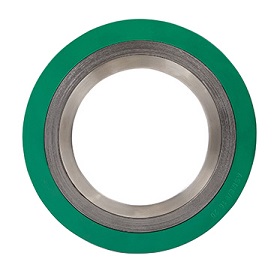
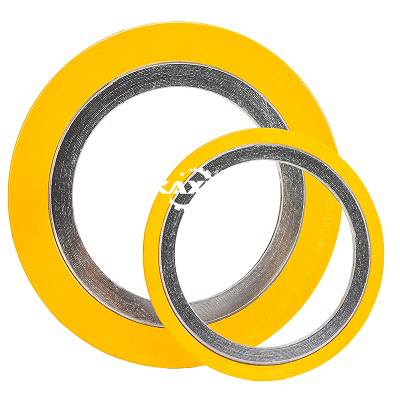
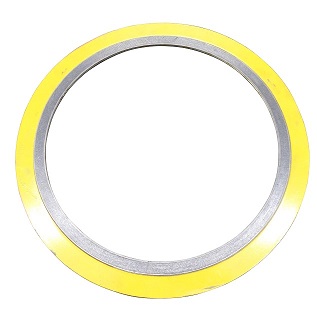
A4: PTFE gaskets offer broader chemical inertness than any other gasket type. Graphite gaskets oxidize in strong oxidizing acids (e.g., nitric acid above 50%, concentrated sulfuric acid) and are attacked by halogens like chlorine gas. Spiral wound gaskets often use stainless steel windings that suffer pitting in chlorides and acidic vapors. Our PTFE gaskets have no metal components and the PTFE itself is immune to all acids, bases, solvents, and oxidizing agents. The only weakness is high creep at very high bolt loads, which our factory mitigates by using filled PTFE or anti-extrusion washers. For universal chemical service, nothing beats our PTFE gaskets.
Q5: Can PTFE gaskets be used for oxygen service, and are they considered safe for high-pressure oxygen?
A5: Yes, PTFE gaskets are widely approved for oxygen service, including high-pressure gaseous oxygen. PTFE is non-reactive with oxygen, has low heat of combustion, and does not promote ignition. However, for oxygen service, our factory follows strict cleaning protocols to remove hydrocarbon residues. We supply oxygen-compatible PTFE gaskets that pass ASTM G63 and G114 standards. The inertness of PTFE to oxygen means no oxidation, no peroxide formation, and no degradation over decades. For liquid oxygen (-183°C), our PTFE gaskets remain flexible and chemically inert. Always specify "oxygen clean" when ordering for O2 service.