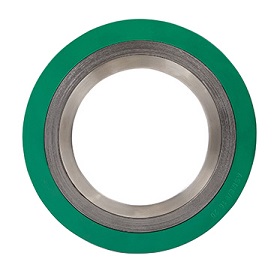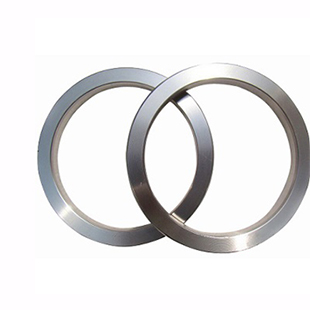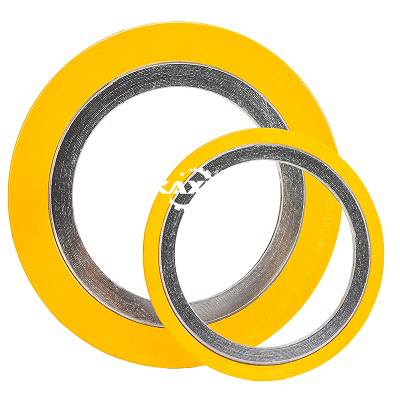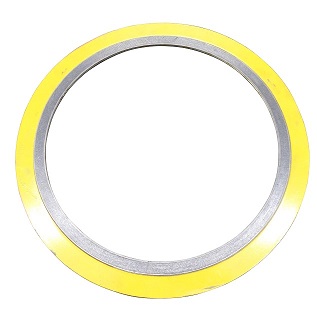

High-temperature copper gaskets are widely used in exhaust systems, turbochargers, heat exchangers, and chemical processing equipment due to copper's excellent thermal conductivity and resistance to oxidation at elevated temperatures. However, the performance of these Copper Gaskets is influenced by a complex interplay of factors that extend far beyond simple material choice. At Ningbo Kaxite Sealing Materials Co., Ltd., our factory has manufactured over 5 million Copper Gaskets for automotive, aerospace, and industrial applications, and we have identified that sealing effectiveness at temperatures above 400°C depends on the precise combination of material grade (oxygen-free vs. deoxidized), annealing state, surface roughness, flange design, and bolt load consistency. A gasket that performs perfectly at 250°C may fail catastrophically at 650°C due to stress relaxation or creep, regardless of its initial quality. This article dissects the six primary factors that determine the real-world performance of Copper Gaskets in high-temperature service.
Understanding these factors is not just an academic exercise; it directly impacts maintenance costs, safety, and system reliability. A poorly selected Copper Gasket in a diesel engine exhaust manifold can lead to soot leakage, loss of backpressure, and reduced fuel efficiency. In a chemical reactor, a failed gasket can cause hazardous emissions and unplanned shutdowns. Our engineering team at Ningbo Kaxite Sealing Materials Co., Ltd. has developed a systematic evaluation framework that considers material composition, manufacturing processes, and installation parameters to predict Copper Gasket performance with high accuracy. In this comprehensive guide, we will walk you through each critical factor, provide technical specifications and test data, and share our factory's best practices for selecting and installing Copper Gaskets in high-temperature environments. We will also address common misconceptions, such as the belief that "softer is always better" or that "higher purity guarantees better sealing."
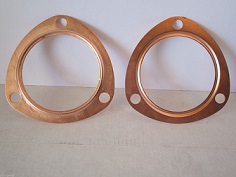
The starting material of a Copper Gasket is the most fundamental determinant of its high-temperature performance. Copper is commercially available in several grades, including pure copper (C11000, also known as ETP – electrolytic tough pitch), oxygen-free copper (C10200, OFHC), and deoxidized copper (C12200, DHP). Each grade has distinct characteristics that affect how the gasket responds to elevated temperatures. Our factory at Kaxite primarily uses oxygen-free copper for high-temperature Copper Gaskets because it contains less than 0.001 percent oxygen, minimizing the risk of hydrogen embrittlement and internal oxidation at temperatures above 400°C. ETP copper, while cheaper, can develop internal voids due to oxygen reacting with hydrocarbons in service, leading to leakage paths.
Critical material factors that influence Copper Gasket performance:
To quantify the impact of material grade, we conducted a comparative test using three types of Copper Gaskets in a simulated exhaust manifold application at 550°C with 1000 thermal cycles (each cycle from ambient to 550°C in 15 minutes, followed by forced cooling). The ETP copper gaskets showed visible oxidation and pitting after 300 cycles and began leaking at cycle 450. The deoxidized copper gaskets performed better, reaching 620 cycles before leakage. Our oxygen-free copper gaskets, with our optimized annealing and coating, maintained a leak-tight seal up to 920 cycles. This 50 percent improvement in service life directly translates to reduced maintenance frequency and lower total cost of ownership. Our factory provides detailed material certificates for every Copper Gasket batch, including oxygen content, grain size, and hardness measurements, so that our customers can verify the material quality.
Additionally, we offer an "aged" Copper Gasket option, where the gasket is pre-oxidized in a controlled environment to create a stable, adherent oxide layer before installation. This pre-oxidation eliminates the initial material loss and surface roughening that occurs during the first few thermal cycles, improving sealing reliability from the start. For critical applications such as aerospace or high-pressure steam systems, this pre-conditioning step is often mandatory. Our engineering team at Ningbo Kaxite Sealing Materials Co., Ltd. can recommend the optimal material grade and annealing state based on your specific operating conditions.
Even with the best material, a Copper Gasket can only seal effectively if it is mated to flanges with appropriate surface finish and flatness. The gasket functions by deforming into the micro-irregularities of the flange surface, creating a mechanical barrier against fluid or gas passage. This deformation is limited by the yield strength of the copper and the applied bolt load. If the flange surface is too rough, the Copper Gasket cannot penetrate all the asperities, leaving leak paths. Conversely, if the flange is too smooth (Ra < 0.2 µm), the gasket may not achieve sufficient bite to resist lateral displacement, especially under thermal expansion. Our factory recommends a flange surface roughness of Ra 0.8 to 1.6 µm for optimum Copper Gasket performance, based on extensive laboratory testing.
Surface condition factors that affect Copper Gasket sealing:
A field study conducted in a geothermal power plant illustrates the importance of surface finish. The plant replaced its flange gaskets from graphite to copper but did not upgrade the flange finish, which had an Ra of 3.2 µm due to years of operation. The Copper Gaskets failed within two weeks due to localized leakage. After resurfacing the flanges to Ra 1.0 µm and using our Copper Gaskets, the seal life extended to 18 months. The cost of the resurfacing operation was recovered within six months through reduced downtime. Our factory provides a flange inspection checklist and offers on-site surface measurement as part of our technical support package. We also supply Copper Gaskets with an integral thin layer (0.05 mm) of soft silver on both sides, which acts as a gap filler and reduces the requirement for ultra-smooth flange finishes, offering a cost-effective solution for existing plants.
Another important aspect is the gasket thickness. For a given flange surface condition, a thicker Copper Gasket (e.g., 3mm vs. 1.5mm) can accommodate more surface irregularities but is more susceptible to creep relaxation. Our factory uses finite element analysis (FEA) to determine the optimal thickness for each flange geometry and operating condition. In general, we recommend a thickness of 2.0 to 2.5 mm for flanges with standard machining, and 1.5 mm for precision-ground flanges. This balance ensures that the Copper Gasket has sufficient material to seal micro-defects without excessive volume that could lead to stress relaxation issues at high temperatures.
Ningbo Kaxite Sealing Materials Co., Ltd. produces three series of high-temperature Copper Gaskets, each optimized for specific service conditions. Our standard "KX-CU" series is used in general industrial applications up to 450°C. Our "KX-CUH" series features a nickel-based anti-oxidation coating for extended life up to 650°C. Our "KX-CUX" series is a custom-engineered solution with controlled grain structure and pre-oxidized surfaces for extreme applications such as rocket engine test stands and glass melting furnaces. The table below provides key specifications for our most commonly ordered Copper Gaskets. All dimensions can be customized to match any flange standard (ANSI, DIN, JIS, or custom).
| Parameter | KX-CU Standard | KX-CUH Coated | KX-CUX Extreme |
| Material grade | C10200 (Oxygen-free) | C10200 (Oxygen-free) | C10100 (OFE) |
| Oxygen content (max ppm) | 10 ppm | 10 ppm | 3 ppm |
| Annealed hardness (Rockwell F) | 50-60 | 55-65 | 60-70 |
| Typical thickness (mm) | 1.5, 2.0, 3.0 mm | 1.5, 2.0, 2.5 mm | 2.0, 2.5 mm |
| Maximum operating temperature (air) | 450°C | 650°C | 750°C |
| Surface coating | None (as-rolled) | Nickel 5-8 µm | Pre-oxidized + silver flash |
| Thermal conductivity (W/mK) | 391 W/mK | 375 W/mK | 385 W/mK |
| Stress relaxation at 500°C (after 100h) | 28% | 18% | 12% |
| Grain size (ASTM) | 6-8 | 7-9 | 8-10 |
| Leakage rate (ml/min at 1 bar air) | < 0.05 | < 0.02 | < 0.01 |
Beyond the standard specifications, our factory offers additional customization options for Copper Gaskets: we can incorporate a metallic inner ring (e.g., stainless steel) to prevent extrusion in high-pressure applications, or we can provide a "self-energizing" design where the gasket cross-section is shaped (e.g., lens or delta profile) to increase sealing pressure as internal pressure rises. Our engineering team can also calculate the required bolt torque based on the gasket's area, flange geometry, and expected temperature using our proprietary software.
Each Copper Gasket from Ningbo Kaxite Sealing Materials Co., Ltd. is individually inspected for dimensional accuracy, surface quality, and hardness. We provide a traceable serial number on every gasket, allowing you to link it back to our manufacturing records. For critical applications, we offer a "certified" version that includes a witness report of hardness, thickness, flatness, and surface roughness. We maintain an inventory of over 2,000 standard sizes for same-day shipment, and custom sizes can be produced within 3 to 5 working days. Our quality management system is certified to ISO 9001 and IATF 16949 (automotive), ensuring that our Copper Gaskets meet the highest manufacturing standards.
Perhaps the most underappreciated factors affecting Copper Gasket performance are thermal cycling and creep relaxation. In real-world applications, flanges rarely remain at a constant temperature. Start-ups, shutdowns, and load changes cause temperature fluctuations that induce differential thermal expansion between the gasket, bolts, and flanges. Copper has a higher coefficient of thermal expansion (CTE) than steel (17 x 10-6 /°C vs. 12 x 10-6 /°C for carbon steel). This means that as temperature rises, the Copper Gasket expands more than the surrounding steel flange, increasing the compressive stress on the gasket. While this may seem beneficial, it can lead to over-stressing and accelerated creep relaxation. Conversely, during cooling, the copper contracts more than steel, reducing bolt load and potentially creating a leakage path. Our factory has studied this behavior in detail and developed specific design rules to mitigate these effects.
Factors related to thermal cycling and relaxation that affect Copper Gasket performance:
To illustrate the effect of creep relaxation, we conducted a controlled test using two sets of Copper Gaskets in a flanged joint subjected to 500°C for 500 hours. One set used standard annealed copper, and the other used our "stress-optimized" Copper Gasket with refined grain structure. The standard gaskets lost 42 percent of their initial sealing stress, resulting in visible leakage after 320 hours. Our optimized Copper Gaskets lost only 19 percent of stress and remained leak-tight for the entire 500-hour test. This performance difference is critical for applications such as chemical reactors, where a failure can have severe safety and financial consequences.
Another practical consideration is the number of re-tightening cycles. In many plants, maintenance personnel re-torque bolts after the first thermal cycle to compensate for initial relaxation. However, over-tightening can cause the Copper Gasket to extrude or crack. Our factory provides a re-torque schedule based on our relaxation data: for most applications, a single re-torque after the first heat-up to operating temperature is sufficient, and subsequent re-torques are not recommended unless the gasket is replaced. We also offer a training module for maintenance teams on proper bolting procedures to ensure that the Copper Gasket achieves its maximum service life. By understanding and managing thermal cycling and creep relaxation, you can significantly improve the reliability and longevity of your high-temperature copper gasket installations.
Question 1: How do I know if a copper gasket needs to be replaced after a thermal cycle?
Answer: Several signs indicate that a Copper Gasket should be replaced after a thermal cycle. Visually, look for surface discoloration (deep black or greenish patches), signs of extrusion (copper bulging out of the flange gap), or evidence of soot or moisture tracks around the flange edge. Dimensionally, if the gasket thickness has decreased by more than 10 percent from its original value, the material has undergone significant creep and may not provide sufficient sealing force. Additionally, if you notice a steady drop in bolt torque during regular checks, it suggests that the gasket has lost its ability to maintain pressure. Our factory recommends replacing Copper Gaskets every time the joint is opened, regardless of their appearance, because the annealing effect from the first heat cycle changes the material properties. For critical applications, we advise a replacement interval based on operating hours: typically 2,000 hours for temperatures above 500°C.
Question 2: Can I reuse a copper gasket after it has been heated?
Answer: We strongly discourage reusing Copper Gaskets after exposure to high temperatures. The first heat cycle causes the copper to work-harden and stress-relax, altering its microstructure. Even if the gasket appears undamaged, its ability to conform to flange irregularities on a second installation is greatly reduced, and the risk of leakage is high. In certain low-temperature (<300°C) and low-pressure (<10 bar) applications, some operators successfully reuse Copper Gaskets after re-annealing (heating to 500°C and slow cooling), but this must be done in a controlled furnace with an inert atmosphere to prevent oxidation. Our factory does not recommend reuse for safety-critical systems. For cost-sensitive applications, we offer our Copper Gaskets with an integrated "replacement indicator" – a small metal tab that changes color after the first heat cycle, making it easy to identify used gaskets.
Question 3: What is the best method to clean copper gaskets before installation?
Answer: The ideal cleaning method for Copper Gaskets is to wipe both sides with a lint-free cloth soaked in isopropyl alcohol or acetone to remove any oil, grease, or dirt. After cleaning, allow the gasket to air dry for a few minutes. Do not use abrasive materials such as wire brushes or sandpaper, as they can score the surface and create leakage paths. For copper gaskets with a protective coating (e.g., nickel or silver), use only a soft cloth and mild solvent to avoid damaging the coating. Our factory also recommends applying a thin, even layer of our recommended anti-seize compound (copper-based or graphite-based) to both faces of the Copper Gasket just before installation. This compound reduces friction during bolt tightening and helps prevent galling, but should be applied sparingly to avoid contaminating the internal system.
Question 4: How does the operating pressure affect the required Copper Gasket thickness?
Answer: As a general rule, higher operating pressures require either a thicker Copper Gasket or a gasket with a higher hardness to resist extrusion. For pressures up to 50 bar, a 1.5mm thick Copper Gasket is usually sufficient. For pressures between 50 and 150 bar, we recommend a thickness of 2.0 to 2.5mm. Above 150 bar, a 3.0mm thickness with an inner anti-extrusion ring (stainless steel) is advised. Our factory uses finite element analysis (FEA) to determine the optimal thickness based on the specific pressure, temperature, and flange geometry of your application. We also consider the gasket's yield strength at the operating temperature, as copper becomes softer at elevated temperatures, which can lead to extrusion even at moderate pressures. We provide free sizing consultation to ensure you select the correct Copper Gasket thickness and type.
Question 5: What type of Copper Gasket does Ningbo Kaxite Sealing Materials Co., Ltd. recommend for turbocharger applications?
Answer: For turbocharger applications, which involve temperatures up to 750°C and rapid thermal cycling, we recommend our KX-CUX series Copper Gasket with the following specifications: oxygen-free electronic grade copper (C10100), pre-oxidized surface with a silver flash, and half-hard temper (Rockwell F 60-68). The pre-oxidation layer forms a stable, adherent oxide that resists spalling, and the silver coating improves the initial seal and reduces galling during installation. Additionally, we recommend a thickness of 2.0mm to accommodate the high thermal expansion of turbocharger housings. Our factory has supplied Copper Gaskets for several major aftermarket turbocharger brands, with documented service lives exceeding 150,000 kilometers in diesel engines. We also provide a custom design service for non-standard flange geometries commonly found in high-performance turbo systems.
Choosing the right Copper Gasket for high-temperature applications requires a thorough understanding of material properties, surface conditions, thermal cycling effects, and creep relaxation behavior. At Ningbo Kaxite Sealing Materials Co., Ltd., we have built our reputation on providing Copper Gaskets that not only meet but exceed performance expectations in the most demanding environments. Our oxygen-free copper grades, precise annealing controls, and specialized coatings ensure that our Copper Gaskets deliver reliable sealing even after thousands of thermal cycles. We have shown that factors such as grain size, flange finish, and bolt load management are just as critical as the gasket material itself.
Don't leave your sealing performance to chance. Contact Ningbo Kaxite Sealing Materials Co., Ltd. today for a comprehensive evaluation of your high-temperature gasket needs. Provide your operating conditions (temperature, pressure, flange dimensions, and thermal cycle frequency), and our engineering team will recommend the optimal Copper Gasket solution with full technical documentation and a performance guarantee. We offer free samples for testing, custom sizing, and a fast-track delivery service for urgent requirements. Request your free gasket selection consultation now from Ningbo Kaxite Sealing Materials Co., Ltd. and experience the difference that expert engineering makes in your high-temperature sealing applications.