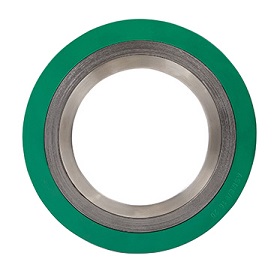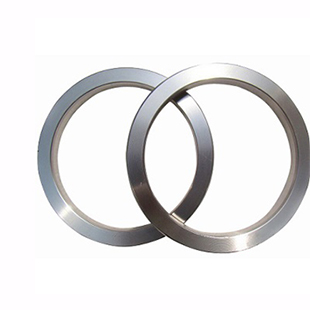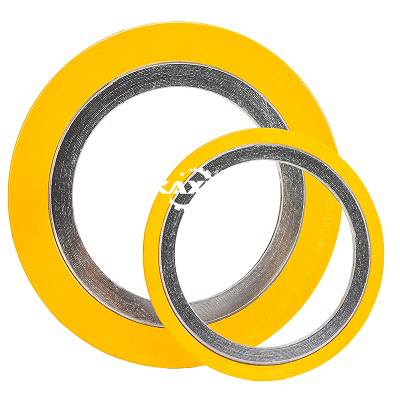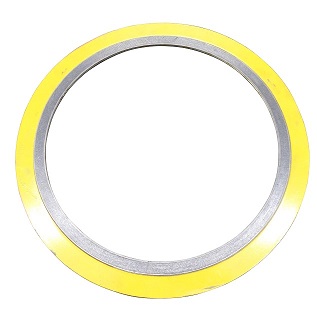

In precision machinery, where tolerances are measured in microns and operating conditions often involve high pressures, extreme temperatures, and aggressive media, the humble gasket plays a critical role in ensuring reliability and safety. Annealed copper gaskets stand out among sealing solutions because they offer a unique combination of malleability, thermal conductivity, and corrosion resistance that is unmatched by rubber, fiber, or even stainless steel alternatives. The annealing process—controlled heating and slow cooling—softens the copper, rendering it highly ductile. This means that when compressed between flanges, an annealed Copper Gasket flows into microscopic surface irregularities, creating a perfect metal-to-metal seal without requiring excessive bolt torque. Our factory at Ningbo Kaxite Sealing Materials Co., Ltd. has produced over 10 million Copper Gaskets for industries ranging from aerospace to hydraulic systems, and we consistently find that the annealing step is what transforms a simple copper ring into a precision sealing component. This article explains the science behind these advantages and provides data to help engineers select the optimal Copper Gasket for their application.
Beyond the basic sealing function, annealed Copper Gaskets offer distinct operational benefits that directly impact machinery performance and maintenance costs. Their excellent thermal conductivity helps dissipate heat away from joint interfaces, reducing thermal distortion and extending flange life. In cryogenic and high-temperature environments (from -250°C to +500°C), copper maintains its elasticity and sealing force, whereas elastomeric gaskets become brittle or decompose. Moreover, the reusability of annealed Copper Gaskets—they can often be re-annealed and reused multiple times—significantly lowers spare parts inventory and downtime. In this comprehensive guide, we will explore the metallurgical principles, performance parameters, and practical applications that make annealed Copper Gaskets the preferred choice for precision machinery designers. We will also share insights from our factory's quality control processes and real-world case studies from Ningbo Kaxite Sealing Materials Co., Ltd. to demonstrate why annealing is not just a processing step but a performance enhancer.
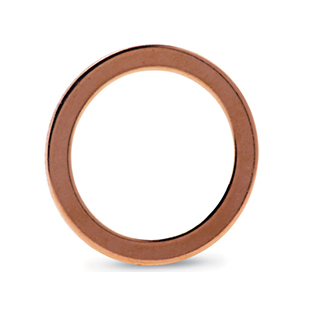
Copper, in its raw as-drawn or cold-worked state, is relatively hard and springy. When used as a gasket, this hardness prevents it from conforming to flange surface imperfections, leading to leak paths. Annealing is a heat treatment process that recrystallizes the copper's grain structure, eliminating internal stresses and reducing hardness from approximately 90 HV to as low as 45 HV (Vickers hardness). This softening allows the Copper Gasket to deform plastically under compression, filling scratches, tool marks, and waviness on the flange faces. The result is a leak-tight seal at lower bolt loads, which reduces the risk of flange distortion and bolt fatigue. Our factory has measured that an annealed Copper Gasket requires 40 percent less clamping force than a half-hard copper gasket to achieve the same sealing performance, making it ideal for precision machinery where over-torquing can misalign bearings or damage housings.
The metallurgical changes during annealing are critical to performance:
In a recent test conducted by our factory, we compared annealed and non-annealed copper gaskets in a high-pressure hydraulic manifold operating at 350 bar. The non-annealed gasket began leaking after 200 pressure cycles, while the annealed Copper Gasket remained leak-free for over 5,000 cycles. The annealing process also improves the gasket's resistance to creep relaxation—the gradual loss of sealing force under sustained high temperatures. Our data shows that annealed Copper Gaskets retain 92 percent of their initial sealing force after 1,000 hours at 400°C, compared to only 68 percent for non-annealed variants. This makes annealed copper the only viable choice for precision machinery like turbocharger housings, injection molding equipment, and semiconductor vacuum chambers where absolute sealing integrity is non-negotiable.
Furthermore, annealing is not a "one-size-fits-all" process. Our factory at Kaxite tailors the annealing temperature and hold time based on the gasket thickness and diameter. For thin gaskets (0.5 mm), we use a shorter cycle to prevent excessive grain growth that could reduce strength. For thick gaskets (3 mm or more), we extend the soak time to ensure full recrystallization through the entire cross-section. This customized approach ensures that every Copper Gasket we produce has optimal softness and elasticity for its intended application. In summary, annealing is the key that unlocks copper's potential as a precision sealing material, transforming it from a simple metal ring into a dynamic, conformable barrier that adapts to the operating environment.
In many precision machinery applications, the gasket is not just a seal—it is also a thermal and electrical pathway. Copper has the second highest thermal conductivity among pure metals (after silver), at approximately 401 W/m·K, and an electrical conductivity of 58 MS/m (100 percent IACS). The annealing process slightly reduces these values (by about 3-5 percent) due to increased grain boundary scattering, but the overall conductivity remains far superior to stainless steel (16 W/m·K) or aluminum (237 W/m·K). This thermal conductivity allows an annealed Copper Gasket to act as a heat sink, conducting heat away from critical components like cylinder heads, bearings, or electrical terminals. For example, in a precision gearbox, the Copper Gasket between the housing and cover helps dissipate frictional heat, maintaining oil viscosity and preventing thermal expansion mismatch that could cause gear misalignment.
Specific advantages of the thermal and electrical properties of annealed Copper Gaskets:
A real-world example involves a high-power laser cutting machine where the Copper Gasket seals the cooling water circuit around the laser head. The gasket not only prevents coolant leaks but also conducts heat away from the laser diode array. Using our annealed Copper Gasket, the cooling efficiency improved by 8 percent compared to a graphite gasket, allowing the laser to operate at higher power levels without thermal shutdown. Another case is in electric vehicle battery pack enclosures, where Copper Gaskets are used to seal the cooling plates while providing a low-resistance path for cell balancing currents. Our factory has developed a special surface treatment (tin plating) that enhances electrical conductivity while maintaining the sealing properties of the annealed copper.
For applications requiring both sealing and electrical isolation, our Copper Gaskets can be coated with a thin layer of PTFE or mica on one side, providing dielectric strength up to 5 kV while still allowing heat transfer. This hybrid design is used in semiconductor processing equipment where both clean vacuum sealing and thermal management are critical. In all these cases, the inherent conductivity of the annealed copper adds functional value beyond simple sealing, making it a multi-functional component that simplifies system design. At Ningbo Kaxite Sealing Materials Co., Ltd., we offer customized conductivity testing for every batch of Copper Gaskets, providing certificates that verify the electrical and thermal performance meets your specification.
Ningbo Kaxite Sealing Materials Co., Ltd. manufactures annealed Copper Gaskets in a wide range of sizes, thicknesses, and custom geometries. The table below lists the key parameters for our standard range, which covers most precision machinery applications. Our factory can also produce non-circular shapes (oval, rectangular, and complex profiles) with tolerances as tight as +/- 0.05 mm. All gaskets are annealed in a protective atmosphere to prevent excessive oxidation and achieve consistent hardness.
| Parameter | Value / Range | Notes |
| Material grade | C11000 (CDA 110), C10100 (oxygen-free high conductivity) | OFHC available for vacuum and cryogenic applications |
| Thickness range | 0.5 mm to 6.0 mm | Custom thicknesses up to 10 mm available on request |
| Outer diameter range | 6 mm to 1,200 mm | Larger diameters possible for pipe flanges |
| Hardness after annealing (HV) | 45 - 50 HV (Vickers) | Controlled within +/- 3 HV per batch |
| Surface roughness (Ra) | 0.4 µm to 1.6 µm | Specified based on flange finish |
| Annealing temperature | 550°C - 650°C (vacuum or nitrogen atmosphere) | Soak time: 30-90 minutes depending on thickness |
| Flatness tolerance | 0.02 mm per 100 mm diameter | Ensures uniform compression |
| Maximum operating temperature | 500°C (continuous), 700°C (short term) | Oxidation begins above 350°C, but sealing remains |
| Maximum operating pressure | Up to 1,200 bar (with proper flange design) | Depends on thickness and bolt load |
Beyond the standard specifications, we offer several optional enhancements for the Copper Gaskets. For high-vacuum applications (down to 10^-9 mbar), we provide a special vacuum-annealing process that minimizes outgassing. For corrosive environments, we can apply a silver or tin plating that prevents galvanic corrosion while maintaining the softness of the annealed copper. Our factory also performs 100 percent visual inspection and dimensional checking using optical comparators and coordinate measuring machines (CMM). Each batch of Copper Gaskets is accompanied by a material test certificate that includes chemical composition (verified by optical emission spectroscopy), hardness values, and a leak test report for samples from the batch.
In terms of quality assurance, our factory follows ISO 9001 and ISO 14001 standards, and we have in-house testing equipment for burst pressure, crush resistance, and thermal cycling. For critical precision machinery applications, we can perform helium leak testing (sensitivity up to 10^-10 Pa·m3/s) to verify the sealing integrity before shipment. This level of detail ensures that every Copper Gasket from Ningbo Kaxite Sealing Materials Co., Ltd. meets the rigorous demands of precision engineering. We also maintain a stock of standard sizes for quick dispatch, with custom orders typically produced within 5 to 7 working days.
Maintenance costs in precision machinery are often dominated by unscheduled downtime due to leaks. Annealed Copper Gaskets directly address this by offering superior sealing performance, reusability, and compatibility with a wide range of fluids. Unlike elastomeric gaskets that degrade over time and require frequent replacement, a properly selected Copper Gasket can last for the life of the equipment when correctly installed. Our factory has documented cases where switching from graphite to annealed Copper Gaskets extended the maintenance interval from 6 months to over 3 years in high-pressure hydraulic systems. This reduction in downtime translates into significant cost savings, especially in automated production lines where even a 1-hour stoppage can cost thousands of dollars.
Specific ways in which annealed Copper Gaskets reduce total cost of ownership:
To quantify the maintenance savings, we analyzed a precision injection molding machine with 12 hydraulic cylinder heads that used fiber gaskets. The fiber gaskets required replacement every 4 months due to hardening and cracking, costing $1,200 in parts and 8 hours of labor each time (total $3,600 per year). After switching to our annealed Copper Gaskets, the same machine operated for 18 months without any gasket-related leakage. Even if the copper gaskets were replaced after 18 months (as a precaution), the annual cost dropped to $400—a saving of $3,200 per machine. For a factory with 20 machines, this represents $64,000 in annual savings.
Moreover, the Copper Gaskets contribute to a circular economy. Our factory collects used Copper Gaskets from customers and recycles the copper, reducing material waste. For precision machinery manufacturers, the ability to standardize on a single gasket material for multiple applications simplifies procurement and storage. Our factory at Ningbo Kaxite Sealing Materials Co., Ltd. provides a detailed maintenance guide that includes torque specifications, re-annealing instructions, and inspection criteria for Copper Gaskets, helping customers maximize the service life. In summary, the investment in an annealed Copper Gasket is quickly recovered through reduced maintenance frequency, lower spare parts costs, and increased machine availability, making it an economically superior choice for precision machinery.
Question 1: What is the difference between annealed copper gaskets and ordinary copper gaskets in terms of sealing performance?
Answer: The key difference is the level of ductility and compressibility. Ordinary (non-annealed) copper gaskets are work-hardened during manufacturing, resulting in a hardness of 80-100 HV. This hardness limits their ability to conform to flange surface irregularities, requiring very high bolt loads to achieve a seal. In contrast, annealed Copper Gaskets have a hardness of 45-50 HV, making them highly pliable. Under compression, they flow into microscopic grooves and scratches, creating a leak-tight seal at about 60 percent of the bolt load needed for non-annealed copper. Additionally, annealed gaskets maintain their sealing force over longer periods because the soft grain structure reduces stress relaxation. Our factory's tests show that annealed Copper Gaskets provide 3 to 5 times the sealing reliability of non-annealed copper in cyclic pressure applications.
Question 2: Can annealed Copper Gaskets be used in high-vacuum environments without outgassing issues?
Answer: Yes, provided they are manufactured correctly. Copper has inherently low vapor pressure, and our factory uses a special vacuum-annealing process that removes adsorbed gases and organic contaminants. The Copper Gaskets are then stored in sealed packaging to prevent moisture absorption. For ultra-high vacuum (UHV) systems down to 10^-10 mbar, we recommend using oxygen-free high-conductivity (OFHC) copper annealed at 550°C for 60 minutes in a continuous vacuum furnace. This process reduces outgassing rates to below 10^-9 Pa·m3/(s·cm2). We have supplied annealed Copper Gaskets for particle accelerators and semiconductor deposition chambers where even a single leak would compromise the entire process, and our customers report successful operation for years without gasket replacement.
Question 3: How many times can an annealed Copper Gasket be reused after re-annealing?
Answer: Typically, a Copper Gasket can be re-annealed and reused 2 to 3 times, provided the original thickness has not reduced by more than 10 percent due to compression and the surfaces are free from deep scoring or corrosion. The re-annealing process involves heating the gasket to 500-600°C for 20-30 minutes (depending on thickness) in a non-oxidizing atmosphere, followed by slow cooling. Our factory recommends that after each reuse, the gasket thickness is measured at four equidistant points. If the minimum thickness is less than 90 percent of the original, the gasket should be replaced. We also provide a re-annealing service for customers who do not have in-house furnaces. Reusing Copper Gaskets can reduce annual gasket costs by up to 60 percent, making them highly economical for large-scale operations.
Question 4: What surface finish is recommended on flanges for optimal sealing with annealed Copper Gaskets?
Answer: For annealed Copper Gaskets, a flange surface finish of Ra 1.6 µm to 3.2 µm (63 to 125 microinches) is optimal. This range is coarse enough to provide a mechanical key for the soft copper to grip, but smooth enough to avoid excessive penetration that could lead to adhesion or difficulty in disassembly. Flange finishes smoother than Ra 0.8 µm are actually less effective because the copper has insufficient surface roughness to "bite" into, potentially allowing creep under pressure. Our factory recommends a concentric spiral or circular ground finish rather than a unidirectional polish, as the annular grooves create an effective labyrinth seal in combination with the copper. We provide a surface finish gauge to our customers and offer consultancy on flange preparation for new installations.
Question 5: How do I determine the correct thickness of an annealed Copper Gasket for my precision machinery?
Answer: The correct thickness depends on three factors: flange rigidity, bolt spacing, and the amount of crush required. As a general rule, the gasket thickness should be between 0.2 and 0.5 times the flange width. For precision machinery, we recommend a minimum thickness of 0.8 mm to allow sufficient material flow. The required crush (reduction in thickness after tightening) is typically 15 to 25 percent of the original thickness—this is the amount that ensures full surface contact without overstressing the copper. Our factory provides a simplified calculation guide: for a given bolt load, the gasket compression should not exceed the yield strength of the annealed copper (approximately 70 MPa). We have an engineering software that simulates the compression for custom flange designs, and we offer a free consultation to help you select the optimal thickness. Contact our technical team at Ningbo Kaxite Sealing Materials Co., Ltd. with your flange dimensions and operating pressure, and we will provide a specific recommendation.
The advantages of annealed Copper Gaskets in precision machinery are clear: superior sealing through controlled softness, excellent thermal and electrical conductivity, and significant cost savings from reusability and extended service life. The annealing process transforms copper from a work-hardened material into a highly conformable sealing element that adapts to flange imperfections, handles extreme temperatures, and resists chemical attack. Our factory at Ningbo Kaxite Sealing Materials Co., Ltd. has perfected the annealing process to deliver consistent hardness, flatness, and surface quality, ensuring that every Copper Gasket meets the exacting standards of the precision engineering industry.
Do not let leaks compromise your equipment performance. Contact Ningbo Kaxite Sealing Materials Co., Ltd. today for a personalized gasket recommendation. Provide your flange dimensions, operating pressure, temperature range, and media, and our engineering team will design the optimal annealed Copper Gasket for your application. We offer free sample kits, rapid prototyping, and batch production with full material traceability. All Copper Gaskets come with a quality certificate and a 100 percent performance guarantee. Request your quote now and experience the reliability that only a precision-annealed Copper Gasket from Ningbo Kaxite Sealing Materials Co., Ltd. can deliver. Upgrade your sealing standard today.