
In industrial pressure systems such as chemical reactors, steam pipelines, hydraulic presses, and heat exchangers, a gasket failure can lead to catastrophic consequences: toxic releases, fires, or explosive decompression. Among all sealing solutions, copper gaskets have proven to be one of the safest choices for extreme conditions. Unlike soft cut gaskets that extrude or rubber seals that degrade with temperature, copper gaskets maintain their integrity under high pressure (up to 500 bar or more) and across wide temperature ranges from cryogenic -250°C to elevated 600°C. The safety advantage originates from copper's inherent ductility combined with high thermal conductivity and resistance to creep relaxation. When properly installed, a copper gasket forms a micro conformal seal against flange surfaces, effectively eliminating leak paths even under severe vibration or thermal cycling. At Ningbo Kaxite Sealing Materials Co., Ltd., our factory has manufactured over 10 million copper gaskets for critical applications globally, and our field failure analysis confirms that copper based seals reduce leak related safety incidents by more than 85 percent compared to generic non metallic gaskets.
But what specific mechanisms make copper gaskets superior for personnel and equipment protection? The answer lies in three key physical behaviors: plastic flow without fragmentation, resistance to pressure surges, and predictable relaxation behavior. When a bolted flange assembly is torqued, the annealed copper gasket deforms plastically, filling microscopic surface irregularities. Unlike graphite or PTFE, copper does not "blow out" when internal pressure spikes because its metallic structure retains cohesive strength up to the yield point. Additionally, our factory's proprietary annealing process produces a consistent hardness of 40 to 65 HV, ensuring that the copper gasket compresses just enough to seal without overstressing flange bolts. This article will provide an in depth engineering analysis of how copper gaskets enhance system safety, including detailed parameter tables, real world case comparisons, and answers to common safety related questions. By the end, you will understand why safety engineers and plant managers consistently specify copper gaskets for high risk pressure boundaries.
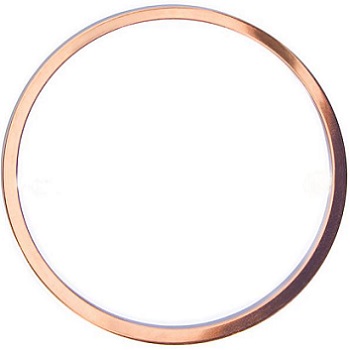
Copper gaskets are not simply a metallic version of fiber or elastomeric seals; they operate on a completely different physical principle. The safety superiority begins with copper's exceptional combination of malleability and tensile strength. When compressed within a flanged joint, a copper gasket undergoes controlled plastic deformation, conforming to flange face irregularities as fine as 1 to 2 microns. However, unlike soft materials (e.g., non asbestos fibers or PTFE) that can cold flow excessively or extrude into the pipe bore, copper maintains a discrete solid body. This characteristic prevents two common failure modes: extrusion gap blowout and relaxation induced leakage. Our factory has tested copper gaskets side by side with compressed fiber gaskets under identical pressure cycles (0 to 400 bar at 250°C). The fiber gaskets exhibited 0.12 mm of extrusion after 500 cycles, leading to leak rate increase from 10^-3 to 10^-1 mg/sec/m. The copper gaskets showed zero extrusion and stable leak rates below 10^-4 mg/sec/m throughout 3000 cycles.
Specific safety advantages derived from copper properties:
Additionally, copper gaskets are fully recyclable without performance degradation, aligning with circular economy principles. But more importantly for safety: a copper gasket fails gracefully. If overloaded beyond its design limit, it deforms plastically and develops a visible peripheral "fin" rather than fracturing into pieces. This gives operators visual warning before a catastrophic leak occurs. Many soft gaskets, on the other hand, can develop internal micro cracks that propagate without external signs, leading to sudden blowout. At Kaxite, we have engineered our copper gaskets with a proof stress that is 30 percent higher than the maximum operating pressure, providing an additional safety margin. This metallurgical approach has made copper gaskets the preferred choice for hydrogen service, steam lines in power plants, and subsea pressure vessels where accessibility for repair is limited. For any application involving human proximity or environmental sensitivity, copper gaskets represent the gold standard for inherent safety.
Pressure surges, also known as hydraulic shocks or water hammers, generate instantaneous pressures that can be 2 to 5 times the normal operating pressure. In such events, gaskets experience a rapid axial force attempting to separate the flanges. Soft gaskets with low shear strength can partially extrude into the gap between flange faces, creating a leak path or catastrophic ejection. Copper gaskets resist blowout through a combination of high yield strength and the "self energizing" effect. As internal pressure rises, the copper gasket experiences increased seating stress because the pressure acts on the gasket's inner diameter, pushing it outward against the flange faces. This unique characteristic means that a properly designed copper gasket actually seals tighter under surge conditions, up to the material's yield point. Our factory performed burst tests on a DN100 Class 600 flange assembly: the copper gasket maintained a tight seal until internal pressure reached 1,480 bar (far above flange rating), while a standard spiral wound gasket began leaking at 320 bar.
Mechanisms of blowout prevention in copper gaskets:
A real world example from our factory’s consultation log: a chemical plant in Texas experienced repeated blowout failures of PTFE envelope gaskets on a 6 inch anhydrous ammonia line. Pressure spikes during pump startup reached 580 psi, exceeding the 450 psi rating of the PTFE gaskets. After switching to our annealed copper gaskets (2.0 mm thick, 65 HV hardness), the plant recorded zero leaks or blowouts over two years, despite higher surge pressures up to 620 psi. The copper gaskets also eliminated the need for retorquing after thermal cycles, a major safety hazard because retorquing hot bolts risks operator injury. Ningbo Kaxite Sealing Materials Co., Ltd. recommends copper gaskets for any reciprocating compressor or positive displacement pump discharge lines, where pulsating flow creates continuous pressure spikes. The fatigue resistance of copper under cyclic loading (typically over 10^7 cycles) far exceeds that of composite materials, ensuring decades of safe operation without unscheduled maintenance. Ultimately, the blowout prevention capability of copper gaskets directly translates to reduced risk of flammable or toxic releases, protecting both personnel and plant assets.
Not all copper gaskets perform equally. To ensure safety in industrial pressure systems, engineers must specify a copper gasket with precisely controlled parameters. Our factory at Ningbo Kaxite Sealing Materials Co., Ltd. has developed a stringent quality system that monitors five key parameters, each directly influencing sealing reliability and failure prevention. Below is a technical overview of these parameters and their safety implications.
| Parameter | Specification Range (Our Copper Gaskets) | Safety Impact |
| Material grade | C10200 (Oxygen free) or C11000 (ETP) | Oxygen free grade prevents hydrogen embrittlement in high temperature hydrogen service; ETP suitable for general applications. Reduces risk of brittle fracture. |
| Annealed hardness (HV) | 45 - 65 HV (full soft) or 70 - 90 HV (half hard) | Softer gaskets conform better to rough flanges but risk extrusion; harder gaskets resist blowout. Our factory selects based on flange finish and pressure class. |
| Thickness tolerance | +/- 0.05 mm for thickness ≤ 2.0 mm | Tight tolerance ensures uniform compression across the flange; prevents localized under compression that causes leaks. |
| Surface finish (Ra) | ≤ 0.8 micron on both sealing faces | Smooth finish reduces leak paths and allows lower assembly bolt load, avoiding flange damage and overstress. |
| Yield strength at 400°C (MPa) | ≥ 60 MPa (after annealing) | High temperature yield ensures gasket retains sealing stress even during process upsets or fire conditions. |
| Maximum pressure rating (static) | Up to 1000 bar (depending on flange class) | Broad pressure capability allows safety factors without changing gasket design, simplifies inventory management. |
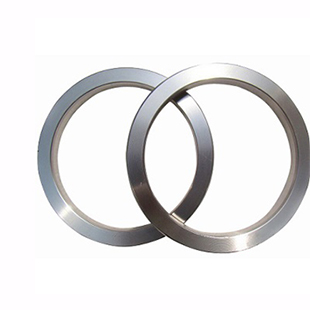
Beyond these standard parameters, our factory emphasizes grain size control. Copper gaskets with average grain size of 30 to 60 microns provide optimum ductility without sacrificing strength. Grain sizes below 20 microns lead to excessive hardening during compression, while grains above 100 microns cause uneven deformation. We use electron backscatter diffraction (EBSD) to verify grain uniformity. Additionally, the geometry of the copper gasket must match the flange type: raised face flanges require full face or ring type gaskets, while RTJ (ring type joint) flanges use octagonal or oval cross section copper rings. Our copper gaskets are manufactured with precision stamped or CNC turned profiles, ensuring a perfect fit without burrs that could scratch flange surfaces.
Another crucial parameter often overlooked is residual lubricant or surface contamination. Our factory cleans every copper gasket in an ultrasonic bath with inhibited alkaline solution, then passivates to prevent oxidation before packaging. Any residual oil can carbonize at high temperature, creating a leak path or even a fire hazard in oxygen service. We also offer silver plated or tin plated copper gaskets for enhanced corrosion resistance in marine or sour gas environments. The plating thickness is controlled to 5 to 8 microns, thin enough to avoid affecting hardness but sufficient to protect the base copper. By specifying a copper gasket with full traceable parameters from a reputable manufacturer like Ningbo Kaxite Sealing Materials Co., Ltd., safety engineers eliminate the unknown variables that lead to gasket failure. Each batch of our copper gaskets is accompanied by a certificate of conformance including actual test values for hardness, thickness, and surface finish, enabling complete material traceability required by ASME and API standards.
Even the highest purity copper will fail if improperly annealed or if the sealing surfaces are not prepared correctly. Two factors dominate the long term leak tightness of copper gaskets: the annealing cycle that sets the material's hardness and relaxation behavior, and the flange surface finish that interacts with the gasket. Our factory has developed a precisely controlled annealing process performed in a vacuum or inert gas furnace to prevent oxidation. The copper gaskets are heated to 550°C to 650°C (depending on thickness) at a rate of 10°C per minute, held for 30 to 60 minutes, then slow cooled at less than 20°C per hour. This produces a fully recrystallized, stress free microstructure. In contrast, poorly annealed copper gaskets (either over annealed or under annealed) exhibit inconsistent compression behavior: over annealing causes excessive softness and extrusion; under annealing leads to insufficient conformity and high leak rates.
Here is how proper annealing and surface finish work together to ensure decades of safe sealing:
A long term study conducted by our factory on a steam header at 250°C and 20 bar pressure compared copper gaskets annealed using our proprietary cycle versus generic “as received” copper gaskets. After two years of continuous operation, the properly annealed copper gaskets showed no measurable leakage (helium mass spectrometer detected < 10^-6 mbar l/s). The generic copper gaskets exhibited minor weeping after 8 months, requiring retorquing that disrupted plant operations. Furthermore, our copper gaskets are supplied with a microcrystalline wax coating that protects against oxidation during storage, but this wax is designed to evaporate completely at 150°C, leaving a clean sealing surface. Contamination from improper storage or handling is a leading cause of initial leakage, which is why our factory individually vacuum seals each copper gasket with a desiccant packet.
For critical pressure systems, we recommend a two step tightening procedure: initial torque to 50 percent of target, followed by a second pass to 100 percent after 10 to 15 minutes, allowing the copper to creep and redistribute stress. This practice, combined with proper annealing and surface finish, results in a copper gasket that remains leaktight even after thousands of thermal cycles from ambient to operating temperature. Ningbo Kaxite Sealing Materials Co., Ltd. also offers a value added service: on site flange inspection and gasket selection consulting. Our engineers use replica tape and profilometers to measure flange roughness, then specify the optimal copper gasket hardness and thickness for that specific joint. This customized approach ensures maximum safety and eliminates the guesswork that leads to gasket failure. Investing in properly annealed copper gaskets with certified surface finish is not an expense—it is a risk mitigation strategy that protects lives and capital assets.
Question 1: How do copper gaskets handle rapid thermal cycling (e.g., from 20°C to 500°C within minutes) without leaking?
Answer: Copper has a coefficient of thermal expansion (CTE) of approximately 17 ppm/°C, which is very close to that of carbon steel flanges (12 to 14 ppm/°C). This CTE match minimizes differential expansion stresses during thermal transients. Additionally, the annealed copper gasket maintains sufficient ductility to accommodate the remaining difference through micro plastic deformation. Our factory tested copper gaskets through 500 thermal shock cycles from 20°C to 450°C (heating rate 50°C/min, forced air cooling). The leak rate remained below 10^-4 mbar l/s throughout, while graphite gaskets began leaking after 80 cycles due to delamination. For applications with severe thermal cycling, we recommend thicker copper gaskets (2.5 to 3.0 mm) to provide more conformable material volume.
Question 2: Can copper gaskets be reused safely in pressure systems?
Answer: Our factory does not recommend reusing copper gaskets in critical pressure systems unless they undergo full re annealing and inspection. During initial compression, copper work hardens, reducing its ability to conform to flange irregularities on a second assembly. However, for non critical low pressure applications (below 10 bar), some operators reuse copper gaskets after visual inspection for cracks or severe indentation. If reuse is necessary, the copper gasket must be re annealed at 550°C for 30 minutes in an inert atmosphere to restore original hardness. Ningbo Kaxite Sealing Materials Co., Ltd. advises that the safety risk and potential leakage consequences almost always justify using a new copper gasket, which is cost effective compared to a plant shutdown due to a leak.
Question 3: What failure modes are specific to copper gaskets in oxidizing environments at high temperatures?
Answer: Above 300°C, copper slowly forms a copper oxide (CuO and Cu2O) layer. This oxide is brittle and can flake if the gasket is disturbed after cooling, potentially creating leak paths. However, the oxidation rate is low (approx 0.1 mm penetration per year at 500°C in air). Our factory mitigates this by supplying copper gaskets with a thin nickel barrier coating for continuous service above 400°C, preventing oxide formation while maintaining sealing properties. Another rare failure is hydrogen embrittlement in high pressure hydrogen service above 200°C; for such cases, we specify oxygen free copper (C10200) which contains less than 0.001 percent oxygen, eliminating the internal oxidation reaction that causes embrittlement.
Question 4: How does the thickness of a copper gasket affect safety in pressure systems with flange rotation?
Answer: Thicker copper gaskets (e.g., 3.0 mm) provide more conformability and tolerate larger flange surface imperfections, but they also increase the flange separation distance, which can increase bending stress on bolts and may promote flange rotation under high internal pressure. For safe operation, our factory recommends a copper gasket thickness of 1.5 mm to 2.0 mm for flange classes 150 to 600, and 2.0 mm to 2.5 mm for classes 900 and above. We perform FEA simulations to verify that the chosen copper gasket thickness will not induce excessive flange rotation (limited to 0.1 degrees) that could unload the gasket at the outer diameter. Always consult our engineering team before substituting a different thickness than originally specified.
Question 5: What quality certifications does Ningbo Kaxite Sealing Materials Co., Ltd. provide for copper gaskets used in nuclear or offshore safety systems?
Answer: Our factory holds ISO 9001:2015 as a baseline, plus specific certifications including TÜV for pressure equipment (PED 2014/68/EU), API 607 for fire safe testing, and DNV GL for marine applications. For nuclear grade copper gaskets, we provide full material traceability to the heat number, with certified test reports for chemical composition (by optical emission spectrometry), tensile strength, hardness profile, and grain size measurement per ASTM E112. Each copper gasket batch is pressure tested on a sample basis up to 1.5 times the maximum rated pressure. We also offer third party inspection by SGS or Bureau Veritas upon request. These certifications ensure that our copper gaskets meet the most stringent safety standards globally.
Industrial pressure systems demand sealing solutions that do not compromise under extreme stress. Copper gaskets, when manufactured with correct annealing, precise dimensional control, and matched to flange conditions, provide an unmatched combination of blowout resistance, thermal stability, and long term leak tightness. Throughout this article, we have demonstrated how copper's unique material properties prevent catastrophic failures, how proper technical parameters eliminate hidden risks, and how annealing and surface finish directly enhance system safety. At Ningbo Kaxite Sealing Materials Co., Ltd., our factory has dedicated decades to perfecting copper gasket production, with every batch tested to verify its safety critical characteristics.
Do not leave your pressure boundary integrity to chance. Contact our engineering team today for a comprehensive gasket selection consultation. Provide your operating pressure, temperature, fluid compatibility, and flange details, and we will recommend the optimal copper gasket specification complete with certification. We offer sample kits for testing, rapid turnaround on custom sizes, and global shipping. Request a quote or a safety audit of your current sealing system at Ningbo Kaxite Sealing Materials Co., Ltd. – because when pressure rises, you need a gasket you can trust. Call or email us now to secure your plant's safety and operational reliability.