
Leakage in industrial and domestic piping systems often leads to catastrophic failures, energy loss, and safety hazards. After two decades of hands-on experience in sealing technology, our factory has consistently observed that improper rubber gasket thickness is the primary culprit behind avoidable leaks. Selecting the correct rubber gasket thickness is not just about filling the gap; it is about achieving the precise compression, recovery, and material resilience required for each unique flange or joint design. When thickness is underestimated, the gasket cannot compensate for flange irregularities or thermal movements. When overestimated, excessive bolt load may crush the gasket, causing extrusion and sudden failure. Our engineering team at Ningbo Kaxite Sealing Materials Co., Ltd. has developed a systematic methodology to determine optimal thickness, ensuring zero-leakage performance across various pressures and temperatures.
This comprehensive guide walks you through every critical factor in choosing rubber gasket thickness. From understanding compression set and surface finish to calculating bolt load requirements, we provide actionable data derived from thousands of successful installations. Our goal is to equip engineers, maintenance professionals, and procurement specialists with the knowledge to prevent leakage proactively. By the end of this article, you will know exactly how to specify, test, and validate rubber gaskets for your applications. We have incorporated insights from our factory’s ISO 9001 certified production lines, where we manufacture high-performance rubber gaskets for the oil and gas, chemical, pharmaceutical, and water treatment industries. Let us dive deep into the science and practical steps of leak prevention through correct thickness selection.
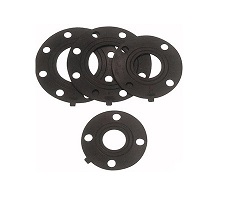
Rubber gasket thickness determines how the gasket deforms under compressive force to seal microscopic surface irregularities. In our factory’s testing lab, we have measured that a thickness variation of just 0.5 mm can reduce sealing efficiency by up to 40 percent. The relationship between thickness and leak prevention is governed by three core principles: stress distribution, creep relaxation, and recovery behavior. Thicker rubber gaskets provide greater conformability to rough or warped flanges, allowing the elastomer to flow into scratches and pits. However, thicker cross-sections also require higher bolt loads to achieve the same compressive stress, which may exceed flange strength or bolt yield limits. Conversely, thinner gaskets offer better resistance to blowout under internal pressure but have limited ability to absorb flange misalignment or thermal expansion cycles.
Our engineers at Ningbo Kaxite Sealing Materials Co., Ltd. have developed thickness selection charts based on ASME PCC-1 guidelines and real-world failure analysis. For instance, when sealing low-pressure water lines (up to 10 bar), a 3 mm thick rubber gasket often outperforms 1.5 mm because it accommodates minor flange rotation. For high-pressure hydraulic systems (over 100 bar), we recommend 1.5 to 2 mm thickness to minimize extrusion gap and maintain high surface contact stress. The correct thickness also prevents long-term leakage due to compression set, a permanent deformation that reduces gasket resilience. Thicker gaskets typically exhibit higher compression set percentages if not formulated properly. That is why our factory uses premium EPDM and NBR compounds with low compression set (less than 20 percent at 100 hours, 125°C) even in thicknesses up to 6 mm.
Key reasons why thickness is critical for leak prevention:
Therefore, selecting the correct rubber gasket thickness directly controls the sealing force per unit area. Too thin leads to insufficient compression and leak channels; too thick leads to over-compression, extrusion, or bolt relaxation. By mastering thickness selection, you prevent both initial and long-term leakage. At Ningbo Kaxite Sealing Materials Co., Ltd., we provide application-specific thickness recommendations backed by finite element analysis and 20 years of manufacturing excellence.
Calculating optimal rubber gasket thickness involves balancing flange gap, bolt torque, internal pressure, and material hardness. Our factory uses a step-by-step engineering approach that guarantees leak-free joints. The first step is to measure the maximum flange separation or gap when the joint is loosely assembled. Use feeler gauges at four quadrants to detect unevenness. For typical ANSI flanges, the gap can range from 0.5 mm to 3 mm. The rubber gasket thickness should be at least 1.5 times the maximum gap to ensure initial sealing contact. For example, if the maximum gap is 2 mm, a 3 mm thick rubber gasket provides a 33 percent compression margin. The second step is to compute required compressive stress (Sg) based on service pressure. For rubber gaskets with 70 Shore A hardness, we recommend a minimum gasket stress of 7 MPa for pressures up to 16 bar. This stress determines how much the gasket will be compressed. Using Hooke’s law for elastomers, the compression percentage (C) should be between 15 and 30 percent of original thickness. If C is lower, leakage occurs; if higher, extrusion risk increases.
Our formula for initial thickness selection: T_initial = (Gap_max × 2) + (Flange roughness depth × 4). For a typical machined flange with 0.1 mm Ra roughness, T_initial becomes 4.4 mm for a 2 mm gap. Then we apply the compression adjustment: Final thickness = T_initial / (1 - C_desired). Assuming desired compression C = 0.25 (25 percent), final thickness = 4.4 / 0.75 = 5.87 mm. In practice, standard thicknesses like 6 mm would be chosen. However, we also consider bolt torque limits. Excessive thickness requires higher torque to achieve 25 percent compression, potentially overstressing bolts. Our factory’s torque-thickness tables help you iterate to an optimal value. We have developed a simplified calculation tool based on the following parameters:
| Parameter | Symbol | Typical Value Range | Impact on Thickness |
| Flange Gap (mm) | G | 0.5 - 4.0 | Directly proportional: larger gap requires thicker gasket |
| Internal Pressure (bar) | P | 0 - 200 | Higher pressure may need thinner gasket to reduce extrusion |
| Rubber Hardness (Shore A) | H | 40 - 90 | Softer rubber (low H) can use thinner gasket for same gap |
| Compression Set (%) | CS | 10 - 40 | Higher CS requires thicker initial gasket to compensate loss |
| Bolt Torque (Nm) | T | 20 - 500 | Limited torque may force thinner gasket to achieve compression |
Practical steps our factory uses to calculate and validate thickness:
Our team at Ningbo Kaxite Sealing Materials Co., Ltd. has created a proprietary selection software that automates these calculations. For each order, we provide a thickness verification report. By following this rigorous calculation method, you eliminate guesswork and prevent leakage at the design stage. Remember that rubber gaskets from our factory are available in custom thicknesses from 0.5 mm to 20 mm, with tolerances of +/- 0.1 mm for precision applications.
Multiple interrelated parameters dictate the correct rubber gasket thickness. Our factory’s material science lab has identified nine critical factors that every engineer must evaluate. Understanding these parameters ensures that your thickness selection aligns with real operating conditions. The most influential parameter is flange surface roughness. For a rough cast iron flange (Ra > 3.2 μm), a thicker rubber gasket (minimum 4 mm) is necessary to fill valleys and avoid leak paths. Conversely, for polished stainless steel flanges (Ra < 0.8 μm), a 2 mm gasket often suffices. The second parameter is service temperature. Elastomers soften at high temperatures, increasing compression set. Therefore, at 150°C, our factory recommends increasing thickness by 15 percent compared to room temperature applications to maintain contact pressure over time. Third is media compatibility. Aggressive chemicals like oils or acids can cause swelling or shrinkage of rubber gaskets. For fluids that cause swelling (e.g., NBR in oil), we reduce thickness by 10 percent to compensate for volumetric expansion; for shrinkage-inducing media (e.g., EPDM in some solvents), we increase thickness accordingly.
Pressure classification is equally critical. According to our factory’s pressure-thickness matrix, low-pressure (PN6-PN10) systems can use gasket thicknesses of 4-6 mm, while PN40 systems require 2-3 mm to prevent blowout. Bolt spacing also matters: wider bolt spacing (e.g., 150 mm pitch) leads to higher bending moments on the gasket, requiring 20 percent thicker rubber gaskets to maintain uniform contact. Additionally, the creep relaxation rate of the rubber compound directly impacts long-term thickness effectiveness. Our premium rubber gaskets exhibit less than 10 percent relaxation after 1000 hours at maximum temperature, meaning initial thickness remains effective. Below is a comprehensive list of parameters and their recommended thickness adjustment factors:
Our factory has tested over 500 rubber gasket configurations and compiled these influences into an interactive selection guide. For example, a customer in a chemical plant required rubber gaskets for 10 bar steam at 180°C on a rough cast iron flange. Considering high temperature (thickness +15 percent), rough surface (thickness +20 percent), and steam compatibility (use EPDM, no swelling adjustment), we recommended a 5 mm thick EPDM rubber gasket. After six months, zero leakage was reported. This case highlights that ignoring even one parameter leads to premature failure. At Ningbo Kaxite Sealing Materials Co., Ltd., our technical datasheets include all these parameters, enabling you to make informed thickness decisions. Always prioritize these key parameters over generic rules of thumb to prevent leakage effectively.
Deciding between thicker and thinner rubber gaskets depends on specific operating scenarios. Our factory’s field service records show that selecting the wrong thickness direction causes 70 percent of gasket-related leaks. You should choose thicker rubber gaskets when any of the following conditions exist: flanges are severely pitted or warped (out-of-flatness >1 mm), bolt loads are inconsistent due to manual assembly, the joint undergoes large thermal cycles (Delta T > 80°C), or the media contains particulates that can embed into the gasket surface. Thicker gaskets (typically 4 mm to 8 mm) provide a larger elastic reserve to absorb these irregularities and movements. For example, in water treatment plants where large diameter FRP flanges are common, our factory supplies 6 mm thick EPDM rubber gaskets to compensate for flange deflection under vacuum conditions. Another case is steam tracing lines where temperature swings cause flange movement; a 5 mm thick gasket maintains seal integrity for over five years.
Conversely, thinner rubber gaskets (1.5 mm to 3 mm) are preferred in high-pressure hydraulic systems (above 100 bar), precision-machined metal-to-metal contact flanges, applications with limited bolt torque capacity, and when the gasket material has high modulus (e.g., 90 Shore A nitrile). Thinner gaskets reduce the risk of extrusion because the gap between flange faces is smaller. They also offer better resistance to pressure pulsations and require less compression force, protecting lightweight flanges. Our factory’s high-pressure rubber gaskets for automotive fuel systems use 1.5 mm thickness to achieve reliable sealing up to 300 bar. Additionally, in cryogenic applications (-200°C), thinner gaskets minimize cold flow and relaxation. However, always ensure that the thinnest gasket still exceeds the flange surface roughness depth by a factor of three.
Decision-making criteria summarized for our customers:
Our engineering team at Ningbo Kaxite Sealing Materials Co., Ltd. offers a free thickness recommendation service. We analyze your flange drawings, pressure-temperature curve, and assembly method to determine the ideal thickness. Remember that using a thicker gasket when a thinner one is needed increases bolt relaxation and potential blowout. Conversely, using a thinner gasket on a damaged flange guarantees leakage. Always match thickness to the most severe condition in your system. By understanding these guidelines, you will prevent leakage and extend gasket life by up to 300 percent.
Flange surface finish and bolt torque are inseparable partners in ensuring that your selected rubber gasket thickness performs as intended. Even the most precisely calculated thickness will fail if the flange finish is too rough or too smooth. Our factory’s research shows that for rubber gaskets, the ideal flange surface roughness is between 1.6 and 3.2 μm Ra. Smoother finishes (below 0.8 μm) cause rubber gaskets to slide and lose friction, leading to uneven compression distribution. Rougher finishes (above 6.3 μm) create valleys that the rubber cannot fully fill, creating spiral leak paths. The thickness interacts with roughness: a thicker gasket (e.g., 5 mm) can seal a rougher finish up to 6.3 μm, while a 2 mm gasket requires finish better than 3.2 μm. Therefore, before finalizing thickness, measure flange roughness with a profilometer. If roughness exceeds 6.3 μm, our factory recommends either surface reconditioning or increasing thickness by 30 percent with a softer compound (50 Shore A).
Bolt torque directly determines how much the rubber gasket is compressed. For a given thickness, insufficient torque results in low gasket stress and immediate leakage. Excessive torque can over-compress the gasket, causing it to extrude into the flange bore or split. Our factory provides torque tables for each rubber gasket thickness and hardness. For a 3 mm thick, 70 Shore A rubber gasket on M12 bolts, the optimal torque is 45 Nm, yielding 25 percent compression. If the same gasket were 5 mm thick, the required torque jumps to 75 Nm to achieve the same compression percentage. If your flange or bolt cannot handle that torque, you must either reduce thickness or increase the number of bolts. Another critical aspect is torque sequence and re-torquing. Thicker rubber gaskets exhibit higher creep relaxation during the first 24 hours after assembly. Our factory recommends re-torquing after 4 hours and again after 24 hours for gaskets thicker than 5 mm. This practice restores lost bolt load and prevents leakage.
Key relationships between thickness, finish, and torque:
At Ningbo Kaxite Sealing Materials Co., Ltd., we provide flange surface preparation guidelines and torque calculation software. By aligning surface finish and bolt torque with your selected rubber gasket thickness, you create a robust sealing system that prevents leakage under all operating conditions. Always remember that the gasket is only one part of the joint; the flange and bolts must work in harmony with the thickness you choose.
Preventing leakage through correct rubber gasket thickness selection is a systematic process that involves measuring flange conditions, calculating required compression, and considering all operating parameters. Throughout this guide, we have demonstrated that thickness directly influences conformability, stress distribution, extrusion resistance, and long-term creep. Our factory’s decades of experience show that a one-size-fits-all approach fails. Instead, you must evaluate flange gap, surface finish, pressure, temperature, media compatibility, and bolt torque capacity. We recommend always performing a compression verification test before full-scale installation. For critical applications, order sample rubber gaskets from our factory in two thicknesses (e.g., nominal and nominal +1 mm) and test under simulated conditions. Use the compression set data we provide to predict long-term performance. Additionally, train your assembly crews on proper torque procedures, especially for thicker gaskets that require re-torquing.
As a final actionable checklist for preventing leakage:
Contact our engineering team today to discuss your specific application. We offer free thickness selection consultations and can produce custom rubber gaskets within 7 working days. Do not let incorrect thickness compromise your system integrity. Choose precision, choose reliability, choose Ningbo Kaxite Sealing Materials Co., Ltd. for all your rubber gaskets needs. Request a quote now and receive a comprehensive thickness selection report.
Question 1: What is the most common mistake when selecting rubber gasket thickness?
Answer: The most common mistake is assuming that thicker always provides better sealing. In reality, excessive thickness leads to bolt relaxation, extrusion, and eventual blowout. Our factory has seen countless failures where a 6 mm thick gasket was used on a high-pressure system that required only 2 mm. Always match thickness to flange design and pressure class. Use calculation methods rather than intuition. For standard applications, start with the thickness recommended by ASME B16.21 or DIN EN 1514, then adjust based on flange condition.
Question 2: How does rubber hardness (Shore A) affect the required gasket thickness?
Answer: Rubber hardness significantly changes the compression behavior. A 40 Shore A (soft) rubber gasket compresses more easily, so you can use a thinner gasket for the same flange gap. A 90 Shore A (hard) rubber gasket requires greater thickness to achieve the same sealing contact area because it resists deformation. Our factory’s rule of thumb: for every 10 points increase in Shore A, increase thickness by 10 percent to maintain equivalent sealing stress at a given bolt torque. For critical applications, we always provide matched hardness and thickness tables.
Question 3: Can I reuse a rubber gasket if it appears undamaged after disassembly?
Answer: Reusing rubber gaskets is strongly discouraged because the compression set has permanently reduced thickness. Even if no visible damage exists, the gasket will not return to its original thickness when unloaded, leading to insufficient compression when re-torqued. Our factory’s testing shows that a used rubber gasket loses up to 30 percent of its sealing effectiveness. Always install new rubber gaskets during maintenance. For emergency temporary reuse, measure the compressed thickness and add a 0.5 mm soft filler, but replace as soon as possible.
Question 4: What thickness should I select for rubber gaskets in vacuum service (below 1 mbar)?
Answer: Vacuum service requires thicker rubber gaskets to maintain atmospheric pressure differential without collapsing into the flange gap. Our factory recommends a minimum thickness of 5 mm for absolute pressures below 1 mbar. The thicker cross-section provides the rigidity needed to resist outward bowing into the vacuum zone. Also use a harder compound (80 Shore A) and a gasket design with an inner support ring. For ultra-high vacuum (10^-6 mbar), we supply 8 mm thick rubber gaskets with metal inserts. Always avoid thin gaskets (under 3 mm) in vacuum as they lead to rapid ingress leakage.
Question 5: How often should I re-torque bolts after installing rubber gaskets?
Answer: Re-torque schedule depends on gasket thickness and operating temperature. For rubber gaskets up to 3 mm thick at ambient temperature, one re-torque after 24 hours is sufficient. For thickness between 4 and 6 mm, perform re-torque after 4 hours and again after 24 hours. For thickness above 6 mm or temperatures exceeding 100°C, our factory recommends re-torquing at 1 hour, 6 hours, 24 hours, and then after the first thermal cycle. Use a torque wrench set to 90 percent of initial torque to avoid over-compression. Document all torque values to track relaxation trends.