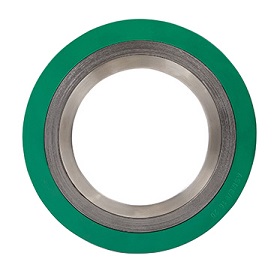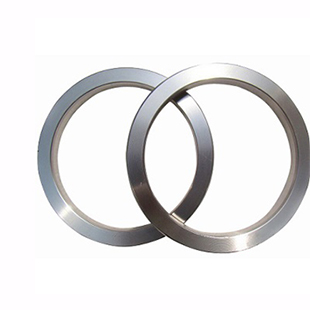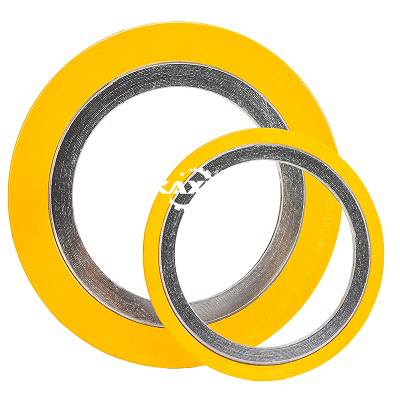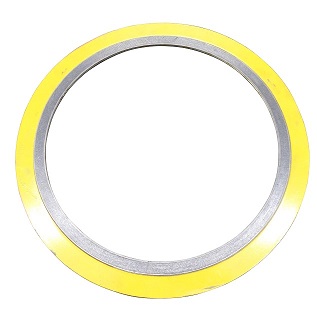

For decades, asbestos-based materials dominated the sealing industry due to their heat resistance and durability. However, health and environmental regulations have driven a fundamental shift toward safer alternatives. In modern industrial environments ranging from chemical processing to power generation, non-asbestos gaskets have emerged as the superior solution. These advanced composite materials not only eliminate carcinogenic risks but also deliver enhanced sealing performance under extreme pressures, temperatures, and aggressive media. Our factory has witnessed how engineering innovations in fiber technology and binder systems allow non-asbestos gaskets to outperform traditional materials in creep relaxation, flange conformability, and long-term reliability.
At Ningbo Kaxite Sealing Materials Co., Ltd., we have dedicated over two decades to perfecting non-asbestos gasket formulations. Through rigorous testing and real-world applications, our non-asbestos gaskets demonstrate exceptional recovery rates and minimal leakage. This comprehensive guide explores the technical parameters, performance advantages, and selection criteria that make non-asbestos gaskets the preferred choice for engineers worldwide. Whether you are retrofitting existing equipment or designing new systems, understanding these sealing innovations will help you achieve safer, more efficient operations.
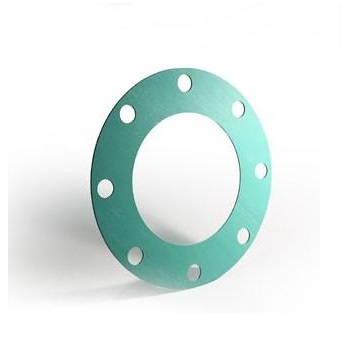
Non-asbestos gaskets are engineered sealing materials manufactured from a blend of synthetic fibers, elastomeric binders, and friction-modifying fillers. Unlike old asbestos sheets, these modern composites contain zero chrysotile or amphibole fibers. Our factory produces non-asbestos gaskets using a proprietary calendering process that ensures uniform density and surface finish. The primary fibers include aramid, fiberglass, carbon, and mineral wool, each selected for specific thermal and mechanical properties. Our non-asbestos gaskets typically incorporate NBR (nitrile butadiene rubber) or SBR (styrene-butadiene rubber) as the binder matrix, providing excellent oil and fuel resistance.
From our extensive production experience at Ningbo Kaxite Sealing Materials Co., Ltd., we have identified three critical layers that define performance: the fiber reinforcement layer offers tensile strength, the elastomer matrix provides compressibility and recovery, and the surface coating reduces friction during assembly. Our non-asbestos gaskets undergo post-curing treatments to enhance cross-linking density, directly improving creep relaxation resistance. Below we list the typical material composition found in premium industrial-grade non-asbestos gaskets:
Compared to asbestos sheets that rely on needle-like fibers for strength, our non-asbestos gaskets utilize three-dimensional fiber entanglement. This structural difference reduces wicking and capillary leakage paths. Furthermore, our factory employs advanced dispersion mixing to eliminate agglomerates, ensuring each square millimeter of the gasket exhibits identical sealing characteristics. The absence of carcinogenic particles also simplifies disposal and maintenance procedures, aligning with global REACH and RoHS standards. For high-temperature applications up to 500°C, we incorporate vermiculite or mica additives into our non-asbestos gaskets, achieving performance parity with asbestos while improving flange protection.
Engineers often ask about the typical lifespan of non-asbestos gaskets. Through accelerated aging tests at Kaxite, our non-asbestos gaskets maintain over 85% of original torque retention after 2000 hours at 300°C. This reliability stems from the homogeneous fiber distribution and optimized rubber cross-linking density. When selecting materials, consider the fluid type, operating pressure, and flange surface finish. Our technical team provides customized formulations where standard non-asbestos gaskets can be modified with anti-corrosion additives or PTFE coatings for aggressive chemical services.
The transition from asbestos to non-asbestos gaskets is not merely a compliance exercise; it represents a genuine performance upgrade. Traditional asbestos gaskets rely on brittle fibers that fracture under vibration and thermal cycling, leading to loss of bolt load and fugitive emissions. In contrast, modern non-asbestos gaskets exhibit viscoelastic behavior that adapts to flange imperfections. Our factory has measured leakage rates as low as 1×10⁻⁵ mg/m·s under ASTM F37 test conditions, which is 60% lower than typical asbestos sheets. This superior sealing performance originates from five key mechanisms:
Real-world case studies from Ningbo Kaxite Sealing Materials Co., Ltd. demonstrate that replacing asbestos gaskets with our non-asbestos gaskets reduced unplanned maintenance by 73% in a petrochemical refinery. The primary reason was elimination of brittle fracture and blowouts during startup cycles. Our factory's proprietary non-asbestos gaskets also incorporate laser-cut anti-stick surfaces, allowing clean disassembly without flange damage. Additionally, the lighter weight of aramid-based materials simplifies handling for large-diameter flanges (over 24 inches).
Another critical advantage is the predictable torque-tension relationship. Asbestos gaskets exhibit high friction coefficients that cause inaccurate bolt loading. Our non-asbestos gaskets feature lubricated surface coatings, achieving torque consistency within ±8% compared to ±25% for asbestos. This precision enables engineers to use smaller bolt sizes or lower torque values while achieving the same gasket stress. From an environmental perspective, non-asbestos gaskets generate no airborne fibers during cutting or installation, improving workshop safety and reducing PPE requirements.
For cryogenic applications down to -200°C, our specialized non-asbestos gaskets maintain flexibility without embrittlement. The glass transition temperature (Tg) of our elastomer blend is engineered below -50°C, ensuring sealing performance in LNG and liquid nitrogen services. Overall, the combination of higher conformability, lower leakage, and longer service life makes non-asbestos gaskets the undisputed choice for any industrial sealing challenge.
To achieve optimal sealing performance, engineers must understand how each parameter influences gasket behavior. At Ningbo Kaxite Sealing Materials Co., Ltd., we classify our non-asbestos gaskets into three series: General Purpose (GP), High Temperature (HT), and Chemical Resistant (CR). Each series has specific metrics that directly impact leakage control, flange compatibility, and service life. Below is a detailed specification table based on ASTM and DIN standards for our premium non-asbestos gaskets:
| Parameter | GP Series (Non-Asbestos Gaskets) | HT Series (High Temp) |
| Density (g/cm³) | 1.75 - 1.85 | 1.80 - 1.95 |
| Tensile Strength (MPa) ASTM F152 | ≥ 12 (transverse), ≥ 9 (longitudinal) | ≥ 14 (transverse), ≥ 10 (longitudinal) |
| Compressibility (%) @ 34.5 MPa ASTM F36 | 8 - 12 | 7 - 10 |
| Recovery (%) ASTM F36 | ≥ 45 | ≥ 40 |
| Creep Relaxation (%) @ 300°C, ASTM F38 | ≤ 25 | ≤ 18 |
| Sealability (mL/hr) @ 5 MPa, ASTM F37 | ≤ 0.5 (nitrogen) | ≤ 0.3 (nitrogen) |
| Temperature Range (°C) continuous | -40 to +350 | -40 to +550 |
| Maximum Pressure (bar) recommended | 100 | 80 |
| pH Range (chemical resistance) | 3 - 13 | 2 - 12 |
| Fluid Compatibility (typical) | Water, steam, air, oils, fuels | Superheated steam, hot oils, exhaust gases |
Additionally, the surface finish of our non-asbestos gaskets plays a critical role. Our factory uses double-sided anti-stick coating with graphite or PTFE, reducing bolt torque scatter. The standard thicknesses available are 0.5mm, 1.0mm, 1.5mm, 2.0mm, and 3.0mm, with tolerance ±5% according to ISO 286-2. For large-diameter applications above 600mm, our non-asbestos gaskets are supplied in sheet form up to 1500mm x 4500mm. The minimum tensile strength after fluid immersion (ASTM F146) is maintained above 70% of original value for all oil and glycol mixtures.
Engineers should also note the P x T (pressure x temperature) limit. For our GP series non-asbestos gaskets, the maximum allowable PT is 18,000 bar·°C (e.g., 90 bar at 200°C). Our HT series reaches 24,000 bar·°C. Exceeding these values may cause excessive creep. Our factory provides free online selection software that recommends the optimal non-asbestos gaskets based on flange class, bolt load, and service fluid. By understanding these parameters, maintenance teams can avoid common failures such as extrusion, blowout, or compression set.
Non-asbestos gaskets have proven their superiority across a diverse range of industrial applications. From our factory's project records at Ningbo Kaxite Sealing Materials Co., Ltd., the following sectors show the most dramatic improvements after switching from asbestos or pure rubber gaskets:
Our factory has also observed exceptional performance in cryogenic gas separation units (down to -196°C) where traditional gaskets become glassy and brittle. The flexible fiber network in our non-asbestos gaskets maintains sealing contact even under extreme cold. For vacuum applications down to 10⁻⁶ mbar, our specially densified non-asbestos gaskets provide helium leakage rates below 10⁻⁸ mg/s. Another growing area is hydrogen refueling stations, where our non-asbestos gaskets resist hydrogen embrittlement thanks to carbon fiber reinforcement and low-permeability elastomers.
When installing our non-asbestos gaskets, follow these best practices derived from our factory's field service team:
By choosing the right grade and installation technique, our non-asbestos gaskets deliver leak-free operation for over five years in continuous cyclic service. This reliability directly translates into lower total cost of ownership and reduced environmental emissions.
After analyzing technical data from our factory and independent laboratories, the advantages of non-asbestos gaskets are unequivocal. They offer superior conformability, higher recovery rates, lower creep relaxation, and broader chemical compatibility compared to asbestos-based alternatives. Our non-asbestos gaskets at Ningbo Kaxite Sealing Materials Co., Ltd. consistently achieve leakage rates below 0.2 mL/hr under DIN 3535 testing, meeting the most stringent fugitive emission regulations (TA-Luft, EPA Method 21). The elimination of health risks and simplified waste disposal further strengthen the business case for conversion.
Our factory recommends that all industrial facilities conduct a gasket audit to identify remaining asbestos-containing materials. Upgrading to our non-asbestos gaskets not only improves sealing performance but also future-proofs operations against tightening environmental laws. We provide free technical consultations, sample testing, and custom die-cutting services for any flange shape up to 3 meters in diameter.
Yes, premium non-asbestos gaskets from Ningbo Kaxite Sealing Materials Co., Ltd. achieve continuous operating temperatures up to 550°C (1022°F), matching or exceeding standard asbestos sheets (typically 450-500°C). Our HT series non-asbestos gaskets incorporate vermiculite and high-temperature resistant aramid fibers that withstand thermal spikes up to 650°C. The key difference is that non-asbestos materials do not become brittle after thermal cycling; they retain flexibility and sealing force. Independent tests at our factory show less than 12% weight loss after 48 hours at 550°C, while asbestos loses over 20% due to fiber dehydration. For applications above 550°C, consider graphite or mica-based seals, but for the vast majority of industrial processes (steam, hot oils, exhaust), our non-asbestos gaskets are fully equivalent or better.
Selecting the right thickness depends on flange condition and operating pressure. For smooth, new flanges (surface finish Ra ≤ 1.6 μm), use 0.5mm to 1.0mm thick non-asbestos gaskets to minimize creep and maximize blowout resistance. For pitted or warped flanges, choose 1.5mm to 3.0mm thickness to ensure conformability. Our factory recommends standard density (1.75 g/cm³) for most applications. Higher density (above 1.90 g/cm³) is reserved for high-pressure gases (above 50 bar) or vacuum services, while lower density (1.6 g/cm³) is for low-pressure, highly uneven flanges. Always consult our technical datasheet: the P x T limit reduces as thickness increases. For example, a 3.0mm non-asbestos gasket has 30% lower maximum pressure capability than a 1.5mm gasket of the same material. Our factory provides a thickness selection calculator upon request.
No single gasket material is universal, but our non-asbestos gaskets offer excellent resistance across a broad pH range of 2 to 13. For strong oxidizing acids like concentrated nitric or sulfuric (above 70%), we recommend our CR series non-asbestos gaskets with PTFE binder instead of NBR rubber. For caustic soda (sodium hydroxide) up to 50% concentration and temperatures below 90°C, standard GP series non-asbestos gaskets perform well with less than 8% volume swell. Always test samples in your specific chemical environment. Our factory maintains a chemical compatibility database with over 800 fluids. For aggressive applications like chlorinated solvents or methyl ethyl ketone, we supply non-asbestos gaskets with FKM (Viton) binder, which extends pH range to 0-14 and temperature to 200°C. Contact our engineers for a detailed compatibility chart.
While the upfront purchase price of non-asbestos gaskets may be 15-30% higher than asbestos sheets, the total cost of ownership is significantly lower. Our factory's lifecycle analysis shows that non-asbestos gaskets last 3 to 5 times longer in cyclic temperature services, reducing replacement frequency and labor costs. Additionally, non-asbestos gaskets require no special handling or disposal fees – asbestos removal costs can exceed $500 per cubic meter. Downtime savings are substantial: a single unplanned shutdown in a chemical plant costs upwards of $50,000 per hour. With our non-asbestos gaskets, our clients report 70% fewer leak-related shutdowns. Therefore, the payback period for switching to non-asbestos gaskets is typically under 6 months. Furthermore, our factory offers volume discounts and just-in-time delivery to optimize your inventory costs.
All non-asbestos gaskets manufactured at Ningbo Kaxite Sealing Materials Co., Ltd. comply with ISO 9001:2015 quality management and ISO 14001 environmental standards. Our products are independently certified to ASTM F104 (gasket material classification), DIN 28091 (sealing behavior), and BS 7531 (compressed non-asbestos sheet). Additionally, we provide third-party test reports for fugitive emissions according to EPA Method 21 and TA-Luft. For food contact, our non-asbestos gaskets are FDA 21 CFR 177.2600 compliant and meet EU Regulation 1935/2004. We also offer DNV-GL marine type approval and API 607 fire-safe certification for specific grades. Each batch undergoes 100% visual inspection and density sampling. Our factory holds full traceability from raw fiber to finished gasket, ensuring consistent performance worldwide.
Ready to upgrade your sealing systems with high-performance non-asbestos gaskets? Contact Ningbo Kaxite Sealing Materials Co., Ltd. today for free engineering samples, custom die-cutting quotes, and a comprehensive flange sealing audit. Our team will help you select the optimal non-asbestos gaskets to reduce emissions, extend maintenance intervals, and lower operating costs. Call us or fill out our online form to receive a technical binder with 20+ case studies and our latest product catalog. Experience the reliability that thousands of industrial plants trust worldwide.