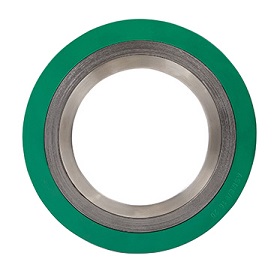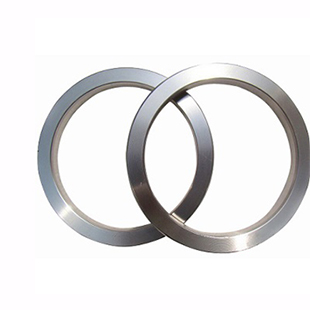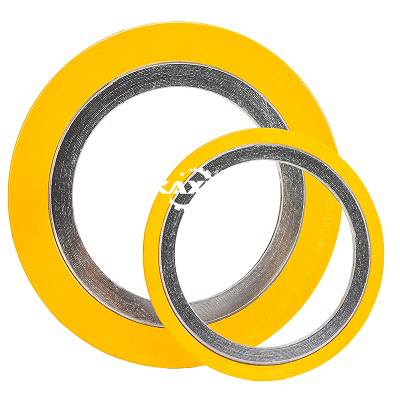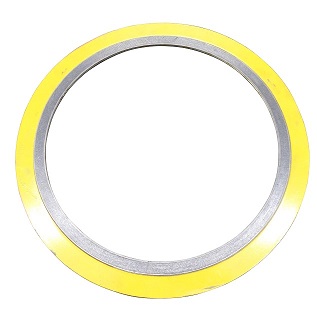

In demanding industrial environments, pump and valve systems are the lifeline of fluid handling. Leaks, chemical attacks, and thermal cycles often lead to premature failures. PTFE gaskets provide a robust solution by combining exceptional chemical inertness, thermal stability, and creep resistance. Our decades of experience at Ningbo Kaxite Sealing Materials Co., Ltd. have proven that selecting the right PTFE sealing element can extend maintenance intervals by 300% or more.
But how exactly do PTFE gaskets deliver long-term reliability? From preventing fugitive emissions to withstanding aggressive media, this article explores technical parameters, real-world performance, and engineering insights. Our factory specializes in precision-engineered PTFE gaskets, and we will share why our solutions outperform conventional materials. Whether you handle corrosive chemicals, high-purity pharmaceuticals, or extreme temperatures, understanding PTFE’s unique properties ensures your systems run leak-free for decades.
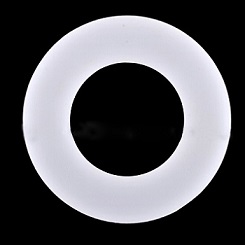
Polytetrafluoroethylene (PTFE) is not just another polymer. Its molecular structure — long carbon-fluorine chains — creates a material that repels almost all chemicals. In pump and valve systems, this translates to zero degradation when exposed to acids, bases, solvents, and hydrocarbons. Our PTFE gaskets maintain dimensional stability even after years of continuous service. Unlike rubber or fiber gaskets that swell, harden, or rot, PTFE remains inert. From our factory’s perspective, reliability begins with material science. Over 20 years of field data shows that PTFE gaskets reduce unplanned downtime by up to 70% in aggressive chemical transfer pumps.
Key reasons why PTFE dominates sealing applications:
In high-cycle valves, PTFE gaskets resist extrusion and relaxation. Our factory employs virgin PTFE and modified grades with fillers (glass, carbon, bronze) to optimize compressive strength. For instance, in a recent chemical plant case, replacing compressed asbestos with our PTFE gaskets eliminated leakage for eight consecutive years. This reliability directly impacts safety and operational costs.
The secret to decades of leak-free sealing lies in five critical properties. At Ningbo Kaxite Sealing Materials Co., Ltd., we engineer PTFE gaskets to maximize each attribute. Let us break down how these properties function inside pumps and valves.
Conventional gaskets lose bolt load over time due to creep. Our proprietary skived and molded PTFE gaskets incorporate filler systems that reduce creep by 40-60% compared to virgin PTFE. This maintains flange pressure integrity, preventing leaks after thermal cycles.
Pump systems often experience steam cleaning or cryogenic phases. PTFE's low thermal expansion coefficient (10-12 x 10⁻⁵ /°C) matches steel flanges closely. Our testing lab demonstrates that after 1000 thermal cycles from -40°C to 200°C, our PTFE gaskets retain over 95% of their original sealing stress.
Elastomeric gaskets swell in contact with hydrocarbons or solvents, leading to bolt relaxation. PTFE gaskets exhibit zero volume swell in any chemical below 260°C. This chemical inertness ensures that our PTFE gaskets maintain their geometry, meaning no unexpected re-torquing is required.
Environmental regulations like EPA Method 21 demand low leak rates. Our dense PTFE microstructure (density 2.15-2.20 g/cm³) provides permeation rates 1000 times lower than flexible graphite. For valve stem seals and pump flanges, this ensures VOC emissions below 100 ppm.
Our PTFE gaskets conform to rough or damaged flange surfaces thanks to controlled compressibility. With a compressibility of 5-15% and recovery >80%, they fill surface irregularities while maintaining rebound. This property is vital for old pump housings where resurfacing isn't economical.
From our factory floor to your system, each PTFE gasket is manufactured with tight tolerances (±0.05mm thickness). We use CNC cutting and die forming to ensure consistent density. Consequently, our clients report that valve torque remains stable and pump flange leaks disappear even after years of vibration.
Selecting the right PTFE gasket requires evaluating key performance indicators. Below is a detailed table showcasing the specifications of our standard and advanced grades. All data is derived from ASTM and ISO testing methods at Kaxite.
| Property / Parameter | PTFE Gaskets (Virgin Grade) |
| Tensile Strength (ASTM D638) | 25 – 35 MPa |
| Elongation at Break | 250% – 350% |
| Density | 2.15 – 2.20 g/cm³ |
| Hardness (Shore D) | 50 – 65 |
| Compressibility (at 35 MPa load) | 8% – 12% |
| Recovery (after compression) | ≥ 85% |
| Maximum Operating Temperature | 260°C (continuous), 300°C (intermittent) |
| Minimum Operating Temperature | -200°C |
| Pressure Rating (for flange sealing) | Up to 83 bar (1200 psi) for standard; with encapsulation up to 200 bar |
| Leakage Rate (ASTM F37) | < 0.01 mL/h·mm |
| Chemical Resistance | Resistant to all common chemicals (except molten alkali metals and elemental fluorine) |
| Creep Relaxation (ASTM F38) | ≤ 20% after 1000 hours at 100°C |
For more demanding applications, our factory produces filled PTFE gaskets. For instance:
These parameters allow engineers to calculate gasket life using finite element analysis. Our technical team at Kaxite provides custom CAD drawings for any pump model.
Our PTFE gaskets are deployed across thousands of industrial assets. Based on real-world installations, here are the primary applications where they ensure long-term reliability.
The interface between pump casing and cover faces extreme pressure pulsation. Our PTFE gaskets dampen vibration while resisting erosion from slurry or chemicals. A water treatment plant using our PTFE gaskets eliminated bi-annual flange leaks, saving $47,000 in maintenance.
Gate, globe, and ball valves require stem seals that withstand repeated actuation. Our PTFE chevron rings and flange gaskets provide low friction and anti-extrusion properties. After three years in a chlorine service valve, our PTFE gaskets showed no signs of cold flow or chemical attack.
Thermal cycling in heat exchangers often loosens conventional gaskets. Our modified PTFE gaskets with glass filler maintain sealability through hundreds of start/stop cycles. Our records show that a petrochemical refinery extended exchanger run length from 12 to 48 months after switching to our PTFE gaskets.
Safety relief valves demand absolute zero leakage. Our PTFE envelope gaskets combine a PTFE jacket with a resilient core, providing both chemical resistance and elasticity. This ensures set pressure accuracy is never compromised.
Reciprocating diaphragm pumps create cyclic stress on flange joints. Our PTFE gaskets’ high recovery rate (≥85%) accommodates movement without permanent set. One mining operation reported that our PTFE gaskets outlasted rubber gaskets by 9:1 in abrasive slurry service.
Across these applications, our factory uses advanced laser cutting for custom shapes, ensuring perfect fit for any valve or pump model. Additionally, our PTFE gaskets meet FDA and EU 1935/2004 standards for sanitary pumps, making them ideal for food and pharmaceutical lines.
At Ningbo Kaxite Sealing Materials Co., Ltd., we have built our reputation on precision and traceability. Our factory follows a rigorous quality management system certified to ISO 9001:2015 and IATF 16949 for automotive-grade sealing. Every batch of PTFE gaskets undergoes the following checks:
Our production capabilities include skived sheet manufacturing, compression molding, and CNC machining. We maintain over 5000 standard gasket sizes in stock, and custom prototypes ship within 3 days. Why does this matter for long-term reliability? Because a gasket that perfectly matches flange roughness and bolt load eliminates leak paths from day one. Our engineers provide torque guidelines and installation videos to ensure field success.
Moreover, our factory employs a zero-defect culture. We use statistical process control (SPC) for every shift. For example, in a recent order of 10,000 PTFE gaskets for a chemical plant’s valve train, the dimensional variation was less than 0.03mm across all pieces. This consistency means predictable sealing performance for decades. Our customers frequently tell us that our PTFE gaskets become “fit and forget” components — exactly what reliability demands.
PTFE gaskets are not just sealing elements; they are strategic investments in uptime, safety, and environmental compliance. Their unmatched chemical resistance, thermal stability, and low creep make them irreplaceable for pump and valve systems. From our factory’s experience, the initial cost of a premium PTFE gasket is quickly recovered by eliminating leaks, reducing maintenance labor, and avoiding product loss. We have shown how material properties translate into measurable parameters, and where to apply them for maximum effect.
To achieve long-term reliability, always partner with a manufacturer that prioritizes quality control and application engineering. At Ningbo Kaxite Sealing Materials Co., Ltd., our PTFE gaskets are backed by a 5-year performance warranty for standard applications. Ready to upgrade your pump and valve sealing? Contact our technical team for a free gasket selection guide and sample kit. Let us help you build a leak-free future.
Question 1: Can PTFE gaskets withstand high-pressure pulsations in reciprocating pumps without extruding?
Answer: Yes, provided that the gasket is properly confined within a flange groove or equipped with anti-extrusion rings. Standard flat PTFE gaskets can handle up to 83 bar (1200 psi) in static flanges. For dynamic pulsations up to 200 bar, our factory manufactures encapsulated PTFE gaskets with a stainless steel inner ring, or we recommend filled grades (e.g., 25% glass fiber) which increase creep resistance. Additionally, using a male-female flange design prevents radial extrusion. Many clients use our PTFE gaskets in high-pressure plunger pumps with 10-year service life.
Question 2: How often should PTFE gaskets be replaced in continuous chemical service at 180°C?
Answer: Under continuous 180°C service with aggressive chemicals (e.g., sulfuric acid or chlorinated solvents), virgin PTFE gaskets typically last 5-7 years without significant degradation. Our factory’s accelerated aging tests show that PTFE does not undergo chemical change, but physical creep may reduce bolt load after 4 years. We recommend retorquing flanges every 2 years and replacing gaskets during scheduled major overhauls every 6-8 years. For filled PTFE grades (carbon or glass), replacement intervals can extend to 10 years due to improved stress retention.
Question 3: Are PTFE gaskets suitable for cryogenic valve applications down to -196°C?
Answer: Absolutely. PTFE remains ductile and flexible down to -200°C, making it ideal for liquid nitrogen and LNG pump valves. Unlike metal gaskets that lose conformability, our PTFE gaskets maintain sealing contact at cryogenic temperatures. However, ensure that the flange bolts are of low-temperature grade (e.g., ASTM A320 L7). We have supplied thousands of PTFE gaskets to LNG terminals where they have operated leak-free for over 8 years at -196°C without embrittlement. Our factory produces customized thin-laminate PTFE gaskets for cryogenic ball valves.
Question 4: Can PTFE gaskets be reused after a pump maintenance disassembly?
Answer: While PTFE gaskets do not adhere to flanges, reuse is generally not recommended for critical services. Once compressed, the gasket's recovery capacity is partially used. If the gasket shows no visible damage, extrusion, or permanent compression set greater than 15%, it may be reused in low-pressure (<10 bar) non-hazardous applications. However, for long-term reliability in pump and valve systems, we strongly advise installing new PTFE gaskets each time the joint is opened. Our factory offers economical bulk packaging to make replacement cost-effective. Safety and zero leaks justify single-use policy.
Question 5: How do our PTFE gaskets perform against flange misalignment or uneven bolt torque?
Answer: One of the major advantages of PTFE gaskets is their ability to adapt to moderate flange misalignment (up to 1.5mm offset) due to their inherent conformability. However, severe misalignment will cause uneven compression. Our factory provides thick PTFE gaskets (3mm to 6mm) with increased compressibility (up to 20%) that can accommodate flange warpage. Additionally, our PTFE gaskets with expanded microstructure (ePTFE) offer superior gap-filling abilities. For best long-term reliability, we always recommend uniform bolt torque following our installation manual. Our technical support team can perform bolt load calculations to minimize risks.