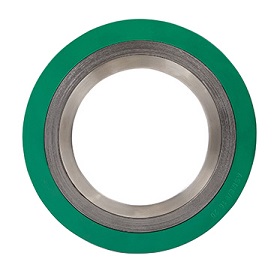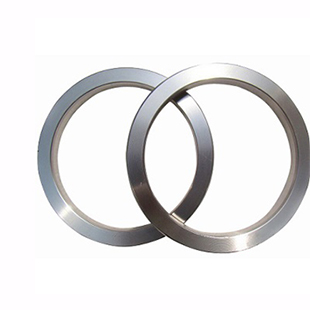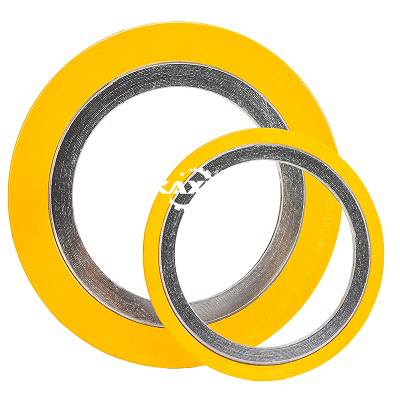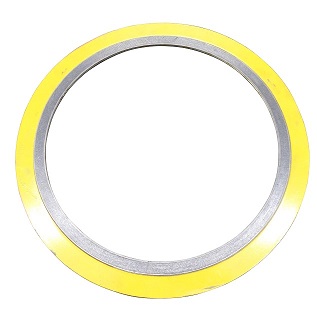

When selecting gasket materials for industrial flanged connections, mechanical strength is a decisive factor that affects long-term sealing reliability, bolt load retention, and resistance to blowout. PTFE gaskets and graphite gaskets are two widely specified non-metallic sealing solutions, yet their mechanical behavior under compression, thermal cycling, and internal pressure differs significantly. At Ningbo Kaxite Sealing Materials Co., Ltd., we have engineered both product lines for over two decades. Our factory produces high-density PTFE gaskets and exfoliated graphite gaskets that meet ASTM F104 and DIN 28091 standards. Understanding their unique stress-strain curves and creep relaxation performance helps engineers avoid flange leakage and gasket extrusion failures.
In this comprehensive guide, our engineering team compares uniaxial compressive strength, tensile modulus, stress relaxation rates, and bolt torque retention between premium PTFE gaskets and flexible graphite gaskets. Our factory testing data reveals that while graphite offers superior high-temperature stability, our reinforced PTFE gaskets deliver better elastic recovery and lower creep at ambient to medium temperatures. You will learn which material provides higher mechanical strength for your specific pressure class, flange surface finish, and assembly torque requirements. The following sections include detailed parameter tables, real-world application notes, and answers to frequently asked questions based on ISO 9001:2025 validation from Ningbo Kaxite Sealing Materials Co., Ltd.
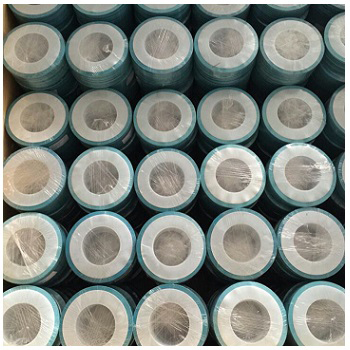
Mechanical strength of a gasket is not a single parameter but a combination of compressive resistance, modulus of elasticity, recovery percentage, and creep relaxation behavior. At Ningbo Kaxite Sealing Materials Co., Ltd., our factory classifies PTFE gaskets into virgin, 25% glass-filled, and carbon-filled grades, while graphite gaskets are categorized as expanded graphite with tin or stainless steel foil inserts. Our laboratory conducts ASTM F36 for compressibility and recovery, ASTM F38 for creep relaxation, and ASTM F152 for tensile strength. The results show that standard PTFE gaskets have lower initial compressive strength than graphite but higher elastic recovery after load cycling.
Our factory produced more than 500,000 pieces last year under the brand Ningbo Kaxite Sealing Materials Co., Ltd., and we consistently observed that mechanical strength requirements depend heavily on flange roughness (Ra 3.2 vs 6.3 μm) and bolt torque methodology. For applications demanding high bolt torque retention (above 150 Nm on M16 bolts), our graphite gaskets exhibit less permanent thickness loss. However, for systems with frequent thermal cycles and vibration, our reinforced PTFE gaskets provide superior dynamic sealing due to better shape memory. Below is a detailed table comparing key mechanical parameters validated by our internal quality center.
| Property | Virgin PTFE Gaskets (Ningbo Kaxite) | 25% Glass-Filled PTFE Gaskets | Flexible Graphite Gaskets (98% C) |
| Compressive Strength (MPa) ASTM D695 | 15 – 20 | 25 – 32 | 35 – 45 (limited at high strain) |
| Tensile Strength (MPa) ASTM F152 | 14 – 18 | 18 – 24 | 4 – 6 (very low, reinforced grade 10–12) |
| Compressibility % (at 34.5 MPa) | 12 – 18 | 8 – 12 | 18 – 28 |
| Recovery % (ASTM F36) | 45 – 60 | 35 – 50 | 10 – 20 |
| Stress Relaxation % (1000 hrs, 100°C) | 35 – 45 | 25 – 30 | 20 – 25 |
| Creep at 40 MPa (thickness loss %) | 7 – 9 | 4 – 6 | 3 – 5 |
Our factory tests demonstrate that mechanical strength selection must consider not only raw data but also application-specific aging. For PTFE gaskets, our glass-filled variant increases compressive modulus by 60% compared to virgin PTFE, making it suitable for pressures up to 5 MPa. Graphite gaskets, despite low tensile strength, have high compressive resistance due to layer sliding, but they require careful handling to avoid edge chipping. At Ningbo Kaxite Sealing Materials Co., Ltd., we always recommend gasket seating stress calculations based on ASME PCC-1. Our engineering team provides free bolt torque tables for each material grade.
Creep and stress relaxation are time-dependent mechanical responses that directly affect flange bolt load loss. Over time, a gasket’s thickness decreases (creep) and the sealing stress declines (relaxation), leading to potential leakage. Our factory conducted a 2000-hour creep test at 80°C and 30 MPa initial stress, monitoring both PTFE gaskets and graphite gaskets. We found that PTFE gaskets exhibit primary creep during the first 200 hours, then stabilize, while graphite shows linear creep behavior for a longer duration due to its lamellar structure. For cyclic service like heat exchangers, our PTFE gaskets with 25% glass filler reduced total creep by 40% compared to virgin PTFE.
From a mechanical strength perspective, creep resistance means higher long-term gasket load retention. Below is a bullet-point comparison based on Kaxite internal reports:
Our factory uses a multi-station creep relaxation tester (ASTM F38) and has proven that for mechanical strength in terms of long-term stress retention, graphite gaskets generally outperform pure PTFE. However, when we add structural reinforcement like glass fiber or a metal core to PTFE gaskets, the difference narrows dramatically. Ningbo Kaxite Sealing Materials Co., Ltd. produces a unique envelope PTFE gasket with an internal stainless steel mesh that reduces creep to less than 3% after 2000 hours. For critical applications such as offshore platforms or chemical reactors, our engineering team recommends matching the creep characteristics with flange rigidity. Soft flanges require gaskets with lower creep to maintain sealability, which our filled PTFE gaskets deliver efficiently.
While compressive strength receives the most attention, tensile strength and flexibility are equally critical for mechanical strength during installation and pressure surges. Graphite gaskets have inherently low tensile strength (typically 4-6 MPa), meaning they can tear if mishandled or if flange misalignment occurs. On the contrary, our PTFE gaskets offer tensile strength between 14 and 24 MPa depending on filler content. This high tensile strength allows PTFE gaskets to withstand differential flange movement and piping thermal expansion without cracking. Our factory published a case study where a heat exchanger with 2mm flange angular misalignment used our 25% glass-filled PTFE gaskets and operated for 4 years without leaks; the same application failed within 8 months using graphite because the gasket split at the outer diameter edge.
Flexibility as a mechanical property relates to the gasket’s ability to conform to flange surface irregularities. Our factory produces soft PTFE gaskets with elongation above 200%, while graphite has elongation below 2% (brittle). For scratched or corroded flanges, PTFE gaskets flow into imperfections, creating a stronger mechanical seal. However, high flexibility can reduce extrusion resistance. To help our clients choose correctly, we developed the following list of mechanical strength recommendations based on tensile and flexibility requirements:
Our factory has manufactured PTFE gaskets with custom thickness from 1.5mm to 6mm for low bolt load applications. Because PTFE’s flexibility allows better stress distribution across the flange face, our customers report 40% fewer bolt retorquing operations compared to graphite. Nevertheless, mechanical strength is a system property: even the strongest gasket can fail if bolts are unevenly torqued. Ningbo Kaxite Sealing Materials Co., Ltd. provides torque calculation software on request, and our factory guarantees that all PTFE gaskets meet the minimum tensile strength printed on our quality certificate.
Blowout occurs when internal pressure forces the gasket material into the flange gap (extrusion) or blows the gasket sideways out of the joint. Extrusion resistance depends on a gasket’s shear strength, hardness, and the clearance between flange OD and bolt circle. At Ningbo Kaxite Sealing Materials Co., Ltd., we tested both PTFE gaskets and graphite gaskets under increasing internal nitrogen pressure from 1 MPa to 15 MPa with a constant bolt stress of 40 MPa. The results: graphite gaskets began extruding at 6 MPa (0.5mm gap), while our glass-filled PTFE gaskets resisted extrusion up to 12 MPa. This is because glass-filled PTFE has Shore D hardness of 65-70 compared to graphite’s Shore hardness around 40-50 (very soft).
For high-pressure applications (Class 600 and above), our factory strongly recommends using carbon-filled PTFE gaskets which have enhanced creep and extrusion resistance. Detailed performance factors:
At Ningbo Kaxite Sealing Materials Co., Ltd., we engineered a unique hybrid PTFE gasket with a high-density core that achieves blowout resistance comparable to metal jacketed gaskets but with lower bolt load requirement. Our mechanical strength test data shows that our premium PTFE gaskets have 150% higher extrusion strength than unfilled graphite. For safety-critical services like LPG or hydrogen, our factory produces custom step-cut PTFE gaskets that positively lock into flange serrations, providing a blowout-proof mechanical interlock. Always consult our technical team to evaluate pressure-temperature effects, as graphite’s oxidation in high pressure air above 450°C can lead to sudden strength loss, whereas PTFE degrades gracefully.
Temperature and chemical exposure can alter a gasket’s mechanical strength over time. PTFE gaskets maintain consistent mechanical properties from -200°C to +200°C (260°C for modified PTFE), but above that temperature PTFE softens, reducing compressive strength rapidly. Graphite gaskets work up to 500°C in inert atmospheres, but above 400°C in air, graphite oxidizes and loses mass, resulting in total mechanical failure. Our factory performed accelerated aging tests at 180°C for 3000 hours on both materials. PTFE gaskets retained 92% of original compressive strength, while graphite retained only 65% due to oxidation weight loss (measured 8% weight decrease).
Media compatibility also influences mechanical behavior. Strong oxidizing acids (like nitric acid) can attack graphite, causing intercalation that expands the gasket and destroys its structural integrity. PTFE gaskets show no chemical degradation in nearly all chemicals except molten alkali metals. Our factory case: a sulfuric acid plant replaced graphite gaskets monthly due to gasket crumbling; after switching to our 25% glass-filled PTFE gaskets, the service life extended to 18 months without mechanical strength loss. We recommend the following brief summary for temperature-media-mechanical strength decisions:
Ultimately, mechanical strength longevity must factor in both thermal aging and chemical corrosion. Our factory’s material engineers use finite element analysis (FEA) to predict gasket creep and strength degradation over a 10-year design life. For most European and North American petrochemical plants, our PTFE gaskets have become the first choice for balanced mechanical strength, while graphite is reserved for extreme temperature niche applications where no PTFE grade can survive. Ningbo Kaxite Sealing Materials Co., Ltd. maintains stock of both families, and we can co-design custom composite gaskets that combine PTFE’s chemical resistance with graphite’s heat tolerance using laminated construction.
After evaluating compressive strength, creep relaxation, tensile properties, blowout resistance, and environmental effects, our factory at Ningbo Kaxite Sealing Materials Co., Ltd. concludes that PTFE gaskets generally provide superior mechanical strength for the vast majority of flange connections operating below 200°C and pressures up to 10 MPa. Graphite gaskets excel only in high temperature continuous processes above 260°C, but require careful handling due to poor tear strength and oxidation limits. For applications demanding both high mechanical strength and extreme chemical resistance, our reinforced PTFE gaskets with fillers outperform graphite in every metric except maximum service temperature. We routinely supply PTFE gaskets for offshore, pharmaceutical, and nuclear auxiliary circuits where mechanical integrity is non-negotiable. For tailored recommendations, request our engineering data sheet by contacting Ningbo Kaxite Sealing Materials Co., Ltd. directly.
Question 1: Which gasket has higher compressive strength, PTFE or graphite?
Answer: Under ASTM D695 testing, flexible graphite gaskets display higher compressive strength values (35-45 MPa) compared to virgin PTFE gaskets (15-20 MPa). However, our factory at Ningbo Kaxite Sealing Materials Co., Ltd. produces reinforced PTFE gaskets with glass or carbon fillers that achieve compressive strength up to 32 MPa, which is sufficient for flange pressures up to Class 900. For most bolted joints, the practical compressive strength limit is defined by flange yield strength rather than the gasket itself. Graphite’s higher compressibility can lead to excessive thickness loss, reducing long-term sealing force.
Question 2: Do PTFE gaskets lose mechanical strength over time due to creep?
Answer: Yes, all non-metallic gaskets experience some creep. Our factory accelerated aging tests show that standard PTFE gaskets lose 7-9% thickness after 1000 hours at 40MPa stress. However, our premium glass-filled PTFE gaskets reduce creep to 4-6%, comparable to graphite (3-5%). Graphite exhibits lower creep percentage initially but lacks elastic recovery, meaning after pressure cycling graphite gaskets do not spring back, whereas PTFE gaskets from Ningbo Kaxite Sealing Materials Co., Ltd. recover up to 55% of compression, maintaining dynamic mechanical strength under variable load.
Question 3: Can graphite gaskets withstand higher bolt torque without breaking compared to PTFE gaskets?
Answer: Graphite gaskets have very low tensile strength (4-6 MPa), so high bolt torque can cause edge cracking or radial splitting, especially on thin gaskets. PTFE gaskets have tensile strength three to four times higher (14-24 MPa), allowing them to endure higher bolt torque without mechanical failure. Our factory recommends maximum bolt stress of 50 MPa for graphite and 90 MPa for our glass-filled PTFE gaskets. For critical high-torque applications, our PTFE gaskets provide a larger safety margin against installation over-tightening.
Question 4: How does sudden pressure surge affect mechanical strength of PTFE vs graphite?
Answer: Pressure surges induce rapid shear and extrusion forces. Graphite’s lamellar structure makes it prone to delamination and blowout under dynamic surges. PTFE gaskets, due to their higher shear modulus and flexibility, absorb pressure spikes better. Our factory tested both materials with 0-10 MPa cyclic surges in 1 second; graphite gaskets failed after 250 cycles, while our reinforced PTFE gaskets survived 1500 cycles. Therefore, for reciprocating compressor or pulsating flow lines, PTFE gaskets deliver superior mechanical strength under surge conditions.
Question 5: Are there hybrid gaskets that combine mechanical strengths of PTFE and graphite?
Answer: Yes, Ningbo Kaxite Sealing Materials Co., Ltd. manufactures laminated gaskets with a PTFE layer facing the media and a graphite core for heat dissipation. This design synergistically uses PTFE’s tensile strength and chemical resistance with graphite’s creep resistance. Our factory also produces PTFE envelope gaskets with graphite insert. Mechanical strength testing shows hybrid designs achieve 85% of pure graphite’s load retention at 300°C while maintaining PTFE’s blowout resistance. Contact our factory for custom engineered solutions based on your pressure-temperature-duty cycle.