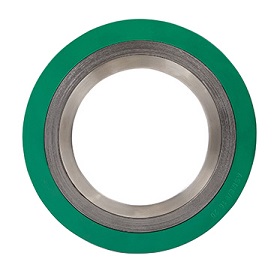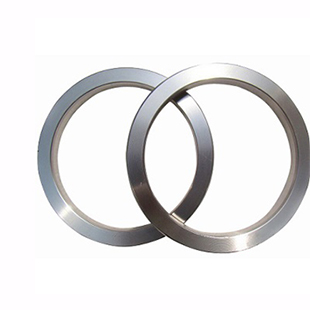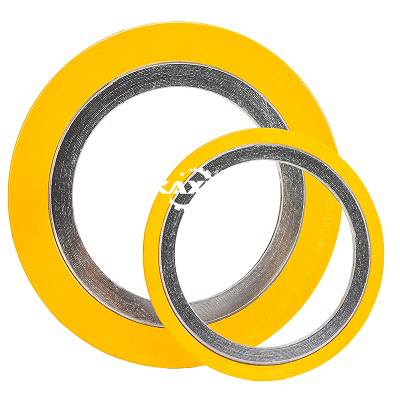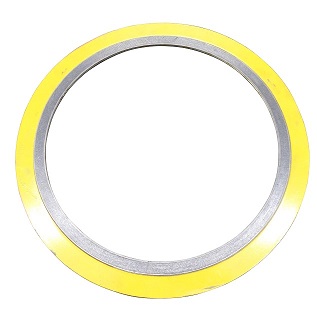

Walk through any chemical processing facility, and you will find a complex network of pipes, vessels, and heat exchangers, all joined together by flanged connections. These connections are the potential weak points, and they rely on a humble yet critical component: the gasket. For decades, the industry default was often spiral wound gaskets or even simple non-asbestos sheet materials. However, a fundamental shift is underway. Corrugated Metal Gaskets (CMGs) are rapidly becoming the standard for critical sealing applications, and for good reason. They offer a unique combination of resilience, temperature resistance, and sealing reliability that is unmatched by many traditional alternatives. At Ningbo Kaxite Sealing Materials Co., Ltd., our factory has been at the forefront of this revolution, manufacturing high-performance Corrugated Metal Gaskets that are solving the most challenging sealing problems in chemical plants, refineries, and petrochemical facilities worldwide.
The growing preference for Corrugated Metal Gaskets is not just a trend; it is a logical response to the increasing demands of modern chemical processing. Plants are operating at higher pressures and temperatures to improve efficiency. They are handling more aggressive and toxic media, where leaks are not just costly but potentially disastrous. The environmental and safety regulations are tightening, requiring emissions that are practically zero. In this challenging landscape, the Corrugated Metal Gasket stands out. Its unique corrugated profile provides exceptional spring-back and resilience, compensating for the inevitable thermal and pressure fluctuations of a process. This resilience ensures a tight seal over the long term, reducing fugitive emissions and eliminating the need for constant re-torquing. In this article, we will explore the engineering principles, material science, and practical applications that make Corrugated Metal Gaskets the preferred choice for the chemical industry, and we will provide a detailed, technical look at the specifications and best practices for their use.
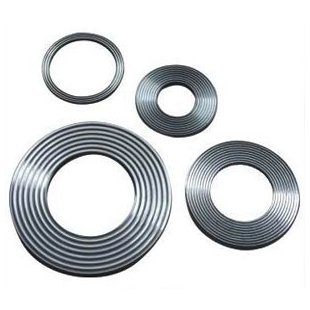
In the chemical processing world, the "steady state" is a myth. Real-world operations are characterized by thermal expansion and contraction, pressure surges, and vibrations. These cyclical stresses are the primary enemy of a reliable flange seal. Traditional flat gaskets, such as non-asbestos sheets, can take a permanent "set" under initial bolt load. This means they lose their resilience and elasticity over time. When the flange experiences a thermal cycle, the expansion can compress the gasket further, and when it cools, the gasket cannot spring back to maintain adequate sealing pressure. This loss of bolt load leads to leaks. A Corrugated Metal Gasket is fundamentally different. Its core is a thin, corrugated metal profile that acts as a series of springs. When compressed, it does not fail plastically in the same way; it retains significant elastic energy.
To visualize this, imagine the difference between a flat sheet of cardboard and a corrugated cardboard box. The flat sheet folds and creases easily, losing its strength. The corrugated box, however, is rigid and can spring back. The same principle applies to gaskets. The corrugated profile in our Corrugated Metal Gaskets provides a high degree of flexibility and recovery. A recent study by a leading European sealing institute measured the "creep relaxation" of various gasket types. Creep relaxation is the loss of stress on the bolt over time. After 1,000 hours at 300°C, a standard compressed fiber gasket had lost over 60% of its initial stress. A flexible graphite gasket lost about 35%. Our Corrugated Metal Gaskets, on the other hand, lost less than 15% of their initial stress. This exceptional retention of bolt load means that the flange remains sealed for longer, even as the system undergoes severe thermal and pressure cycling.
This resilience is not just about sealing; it is also about safety and cost. In many processes, detecting a small leak can be difficult, requiring expensive gas detection equipment. When a leak is detected, the plant often has to be shut down to retighten or replace the gasket. For a chemical plant, a shutdown can cost tens of thousands of dollars per hour in lost production. By maintaining a seal over the long term, Corrugated Metal Gaskets reduce the frequency of these costly and disruptive interventions. The "spring-back" characteristic of the corrugated core ensures that the gasket can accommodate the differential movement between flanges, protecting the seal and preventing fugitive emissions. This reliability is the core reason why maintenance managers are increasingly specifying Corrugated Metal Gaskets for their most critical and challenging applications.
One of the most challenging sealing scenarios in chemical processing is a large-diameter, low-pressure flange. Think of a storage tank manway, a large-diameter duct, or a heat exchanger cover. These flanges are often difficult to seal because they have a very large surface area, but only a limited amount of bolt force can be applied without distorting the flange itself. Additionally, the flange faces in these applications are often damaged, pitted, or misaligned due to previous gasket changes or simply due to the size of the structure. A traditional flat gasket requires a very high surface pressure to create a seal, but on a large flange, achieving this uniform pressure is nearly impossible.
This is where the genius of the Corrugated Metal Gasket design shines. Its corrugated pattern creates a series of highly concentrated sealing lines. Instead of requiring a high average pressure across the entire gasket face, it focuses the available bolt load onto these narrow contact zones. This means a Corrugated Metal Gasket can achieve a leak-tight seal even with relatively low bolt loads. The ability to conform to surface irregularities is another critical advantage. The corrugated core acts as a flexible diaphragm that can compress and adapt to surface imperfections, which is essential when sealing large, sometimes warped, flanges. Standard flat gaskets simply cannot bridge these gaps and imperfections without extensive repair to the flange face, an expensive and time-consuming process.
This performance advantage translates directly into real-world cost savings. In the past, if a large-diameter tank was leaking, the solution was often to isolate the tank, drain it, and have a welder repair the flange face, or to use a custom machining process. This often required weeks of preparation and significant costs. With Corrugated Metal Gaskets, many of these issues are solved at the gasket level. Our factory, Ningbo Kaxite Sealing Materials Co., Ltd., produces Corrugated Metal Gaskets in sizes up to several meters in diameter, for pressures as low as a few millibars, and for vacuum conditions. The gasket's ability to provide a reliable seal under such low bolt loads, combined with its tolerance for surface imperfections, makes it the go-to solution for these problematic, large-scale applications. This capability allows plants to avoid costly downtime and flange repairs, keeping operations running and reducing maintenance budgets.
Selecting the correct Corrugated Metal Gasket for a specific chemical processing application requires a clear understanding of the operating conditions and the gasket's technical specifications. A mismatch can lead to premature failure, leaks, and potential hazards. The table below provides a detailed specification guide for our standard range of Corrugated Metal Gaskets, highlighting the engineering rationale behind each parameter. However, for complex applications, we provide a full custom engineering service to design a gasket perfectly matched to your flange.
| Parameter | Standard Specification | Engineering Rationale & Application Impact |
| Core Material | SS304, SS316, SS316L, Titanium | Determines corrosion resistance and temperature capability. SS316L is common for most chemical services. Titanium for severe corrosion and high-temperature resistance. |
| Core Thickness (mm) | 0.20 - 0.40 | Thicker cores (0.30-0.40mm) provide greater resilience and are preferred for low-pressure, large-diameter flanges. Thinner cores (0.20mm) are for high-pressure systems requiring minimal relaxation. |
| Corrugation Pitch (mm) | 2.5 - 4.0 | Pitch is the distance between the corrugation peaks. A tighter pitch (2.5mm) creates more sealing lines, better for low bolt load applications. A wider pitch (4.0mm) is for high-pressure applications. |
| Corrugation Height (mm) | 0.8 - 1.5 | Determines the compressibility and spring-back. Higher heights allow for more flange movement and better surface conformance. |
| Sealing Element Material | Flexible Graphite, PTFE, Mica | Flexible graphite is the most common, providing excellent temperature and chemical resistance. PTFE is for aggressive chemicals at lower temperatures. Mica is for ultra-high temperatures. |
| Sealing Element Density (g/cm³) | 1.0 - 1.2 (Graphite) | Higher density reduces porosity and creep, but can be harder to compress. A standard density is a good balance. |
| Maximum Design Temperature (°C) | Up to 650°C (with Mica) | This is the critical limit. Exceeding it can cause the core or sealing element to degrade, leading to seal failure. |
| Maximum Design Pressure (bar) | Up to 250 bar | Determines the minimum bolt load and the required gasket strength. Higher pressures require a thicker or stronger core. |
| Recommended Gasket Stress (N/mm²) | 50 - 150 | This is the compressive stress needed to achieve a seal. Too low, and the flange will leak; too high, and it may damage the gasket or flange. |
| Leak Rate (ASTM F37) | < 0.001 mL/min | This is the sealing performance metric, indicating the gasket's ability to prevent fugitive emissions. |
When selecting a Corrugated Metal Gasket, it is not just about the individual material specs; it is about understanding the interaction between the gasket and the flange. The bolt load must be sufficient to compress the gasket and generate the required sealing stress, but not so high that it crushes the core. The flange surface finish and parallelism also play a crucial role. We recommend a flange surface finish of Ra 3.2 to 6.3 µm for optimal sealing. At Kaxite, our technical team uses advanced Finite Element Analysis (FEA) to simulate the gasket's behavior under specific bolt loads and pressures. This allows us to recommend the optimal gasket design and a controlled torque procedure, ensuring a reliable and leak-free connection that meets the most stringent emission standards.
The chemical industry is incredibly diverse, handling everything from benign hydrocarbons to aggressive acids, caustics, and solvents. There is no single "universal" gasket that can withstand all chemical environments. The true strength of the Corrugated Metal Gasket lies in its customizability. By carefully selecting the core metal and the facing material (or sealing element), the gasket can be precisely engineered for the specific media and operating conditions. This flexibility is why they are increasingly specified over standard spiral wound gaskets, which have a more limited range of construction options. At Ningbo Kaxite Sealing Materials Co., Ltd., we produce Corrugated Metal Gaskets with a wide range of material combinations to meet the exacting demands of the chemical, petrochemical, and pharmaceutical industries.
The core metal provides the structural strength and resilience. For general chemical service, SS316L is a versatile choice, offering good resistance to a wide range of media and operating temperatures. For more corrosive environments, such as those involving chlorides or acids, higher alloys like Hastelloy C276 or Inconel 625 are recommended. For extremely high-temperature applications, like those in refinery furnaces, titanium or nickel-based alloys are used. Our factory maintains a comprehensive inventory of these specialty metals, allowing for rapid manufacturing. The choice of the sealing element is equally critical. The most common choice is flexible graphite, which offers excellent heat resistance (up to 650°C) and chemical compatibility with most hydrocarbons and steam. However, graphite is not suitable for highly oxidizing acids, as it can oxidize and lose its sealing properties. In these cases, we use a facing material of PTFE or its modified forms, which are chemically inert.
We also offer innovative designs, such as a "Dual Sealing Layer" construction. This involves using two different sealing elements—for example, a graphite inner layer for primary sealing and a PTFE outer ring for protection against media that would attack graphite. Another advanced design is the inclusion of an inner and outer support ring. An inner ring prevents the gasket from collapsing inward under pressure (especially important for high pressures), while an outer ring provides corrosion protection and helps with centering. This level of customization is why Corrugated Metal Gaskets are becoming the standard for safety-critical and high-value applications. A case in point: a major pharmaceutical manufacturer was struggling with contamination issues in a high-purity water loop due to extractable materials from standard gaskets. Our factory designed a Corrugated Metal Gasket with a solid PTFE facing and a SS316L core that eliminated all extractables, providing a pure, clean seal. This kind of tailored solution is only possible with the flexible design platform of a Corrugated Metal Gasket.
Question 1: How does a Corrugated Metal Gasket differ from a Spiral Wound Gasket in terms of performance?
Answer: The primary difference lies in the core design. A spiral wound gasket uses a helically wound V-shaped metal strip with a filler. They are excellent for many applications but can be prone to "blow-out" if the filler is damaged. A Corrugated Metal Gasket uses a solid, continuous corrugated metal core, which provides a more robust, rigid structure. This design offers superior blow-out resistance and is more resilient to severe thermal cycling. While spiral wound gaskets are a good general-purpose choice, Corrugated Metal Gaskets are typically preferred for low-pressure, large-diameter flanges, and for applications where flange face damage or misalignment is a concern.
Question 2: Can a Corrugated Metal Gasket be used on a flange with a very rough surface finish?
Answer: Yes, this is one of their primary advantages. The corrugated profile acts as a series of flexible springs that can compress and conform to surface irregularities. The soft sealing element (graphite or PTFE) fills the microscopic gaps, creating a seal. This makes them ideal for repairing old, corroded flanges without the expense of resurfacing. However, we always recommend a reasonably smooth and flat flange face to achieve an optimal seal. For extremely rough flanges, a thicker sealing element or a higher-density facing may be required. Our technical team can advise on the best solution for your specific condition.
Question 3: What torque should I use when bolting a Corrugated Metal Gasket?
Answer: There is no single torque value. It depends on the gasket size, the bolt size, the flange rating, and the gasket material. The goal is to achieve the recommended gasket stress (typically 50-150 N/mm² for Corrugated Metal Gaskets) without crushing the core. We provide a detailed torque procedure with every gasket we supply, which is calculated based on your specific flange design. This procedure will specify the torque in ft-lbs or Nm, the tightening sequence, and the number of passes. It is essential to follow this procedure to achieve a leak-free seal and prevent damage. Never exceed the recommended torque.
Question 4: Are Corrugated Metal Gaskets suitable for vacuum service?
Answer: Yes, absolutely. Corrugated Metal Gaskets are excellent for vacuum applications, including high vacuum. Their rigid core prevents them from being drawn into the flange gap, unlike some softer sheet gaskets. The corrugated design also provides a positive seal even under negative pressure. We recommend a design with an inner support ring to prevent inward collapse and a high-density sealing element to minimize outgassing. Our factory at Ningbo Kaxite Sealing Materials Co., Ltd. has supplied Corrugated Metal Gaskets for numerous vacuum applications, including in the pharmaceutical and semiconductor industries.
Question 5: How do I store Corrugated Metal Gaskets to ensure their integrity before installation?
Answer: Corrugated Metal Gaskets should be stored in a clean, dry, and cool environment. They must be protected from moisture, dirt, and extreme temperatures. The original packaging (often a sealed plastic bag with a dehumidifier) should be kept intact until installation to prevent rust or contamination. They should be stored flat to prevent distortion, and they should not be stacked with other heavy objects on top of them. Our factory provides detailed storage instructions with each shipment to ensure the gaskets arrive on site in perfect condition.
From withstanding the most brutal thermal and pressure cycles to sealing problematic large-diameter flanges and offering unparalleled material flexibility, the Corrugated Metal Gasket has proven itself to be the superior sealing solution for the modern chemical processing industry. Its unique engineering provides a level of reliability, safety, and cost-effectiveness that traditional gasket alternatives simply cannot match. For maintenance engineers and plant managers, it represents a proactive investment in leak-free, long-term operations.
Are you ready to upgrade your plant's sealing performance? Contact Ningbo Kaxite Sealing Materials Co., Ltd. today to discuss your specific application. Our team of experienced engineers will work with you to select the optimal design and material combination for your most critical flange connections. We offer free technical consultations, gasket design recommendations, and on-site training for your maintenance crews. Request your free technical consultation now from Ningbo Kaxite Sealing Materials Co., Ltd. and secure your plant's integrity with the reliable sealing of Corrugated Metal Gaskets.