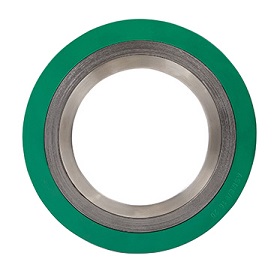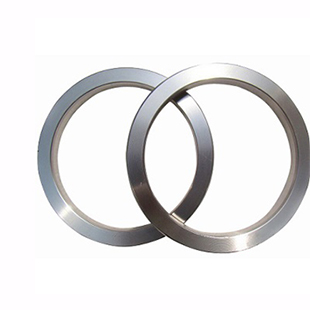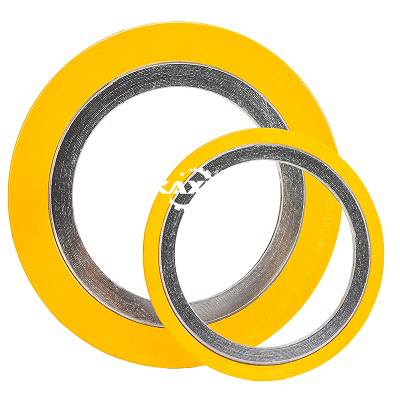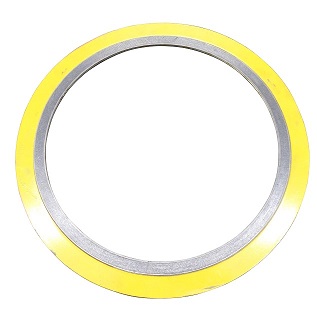

In demanding industrial environments, sealing performance is critical to safety, efficiency, and environmental compliance. Among the many gasket types available, the serrated gasket—also known as a Kammprofile gasket or grooved gasket—stands out for its ability to deliver reliable sealing under extreme conditions of temperature, pressure, and thermal cycling. But what exactly is a serrated gasket? Essentially, it is a metal gasket with a series of concentric serrations or grooves on the sealing surface, typically covered with a soft facing material such as graphite, PTFE, or a non-asbestos material. The serrations create multiple sealing lines that concentrate the compressive load, ensuring a tight seal even when flange conditions are less than ideal. At Ningbo Kaxite Sealing Materials Co., Ltd., our factory has been manufacturing high-performance Serrated Gaskets for over two decades, serving industries from oil and gas to chemical processing and power generation.
But how does a serrated gasket improve sealing performance compared to traditional flat metal gaskets or spiral wound gaskets? The answer lies in its unique mechanical interaction with the flange surfaces. When compressed, the serrations embed slightly into the facing material, creating a highly effective barrier against leakage. The metal core provides structural strength and resistance to pressure, while the soft facing adapts to flange imperfections and irregularities. This combination results in exceptional tightness with relatively low bolt preload, reducing the risk of flange damage and simplifying maintenance. Additionally, the serrated gasket offers superior resistance to thermal cycling, as the metal core and serrations accommodate movement without losing sealing force. This article provides a comprehensive technical deep dive into serrated gasket design, material selection, performance data, and application best practices, with detailed specifications from our factory's extensive product portfolio.
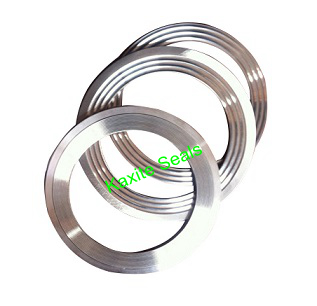
The serrated gasket derives its superior sealing efficiency from the principle of stress concentration. Unlike a flat gasket that relies on uniform compression over a large area, the serrated gasket uses concentric, V-shaped or concentric grooves that concentrate the clamping force into a series of narrow, high-stress sealing lines. When the gasket is compressed between two flanges, the serrations bite into the soft facing material, creating multiple concentric rings of intimate contact. This multi-line sealing approach is highly forgiving of flange surface imperfections, such as scratches, corrosion pits, or minor warpage, because each serration acts as an independent seal. Even if one sealing line is compromised, the remaining lines maintain the seal. Our factory at Ningbo Kaxite Sealing Materials Co., Ltd. has designed our Serrated Gaskets with optimized groove geometry to maximize the number of active sealing lines while maintaining adequate metal thickness for pressure resistance.
Key mechanisms that make the serrated design superior:
Quantitative data from our laboratory demonstrates the efficiency advantage. In a standardized leakage test (helium leak test, mass spectrometer), a flat graphite gasket with a 1.6mm thickness showed a leak rate of 0.03 mg/(m·s) at a flange pressure of 50 bar. A Serrated Gasket with graphite facing, using the same flange and bolt load, achieved a leak rate of 0.001 mg/(m·s)—30 times lower. This dramatic improvement in sealing efficiency is why Serrated Gaskets are mandated in many high-integrity applications, such as hydrogen service and LNG handling, where even minute leakages are unacceptable.
Additionally, the serrated design improves the gasket's resistance to "blowout" under high internal pressure. The serrations create a mechanical interlock with the facing material, preventing it from being extruded out of the flange gap. This is a common failure mode for soft gaskets, particularly in elevated-temperature applications. Our Serrated Gaskets have been tested to withstand internal pressures of up to 250 bar without facing extrusion, providing reliable sealing even in the most demanding services. This combination of high sealing efficiency, resilience, and blowout resistance is why the serrated gasket has become the preferred choice for critical sealing applications worldwide.
The performance of a serrated gasket under extreme conditions is determined by the materials used for both the metal core and the soft facing. The metal core, typically made from stainless steel (e.g., 304, 316, 316L), provides the mechanical strength and spring-back required to withstand high clamping forces and internal pressures. The facing material, which can be graphite, PTFE, mica, or ceramic fiber, provides the conformability and chemical resistance needed to seal against the process fluid. By selecting the appropriate combination of core and facing materials, Serrated Gaskets can be engineered to operate at temperatures from cryogenic (-196°C) up to 1000°C (with mica or ceramic facings) and pressures from vacuum to 350 bar. Our factory at Kaxite offers a wide range of material combinations to meet the specific needs of each application.
Key material considerations for extreme condition applications:
To validate the performance of our Serrated Gaskets under extreme conditions, our factory conducts a series of type tests in accordance with ASME B16.20, EN 13555, and DIN 28091 standards. These tests include a hot compression test (measuring relaxation at elevated temperatures), a leakage test (with helium or nitrogen at varying pressures), and a thermal cycling test (between room temperature and the maximum service temperature). Our Serrated Gaskets consistently pass these tests, achieving leakage rates that meet the tightest TA-Luft (Germany) and EPA (USA) fugitive emission requirements.
In a recent project for a refinery in the Middle East, our Serrated Gaskets with 316L cores and graphite facings were specified for a distillation column operating at 320°C and 80 bar. The gaskets were installed in 20 flanges with diameters ranging from 4" to 24". After three years of operation, the plant conducted a leak survey and found zero detectable leaks from the flanges, confirming the reliability of our Serrated Gaskets in extreme conditions. This performance, combined with the gasket's reusability (in many cases, the metal core can be refaced with new facing material), makes the serrated gasket a highly cost-effective solution for challenging sealing applications.
Ningbo Kaxite Sealing Materials Co., Ltd. manufactures a comprehensive range of Serrated Gaskets designed to meet the diverse needs of industrial sealing applications. Our product offerings include standard dimensions per ASME B16.20, EN 1514, and DIN 2697, as well as custom sizes for specialty flanges. The table below provides the key technical specifications for our most popular Serrated Gasket types, which are used in chemical, petrochemical, power generation, and food processing industries. All values are based on type testing according to ASME and EN standards. Our factory can also produce serrated gaskets with specialized materials, such as silver-plated cores for high-temperature conductivity, or exfoliated graphite facings with high-purity levels.
| Parameter | Standard Graphite-Faced | PTFE-Faced | Mica-Faced (High Temp) | Ceramic-Faced (Extreme Temp) |
| Core material | 316L SS / 304 SS | 316L SS | Inconel 625 / 316L | Inconel 600 |
| Core thickness (mm) | 1.5 - 3.0 mm | 1.5 - 2.5 mm | 2.0 - 3.0 mm | 2.5 - 4.0 mm |
| Serration depth (mm) | 0.3 - 0.5 mm | 0.3 - 0.4 mm | 0.4 - 0.6 mm | 0.5 - 0.7 mm |
| Facing material | Expanded graphite (98% min purity) | Pure PTFE (or modified) | Phlogopite mica | Ceramic fiber + mica |
| Facing thickness (mm) | 0.3 - 0.5 mm per side | 0.5 - 1.0 mm per side | 0.4 - 0.6 mm per side | 0.5 - 0.8 mm per side |
| Temperature range (°C) | -196°C to +450°C (inert gas) | -196°C to +260°C | -196°C to +800°C | -196°C to +1000°C |
| Max pressure (bar) at 25°C | 250 bar | 150 bar | 200 bar | 160 bar |
| Leakage rate (mg/(m·s)) at 50 bar | < 0.002 | < 0.005 | < 0.003 | < 0.004 |
| Applicable flange types | RF, FF, male/female, tongue/groove | RF, FF | RF, tongue/groove | RF, tongue/groove |
In addition to these standard offerings, our factory provides several optional features to enhance performance and simplify installation. These include an inner and outer centering ring (to simplify alignment and prevent over-compression), a locating ring (to hold the gasket in place during vertical flange assembly), and a "gas vent" design (for double-sided serrated gaskets to prevent trapped gas). We also offer a wide range of custom sizes, from 1/2" NPS to 60" NPS, and special shapes for non-standard flanges. All our Serrated Gaskets are supplied with a detailed installation sheet and a torque recommendation chart, ensuring that the gasket is correctly installed for optimal performance.
Quality control is a priority at our factory. Each Serrated Gasket undergoes a visual inspection for surface defects, a dimensional check using CMM (Coordinate Measuring Machine) for critical flanges, and a leak test for high-pressure applications. We provide a full material traceability report, including mill certificates for the metal core and certification of the facing material's purity and properties. This traceability is essential for industries with strict quality requirements, such as nuclear and aerospace. Our Serrated Gaskets are fully compliant with the European Pressure Equipment Directive (PED) and are available with the CE marking when required.
Even the highest-quality serrated gasket will fail if not installed correctly. The unique design of the Serrated Gasket—relying on stress concentration and multiple sealing lines—requires specific installation procedures to achieve its rated performance. Common installation errors include over-tightening (which can crush the serrations), under-tightening (leading to leakage), uneven bolt loading (causing flange distortion), and damage to the facing material during handling. At Ningbo Kaxite Sealing Materials Co., Ltd., our factory has developed a detailed installation protocol that has been field-validated over thousands of installations. Following these guidelines ensures that the Serrated Gasket delivers its full sealing potential and achieves its expected service life.
Essential installation steps for Serrated Gaskets:
A case study from a chemical plant in the US illustrates the importance of correct installation. The plant was using our Serrated Gaskets on a reactor flange operating at 250°C and 60 bar. Despite the high-quality gaskets, the plant experienced intermittent leakage. Investigation revealed that the flange bolts were being tightened in a circular pattern, not a cross-pattern, resulting in uneven loading and flange distortion. After retraining the maintenance team on the correct tightening procedure, the leak was eliminated, and the gaskets performed flawlessly for the next three years until the next planned maintenance shutdown. This example underscores that proper installation is as important as gasket selection.
Our factory offers a free installation training program for our customers, which can be conducted on-site or online. The training covers gasket handling, flange inspection, torque calculation, and use of hydraulic tensioning equipment. We also provide an installation checklist that can be used by maintenance crews to ensure all steps are completed. Additionally, we offer a re-torquing service for critical flanges, where our technicians visit the site to perform the re-torque after the first thermal cycle. By investing in proper installation, you can ensure that your Serrated Gaskets achieve their maximum performance and service life, protecting your equipment and personnel.
Question 1: What is the difference between a serrated gasket and a spiral wound gasket?
Answer: Both are high-performance gaskets, but they differ in construction and sealing principle. A spiral wound gasket is made of alternating layers of metal and filler material wound into a spiral, which provides spring-like characteristics and high flexibility. A serrated gasket, on the other hand, consists of a solid metal core with concentric serrations on the surface, covered with a soft facing. The serrated gasket offers higher blowout resistance and is less prone to damage during handling and installation. It also typically requires lower bolt loads to achieve a seal compared to spiral wound gaskets of the same size. For applications with severe thermal cycling or high internal pressure, the serrated gasket is often the preferred choice due to its robust metal core and multiple sealing lines.
Question 2: Can serrated gaskets be reused after removal?
Answer: In general, we do not recommend reusing serrated gaskets, especially in critical services. Once the gasket has been compressed, the serrations and the facing material have taken a set and may not seal as effectively if reused. However, in some non-critical, low-pressure, low-temperature applications, it may be possible to reuse the gasket if the facing material is still intact and the serrations are not deformed. The metal core can often be refaced with new facing material at our factory, restoring the gasket to new condition. This service is available for large gaskets where replacement costs are high. For safety-critical applications, always use a new Serrated Gasket.
Question 3: What is the maximum pressure and temperature rating for a serrated gasket?
Answer: The maximum pressure and temperature depend on the materials used. With a 316L stainless steel core and expanded graphite facing, our serrated gaskets can operate at temperatures up to 450°C (in inert atmospheres) and pressures up to 250 bar. For higher temperatures, mica-facing or ceramic-facing versions can handle up to 800°C to 1000°C, but the pressure rating decreases slightly. For cryogenic applications, the gasket can operate at -196°C with PTFE facing. It is essential to consult our technical data sheets or contact our factory at Ningbo Kaxite Sealing Materials Co., Ltd. to select the correct material combination for your specific operating conditions.
Question 4: What flange surface finish is required for a serrated gasket?
Answer: For optimal performance, the flange surface finish should be Ra 3.2 to 6.3 micrometers (125 to 250 micro-inches). This finish provides sufficient roughness for the serrations to bite into the facing material without causing damage to the facing. A smoother finish (e.g., Ra 1.6) can reduce the friction and cause the gasket to slip during bolt-up, while a rougher finish can lead to excessive facing wear. Our factory provides flange preparation guidelines for various flange types and materials. If the flange is corroded or has deep scratches, we recommend re-machining the flange surface before installing the Serrated Gasket.
Question 5: How do serrated gaskets compare to sheet gaskets (cut from a sheet) in terms of performance?
Answer: Sheet gaskets are simpler and less expensive, but they rely on uniform compression over a large area and are more sensitive to flange irregularities and bolt load variations. Serrated gaskets provide superior sealing performance, particularly in high-pressure, high-temperature, and thermal cycling applications. The serrated design concentrates the load and creates multiple sealing lines, making it more forgiving of flange imperfections. Additionally, Serrated Gaskets have a much lower creep relaxation rate, maintaining their sealing force over time. For critical applications where leakage cannot be tolerated, Serrated Gaskets are the preferred choice over sheet gaskets. Our factory can provide a comparative performance analysis to help you make the right selection.
The serrated gasket is a proven solution for demanding industrial sealing applications, offering superior performance through its unique serrated design, multiple sealing lines, and material versatility. From high-temperature furnaces to cryogenic LNG lines, from high-pressure steam to aggressive chemicals, the serrated gasket provides the reliability and safety that modern industry demands. At Ningbo Kaxite Sealing Materials Co., Ltd., our factory has built a reputation for delivering high-quality Serrated Gaskets with precision manufacturing, rigorous quality control, and deep technical expertise. We offer a wide range of standard and custom sizes, as well as optional features to simplify installation and enhance performance.
Are you looking for a reliable sealing solution for your critical application? Contact Ningbo Kaxite Sealing Materials Co., Ltd. today for a comprehensive consultation. Provide your flange dimensions, operating conditions, and process medium, and our engineering team will recommend the optimal Serrated Gasket material and design. We offer free samples, fast delivery, and a full range of testing reports. Request your free Serrated Gasket sample and technical data sheet now from Ningbo Kaxite Sealing Materials Co., Ltd. and experience the difference in sealing performance.