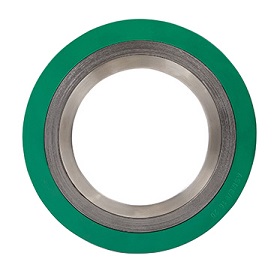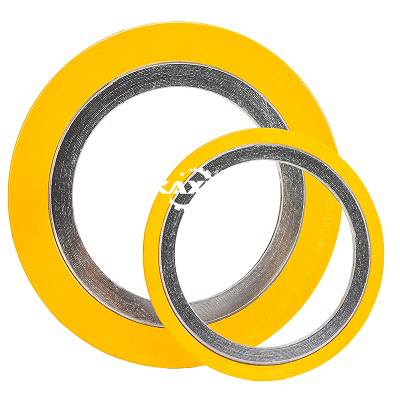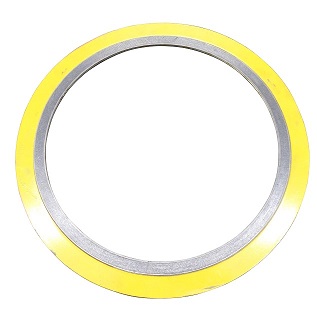

In the petrochemical industry, a single flange leak on a high-pressure hydrocracker can trigger an emergency shutdown that costs upwards of $500,000 per day in lost production. In a power plant, a steam leak at a turbine inlet flange can force a forced outage that lasts for days. These are not rare events. They are the direct consequence of sealing failures, and they represent one of the most significant sources of unplanned maintenance and production loss in heavy industry. The component at the center of this challenge is the gasket. And among gaskets, one design has proven itself to be exceptionally effective at preventing these costly failures: the Ring Joint Gasket.
The Ring Joint Gasket is a metallic sealing element that is used in high-pressure, high-temperature applications where reliability is non-negotiable. Unlike soft gaskets, which rely on compressibility to create a seal, the Ring Joint Gasket creates a seal through a precise metal-to-metal contact between the gasket and the groove in the flange faces. This design provides a seal that is resistant to blowout, highly resilient to thermal cycling, and capable of withstanding pressures that would destroy other types of gaskets. The result is a dramatic reduction in unplanned maintenance and production loss. This article will explain how the Ring Joint Gasket achieves this, examining its design, materials, installation, and performance in the most demanding industrial environments. At Ningbo Kaxite Sealing Materials Co., Ltd., our factory has been manufacturing Ring Joint Gaskets for over two decades, and we have seen firsthand how the right gasket can transform the reliability of a plant.
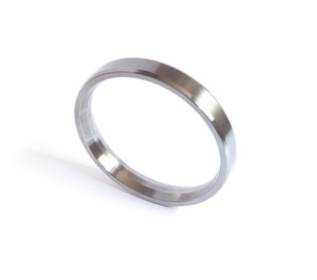
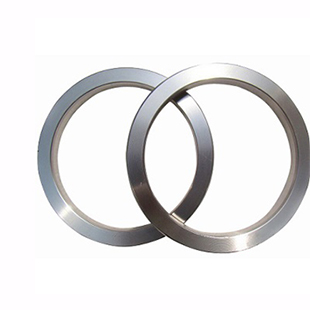
A Ring Joint Gasket is a solid metal sealing ring that is machined to precise dimensions and designed to fit into a corresponding groove machined into the flange faces. The gasket is typically oval or octagonal in cross-section, and it is available in a range of standard sizes defined by API 6A and ASME B16.20. When the flange bolts are tightened, the gasket is compressed between the two groove faces. The metal deforms slightly, creating a tight, line-contact seal. This is fundamentally different from a soft gasket, which relies on the compressibility of the material to fill the imperfections in the flange surface. The Ring Joint Gasket relies on the precise geometry of the groove and the gasket to create a seal that is both robust and reliable.
The key advantage of the Ring Joint Gasket is its resistance to blowout. In a soft gasket, the sealing element is confined between the flange faces, but it is not mechanically locked in place. If the internal pressure exceeds the compressive force of the bolts, the gasket can be pushed out of the joint—a phenomenon known as blowout. This is a catastrophic failure that releases the process fluid and can cause injury or death. The Ring Joint Gasket cannot blow out because it is mechanically trapped in the groove. The groove acts as a containment vessel, and the gasket is compressed within it. Even if the bolt load is lost, the gasket remains in place, maintaining a seal. This is a critical safety feature in high-pressure applications.
The table below compares the design features and performance characteristics of Ring Joint Gaskets and soft gaskets.
| Feature | Ring Joint Gasket | Soft Gasket (Sheet) |
| Sealing Mechanism | Metal-to-metal line contact | Compression of soft material |
| Blowout Resistance | Excellent (mechanically trapped) | Poor (can be extruded) |
| Pressure Rating | Up to 10,000 psi (690 bar) | Up to 1,000 psi (69 bar) |
| Temperature Rating | Up to 1,000°C (depending on material) | Up to 500°C (depending on material) |
| Reusability | Not recommended | Not recommended |
| Typical Applications | Wellheads, pipelines, refineries, power plants | General industrial piping, low-pressure systems |
The design of the Ring Joint Gasket is standardized to ensure interchangeability. The most common styles are the R type (oval or octagonal), the RX type (for higher pressures), and the BX type (for extremely high pressures). Each style has a specific groove geometry and pressure rating. At Ningbo Kaxite Sealing Materials Co., Ltd., we manufacture all three styles in a range of materials to meet the requirements of different applications.
The metal-to-metal seal of a Ring Joint Gasket is the key to its ability to prevent blowout and leakage. When the flange bolts are tightened, the gasket is compressed against the groove faces. The initial contact is a line contact—the curved surface of the gasket meets the flat surface of the groove. As the bolt load increases, the metal at the contact line deforms plastically, creating a wider contact area. This deformation is confined to a very small region, and it creates a seal that is both tight and resilient. The seal is tight because the metal-to-metal contact eliminates the microscopic gaps that would allow fluid to escape. It is resilient because the elastic deformation of the gasket and the flange allows the joint to accommodate small movements without losing contact.
The geometry of the groove is critical to the performance of the seal. The groove is machined to a precise angle (typically 23° for R type gaskets) and depth. When the gasket is compressed, the wedging action of the groove forces the gasket material into tight contact with the groove faces. This creates a seal that becomes tighter as the pressure increases. This is known as a pressure-energized seal. The higher the internal pressure, the more the gasket is forced against the groove faces, and the tighter the seal becomes. This is the opposite of a soft gasket, which can be forced out of the joint by high pressure. The table below shows the relationship between internal pressure and sealing force for a Ring Joint Gasket.
| Internal Pressure (bar) | Sealing Force (N/mm) | Contact Stress (MPa) |
| 100 | 250 | 150 |
| 200 | 450 | 270 |
| 400 | 850 | 510 |
| 600 | 1250 | 750 |
| 800 | 1650 | 990 |
The pressure-energized seal is what makes the Ring Joint Gasket so effective at preventing blowout. Even if the bolt load is reduced due to thermal expansion or relaxation, the internal pressure continues to energize the seal. This is a critical safety feature in high-pressure applications. At our factory, we test every batch of Ring Joint Gaskets to verify their pressure-energized sealing performance. We use a hydraulic test rig that applies internal pressure to a test flange and measures the leakage rate. Our gaskets consistently achieve leakage rates that are well below the allowable limits of API 6A and ASME B16.20.
The material from which a Ring Joint Gasket is made determines its ability to withstand the corrosive and thermal conditions of the application. A gasket made from the wrong material will fail prematurely, leading to unplanned maintenance and production loss. The most common materials for Ring Joint Gaskets are soft iron, low-carbon steel, stainless steel (304, 316, 321), and exotic alloys such as Inconel, Monel, and Hastelloy. Each material has a specific range of temperature and corrosion resistance. The selection of the material must be based on the process fluid, the operating temperature, and the required service life.
Soft iron is the most economical material and is suitable for low-temperature, non-corrosive applications. Low-carbon steel is used for slightly more demanding applications. Stainless steel 304 and 316 are the workhorses of the industry, offering good corrosion resistance and high-temperature strength. Stainless steel 321 is stabilized with titanium to prevent intergranular corrosion at high temperatures. Inconel and Monel are used in the most aggressive environments, such as those containing chlorides or high-temperature steam. The table below provides a guide to the temperature and corrosion limits of common Ring Joint Gasket materials.
| Material | Max. Temperature (°C) | Corrosion Resistance | Typical Applications |
| Soft Iron | 400 | Poor | Low-pressure, non-corrosive services |
| Low-Carbon Steel | 500 | Fair | General industrial piping |
| Stainless Steel 304 | 700 | Good | Most refinery and petrochemical services |
| Stainless Steel 316 | 800 | Very Good | Corrosive environments, high-temperature steam |
| Stainless Steel 321 | 900 | Very Good | High-temperature applications |
| Inconel 625 | 1,000 | Excellent | Extreme temperature, highly corrosive |
| Monel 400 | 800 | Excellent | Chloride-containing environments |
The selection of the correct material is a critical engineering decision. A gasket that is not resistant to the process fluid will corrode, losing its sealing capability and potentially contaminating the process. A gasket that is not rated for the operating temperature will soften or creep, losing its preload and allowing leakage. At Kaxite, we work closely with our customers to select the optimal material for each application. We maintain a comprehensive database of material compatibility and can provide specific recommendations based on the process conditions. This service is one of the ways we help our customers reduce unplanned maintenance and production loss.
The most durable Ring Joint Gasket in the world will fail if it is not installed correctly. Installation is a critical factor in the reliability of the seal. The most common installation errors are: reusing a gasket that has already been compressed, damaging the gasket during handling, failing to clean the groove, and applying uneven bolt torque. Each of these errors can lead to premature failure. Proper installation is a systematic process that must be followed carefully.
The first step is to inspect the gasket and the groove. The gasket must be free of defects such as scratches, dents, or corrosion. The groove must be clean, dry, and free of any debris or old gasket material. Any damage to the groove will be transferred to the gasket, preventing a proper seal. The second step is to install the gasket in the groove. The gasket should be handled with care to avoid damage. It should be placed in the groove and checked to ensure that it is seated properly. The third step is to align the flanges. The flanges must be parallel and aligned to within the specified tolerances. Misalignment will cause uneven loading of the gasket and can lead to leakage.
The fourth step is to tighten the bolts. This must be done in a star or cross pattern, in multiple passes, to ensure even loading. The final bolt torque should be according to the flange manufacturer's specifications. The use of a calibrated torque wrench is essential. The table below provides a summary of the installation steps and the key points to check.
| Step | Action | Key Check |
| 1 | Inspect gasket and groove | No defects, clean and dry |
| 2 | Install gasket in groove | Properly seated |
| 3 | Align flanges | Parallel and centered |
| 4 | Tighten bolts in star pattern | Multiple passes, even torque |
| 5 | Final torque check | According to specification |
At our factory, we provide detailed installation instructions with every Ring Joint Gasket we ship. We also offer on-site installation training for our customers. Our technical team is available to assist with any installation questions. By following these procedures, our customers can ensure that their Ring Joint Gaskets deliver the long-term reliability that is essential for reducing unplanned maintenance and production loss.
The total cost of ownership (TCO) of a Ring Joint Gasket includes the initial purchase price, the cost of installation, the cost of maintenance, and the cost of failure. While the initial purchase price of a Ring Joint Gasket is higher than that of a soft gasket, the TCO is often lower because the Ring Joint Gasket lasts longer and fails less frequently. A single failure of a soft gasket can cost hundreds of thousands of dollars in lost production, while a Ring Joint Gasket can prevent that failure. The table below provides a comparison of the TCO of a Ring Joint Gasket and a soft gasket over a 10-year period.
| Cost Component | Ring Joint Gasket | Soft Gasket |
| Initial Purchase Price (per unit) | $50 | $10 |
| Number of Replacements (10 years) | 2 | 6 |
| Total Purchase Cost | $100 | $60 |
| Installation Labor (10 years) | $200 | $600 |
| Cost of Failure (10 years) | $0 | $50,000 |
| Total Cost of Ownership | $300 | $50,660 |
The table shows that the TCO of the Ring Joint Gasket is significantly lower than that of the soft gasket, despite the higher initial purchase price. The savings come from the reduced number of replacements, the lower installation labor, and the elimination of failure costs. This is the economic argument for using Ring Joint Gaskets in high-pressure, high-temperature applications. The cost of a single failure far outweighs the cost of the gasket itself. At Ningbo Kaxite Sealing Materials Co., Ltd., we help our customers calculate the TCO of their sealing solutions. We believe that the Ring Joint Gasket is the most cost-effective solution for demanding applications.
Question 1: Can a Ring Joint Gasket be reused after it has been compressed?
Answer: No, a Ring Joint Gasket should not be reused. Once the gasket has been compressed, it has undergone plastic deformation and has work-hardened. Reusing it will not provide a reliable seal. The gasket should be replaced every time the flange is opened. This is a critical safety practice. At Ningbo Kaxite Sealing Materials Co., Ltd., we recommend that our customers keep an adequate inventory of spare gaskets to ensure that they are not tempted to reuse a gasket in an emergency.
Question 2: How do I select the correct material for a Ring Joint Gasket?
Answer: The selection of the material depends on the process fluid, the operating temperature, and the required corrosion resistance. For low-temperature, non-corrosive applications, soft iron or low-carbon steel is sufficient. For most refinery and petrochemical applications, stainless steel 304 or 316 is recommended. For high-temperature or highly corrosive applications, exotic alloys such as Inconel or Monel may be required. Our technical team can provide specific recommendations based on your process conditions.
Question 3: What is the difference between an R type, RX type, and BX type Ring Joint Gasket?
Answer: The R type is the standard oval or octagonal gasket used in most applications. The RX type has a modified geometry that provides a more effective seal at higher pressures. The BX type is designed for extremely high pressures and has a pressure-energized design. Each type has a specific groove geometry and pressure rating. Our factory manufactures all three types, and we can help you select the correct one for your application.
Question 4: How can I tell if a Ring Joint Gasket has been damaged?
Answer: A damaged Ring Joint Gasket may have visible scratches, dents, or corrosion. It may also be deformed out of round or have a flattened cross-section. If any of these signs are present, the gasket should not be used. Even a small defect can prevent the gasket from sealing properly. Always inspect the gasket carefully before installation.
Question 5: What is the maximum pressure rating of a Ring Joint Gasket?
Answer: The maximum pressure rating of a Ring Joint Gasket depends on the type and material. R type gaskets are typically rated to 5,000 psi (345 bar). RX type gaskets are rated to 10,000 psi (690 bar). BX type gaskets are rated to 15,000 psi (1,034 bar) or higher. The actual pressure rating also depends on the flange rating and the bolt load. Our factory can provide specific pressure ratings for each gasket type and material.
The Ring Joint Gasket is a critical component in the effort to reduce unplanned maintenance and production loss in high-pressure industrial systems. Its metal-to-metal seal, pressure-energized design, and resistance to blowout make it the most reliable sealing solution for demanding applications. By selecting the correct material, installing the gasket properly, and following a preventive maintenance program, plant operators can virtually eliminate gasket-related failures. The result is higher uptime, lower maintenance costs, and a safer working environment.
At Ningbo Kaxite Sealing Materials Co., Ltd., our factory has been manufacturing Ring Joint Gaskets for over two decades. We offer a complete range of standard and custom gaskets in a variety of materials. Our technical team is available to assist with material selection, installation training, and failure analysis. We are committed to helping our customers achieve the highest levels of reliability and safety in their operations.
Contact Ningbo Kaxite Sealing Materials Co., Ltd. today to learn more about our Ring Joint Gaskets and how they can reduce your unplanned maintenance and production loss.