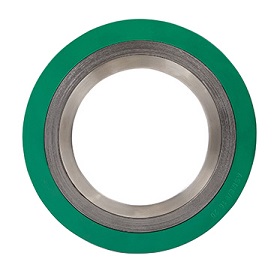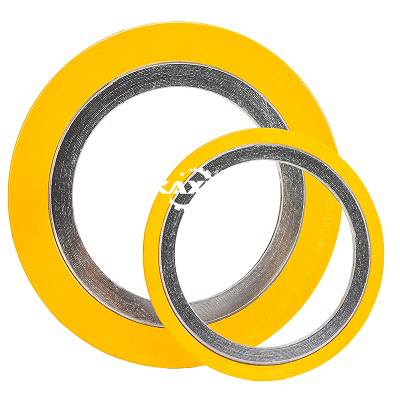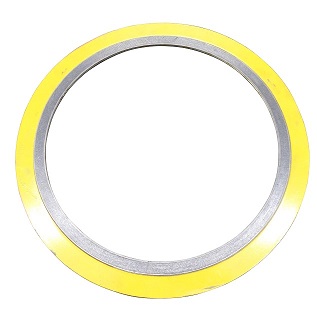

On an offshore oil platform in the North Sea, a high-pressure gas line operates at 350 bar and 120°C. The flanges that connect the pipe sections are sealed with Ring Joint Gaskets made from SS316L stainless steel. These gaskets must withstand not only the extreme pressure and temperature of the process fluid but also the relentless assault of salt spray, humidity, and the constant motion of the sea. A gasket failure here is not a minor inconvenience; it is a catastrophic event that can lead to fire, explosion, environmental disaster, and loss of life. The choice of gasket material is therefore one of the most critical decisions in offshore engineering. SS316L has emerged as the preferred material for Ring Joint Gaskets in these environments because it offers a unique combination of corrosion resistance, mechanical strength, and thermal stability that no other material can match at a comparable cost.
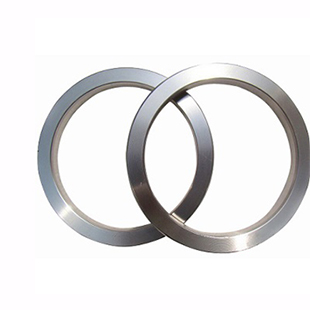
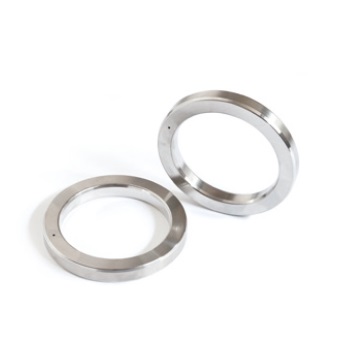
Ring Joint Gaskets are metallic seals that are used in high-pressure and high-temperature applications. They are designed to fit into a specially machined groove on the flange face, creating a metal-to-metal seal when the flanges are bolted together. The sealing action relies on the deformation of the gasket material into the groove, which creates a tight, leak-proof joint. The material of the gasket determines its ability to withstand the corrosive and mechanical stresses of the application. SS316L, a low-carbon version of the standard 316 stainless steel, is particularly well-suited for marine and offshore environments because of its excellent resistance to chloride pitting and crevice corrosion. At Ningbo Kaxite Sealing Materials Co., Ltd., our factory has been manufacturing Ring Joint Gaskets from SS316L and other high-performance alloys for over 15 years, and we have refined our material selection and production processes to meet the most demanding requirements of the offshore industry.
The marine environment is one of the most corrosive naturally occurring environments on earth. Seawater contains approximately 3.5% dissolved salts, primarily sodium chloride, along with smaller amounts of magnesium, calcium, and potassium salts. These salts make seawater an excellent electrolyte, which accelerates electrochemical corrosion processes. For metallic components, the combination of chloride ions, dissolved oxygen, and moisture creates a relentless attack that can cause even high-quality materials to degrade over time. In offshore applications, the challenges are even greater. The atmosphere is saturated with salt spray, the temperatures fluctuate between tropical heat and arctic cold, and the mechanical stresses are intense. The table below summarizes the key corrosion challenges in marine and offshore environments.
| Corrosion Challenge | Description | Impact on Gaskets |
| Chloride Pitting | Localized attack by chloride ions | Pinholes and surface degradation |
| Crevice Corrosion | Attack in stagnant areas | Degradation at sealing surfaces |
| Galvanic Corrosion | Dissimilar metals in contact | Accelerated corrosion of less noble metal |
| Stress Corrosion Cracking | Corrosion under tensile stress | Sudden cracking and failure |
| Erosion Corrosion | High-velocity fluid flow | Mechanical removal of protective oxide |
The consequences of corrosion in Ring Joint Gaskets are severe. A corroded gasket can lose its sealing force, leading to leaks. A cracked gasket can fail catastrophically. In an offshore oil or gas platform, a gasket leak can release flammable hydrocarbons, creating a risk of fire or explosion. In a marine pipeline, a leak can cause environmental contamination. In a desalination plant, a leak can compromise water quality. The selection of a corrosion-resistant material such as SS316L is therefore not just a quality preference; it is a safety imperative. Our factory at Kaxite has extensive experience in supplying Ring Joint Gaskets for marine and offshore applications, and we understand the critical importance of material selection in these environments.
When selecting a material for Ring Joint Gaskets in marine and offshore environments, engineers must choose from a range of options, including carbon steel, stainless steel, duplex stainless steel, and exotic alloys such as Inconel and Monel. Each material has its own combination of corrosion resistance, mechanical strength, and cost. SS316L is often the preferred choice because it offers the best balance of performance and cost for many marine applications. To understand why, it is helpful to compare SS316L to other common materials. The table below provides a comparison of the key properties of these materials.
| Material | Corrosion Resistance in Seawater | Mechanical Strength | Cost | Typical Application |
| Carbon Steel | Poor (requires coating) | High | Low | Non-critical, dry applications |
| SS304 | Moderate (pitting in chlorides) | High | Low | General purpose, mild environments |
| SS316L | Excellent (resists chloride pitting) | High | Medium | Marine, offshore, chemical processing |
| Duplex SS | Excellent | Very High | High | High-pressure, high-temperature marine |
| Inconel 625 | Excellent | Very High | Very High | Extreme environments, sour gas |
| Monel 400 | Excellent | High | High | Seawater piping, heat exchangers |
The key advantage of SS316L over SS304 is its molybdenum content. SS316L contains 2-3% molybdenum, which significantly improves its resistance to pitting and crevice corrosion in chloride-containing environments. SS304, which contains no molybdenum, is susceptible to pitting in seawater, especially in stagnant areas where chlorides can concentrate. Duplex stainless steel offers even higher strength and corrosion resistance, but it is more expensive and more difficult to machine. Inconel and Monel offer the highest levels of corrosion resistance, but their cost can be prohibitive for many applications. SS316L offers the best combination of corrosion resistance, mechanical strength, and cost for the majority of marine and offshore Ring Joint Gaskets applications.
The "L" in SS316L stands for "low carbon." Standard SS316 has a maximum carbon content of 0.08%, while SS316L has a maximum carbon content of 0.03%. This difference may seem small, but it has a significant impact on the material's performance in welding and high-temperature applications. When austenitic stainless steels like SS316 are heated to temperatures between 425°C and 815°C, chromium carbide precipitates form at the grain boundaries. This process is known as sensitization. The formation of chromium carbides depletes the surrounding areas of chromium, reducing their corrosion resistance. In a marine environment, sensitized areas are highly susceptible to intergranular corrosion. By reducing the carbon content, SS316L minimizes the formation of chromium carbides, making it resistant to sensitization and intergranular corrosion.
The low carbon content of SS316L also improves its weldability. When SS316 is welded, the heat-affected zone can become sensitized if the carbon content is too high. SS316L can be welded without post-weld heat treatment in most applications, because the low carbon content prevents sensitization. This is particularly important for Ring Joint Gaskets, which may be fabricated by welding or machining. The table below summarizes the key chemical and mechanical properties of SS316L.
| Property | Specification |
| Carbon (C) max | 0.03% |
| Chromium (Cr) | 16 - 18% |
| Nickel (Ni) | 10 - 14% |
| Molybdenum (Mo) | 2 - 3% |
| Manganese (Mn) max | 2.0% |
| Silicon (Si) max | 0.75% |
| Phosphorus (P) max | 0.045% |
| Sulfur (S) max | 0.030% |
| Tensile Strength | 485 - 690 MPa |
| Yield Strength (0.2% offset) | 170 - 310 MPa |
| Elongation | 40% min |
| Hardness (Rockwell B) | 95 max |
At Ningbo Kaxite Sealing Materials Co., Ltd., our factory uses only certified SS316L material from reputable suppliers. We verify the chemical composition and mechanical properties of every batch of material we receive. We also perform intergranular corrosion testing on our finished gaskets to ensure that they meet the requirements of ASTM A262 Practice E. This rigorous quality control ensures that our Ring Joint Gaskets deliver reliable performance in the most demanding marine and offshore environments.
The performance of a Ring Joint Gasket depends not only on the material but also on its geometry. The gasket is designed to fit into a groove on the flange face. When the flanges are bolted together, the gasket is compressed, and its material deforms to fill the groove and create a seal. The shape of the gasket and the groove determines the sealing mechanism. There are several standard Ring Joint Gasket profiles, each with its own characteristics. The most common are the R, RX, and BX types. The R type is an oval or octagonal ring that is used in standard applications. The RX type is a modified oval ring that is used in higher-pressure applications. The BX type is a hexagonal ring that is used in high-pressure, high-temperature applications. The table below summarizes the key characteristics of these profiles.
| Profile | Shape | Pressure Rating | Typical Application |
| R | Oval or Octagonal | Up to 10,000 psi | General purpose, wellheads |
| RX | Modified Oval | Up to 15,000 psi | Higher pressure, sour service |
| BX | Hexagonal | Up to 20,000 psi | High pressure, high temperature |
The choice of profile depends on the pressure, temperature, and the nature of the fluid being sealed. The R type is the most common and is suitable for a wide range of applications. The RX type is used in higher-pressure applications and has a slightly different geometry that improves sealing performance. The BX type is used in the most demanding applications and is designed to provide a reliable seal at pressures up to 20,000 psi. At Ningbo Kaxite Sealing Materials Co., Ltd., our factory manufactures Ring Joint Gaskets in all these profiles, in a range of sizes to fit standard flange specifications.
The following table provides the key performance specifications for our SS316L Ring Joint Gaskets. These specifications are based on standard testing and are provided as a reference for engineers and procurement specialists.
| Parameter | Specification | Test Standard |
| Material | SS316L (UNS S31603) | ASTM A182, ASTM A479 |
| Hardness | ≤ 160 HBW | ASTM E10 |
| Tensile Strength | ≥ 485 MPa | ASTM E8 |
| Yield Strength | ≥ 170 MPa | ASTM E8 |
| Elongation | ≥ 40% | ASTM E8 |
| Intergranular Corrosion | Pass | ASTM A262 Practice E |
| Max Operating Temperature | 800°C (continuous) | — |
| Max Operating Pressure | 20,000 psi (dependent on profile) | — |
| Surface Finish | Ra 1.6 µm max | — |
| Standard Sizes | R, RX, BX profiles per API 6A | API 6A |
At our factory, we manufacture Ring Joint Gaskets to meet these specifications and more. We can also produce custom gaskets for special applications. Our quality control process includes dimensional inspection, material certification, and performance testing. We provide a certificate of conformance with every order, documenting the material composition, mechanical properties, and test results. This level of documentation is essential for offshore applications, where traceability and quality assurance are critical.
Question 1: What is the difference between SS316 and SS316L Ring Joint Gaskets?
Answer: The primary difference is the carbon content. SS316 has a maximum carbon content of 0.08%, while SS316L has a maximum carbon content of 0.03%. The lower carbon content of SS316L makes it resistant to sensitization and intergranular corrosion, which is important in welded and high-temperature applications. For marine and offshore environments, SS316L is generally preferred because of its superior corrosion resistance.
Question 2: Can SS316L Ring Joint Gaskets be used in sour gas service?
Answer: SS316L is not recommended for sour gas service (H2S-containing environments) because it is susceptible to sulfide stress cracking. For sour gas applications, a harder material such as Inconel 625 or a duplex stainless steel is typically required. The selection of the gasket material should be based on the specific composition and conditions of the process fluid. Our technical team can advise on the best material for your application.
Question 3: What is the maximum temperature that SS316L Ring Joint Gaskets can withstand?
Answer: SS316L Ring Joint Gaskets can withstand continuous operating temperatures up to 800°C. However, at temperatures above 425°C, the material may be susceptible to sensitization if it is not properly stabilized. For high-temperature applications, it is important to verify that the material has been properly heat-treated and tested for intergranular corrosion resistance. Our factory provides certification of intergranular corrosion testing for all high-temperature gaskets.
Question 4: How do I select the correct Ring Joint Gasket profile for my application?
Answer: The selection of the profile depends on the pressure, temperature, and the nature of the fluid. The R type is suitable for general-purpose applications up to 10,000 psi. The RX type is used for higher pressures up to 15,000 psi. The BX type is used for the most demanding applications up to 20,000 psi. The flange specification will also dictate the required profile. Our technical team can assist you in selecting the correct profile for your specific application.
Question 5: What documentation is provided with SS316L Ring Joint Gaskets?
Answer: We provide a certificate of conformance with every order, documenting the material composition, mechanical properties, and test results. This includes the chemical analysis, tensile test results, hardness test results, and intergranular corrosion test results. We also provide dimensional inspection reports and a material traceability certificate. This documentation is essential for quality assurance and regulatory compliance in marine and offshore applications.
SS316L Ring Joint Gaskets are the ideal choice for marine and offshore applications because they offer a unique combination of corrosion resistance, mechanical strength, and thermal stability. The molybdenum content of SS316L provides excellent resistance to chloride pitting and crevice corrosion, while the low carbon content prevents sensitization and intergranular corrosion. The material can be machined into a variety of profiles to meet the pressure and temperature requirements of the application. And it can be certified to meet the most stringent quality standards. At Ningbo Kaxite Sealing Materials Co., Ltd., our factory has the expertise and the equipment to manufacture SS316L Ring Joint Gaskets that meet the most demanding requirements of the offshore industry.
Whether you are designing a new offshore platform or maintaining an existing one, we invite you to contact our technical team to discuss your gasket requirements. We can provide detailed product specifications, material certifications, and application support. Our commitment to quality and customer satisfaction has made us a trusted partner for sealing solutions around the world.
Contact Ningbo Kaxite Sealing Materials Co., Ltd. today to discuss your Ring Joint Gasket requirements and discover how our SS316L gaskets can meet the challenges of your marine and offshore applications.