
Steam line sealing is one of the most demanding applications in industrial maintenance. The combination of high temperatures, cyclic pressure fluctuations, and aggressive condensate can destroy an ordinary gasket in hours. Selecting the wrong material leads to leaks, energy loss, unplanned downtime, and even safety hazards. Over the past two decades, our team has analyzed thousands of sealing failures, and the root cause almost always traces back to a mismatch between the rubber compound and the actual steam conditions.
Choosing the right rubber gasket material isn't just about picking something "heat resistant." It requires a deep understanding of temperature spikes, pressure classes, chemical exposure (like amine carryover), and the flange surface finish. This guide is built on our 20 years of manufacturing experience at Ningbo Kaxite Sealing Materials Co., Ltd. We’ll walk you through the exact parameters, material data, and decision trees we use to help our customers achieve zero-leak steam joints. Our factory has tested thousands of compounds; let that experience guide your next purchase.
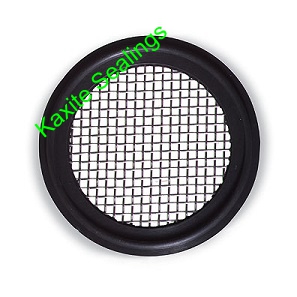
Steam is not just hot air; it's a high-energy vapor that can degrade elastomers through thermal attack, hydrolysis, and explosive decompression. To select the right material, you must evaluate five critical factors. Our factory uses these exact criteria when formulating rubber gaskets for power plants and chemical processors.
Every elastomer has a maximum continuous service temperature. For steam, you need a buffer: if your line runs at 180°C (356°F), a material rated for 200°C continuous is safer than one rated for 185°C. But beware—peak spikes can exceed ratings temporarily. In our experience, customers often overlook the difference between saturated steam (wet) and superheated steam (dry). Saturated steam transfers heat more aggressively to the gasket surface.
Steam condensate can be surprisingly aggressive. In carbon steel lines, rust particles and amine treatments (used for corrosion inhibition) attack the polymer chain. Some rubber compounds, like standard nitrile, will literally dissolve over time when exposed to steam and amines. Our engineers at Ningbo Kaxite Sealing Materials Co., Ltd. always remind clients to check the water chemistry. Even trace amounts of hydrocarbons in the steam can swell certain gaskets.
Pressure is another variable. For high-pressure steam (above 150 psi), reinforced sheets or higher-durometer materials are necessary to prevent blowout. Our factory produces rubber gaskets with fabric insertion specifically for these conditions. We've seen 1.5 mm thick plain rubber extrude like toothpaste at 200 psi steam; reinforcement changes the game.
Standard rubber gaskets for water are usually 70 Shore A. For steam, 80-85 Shore A provides better resistance to creep and extrusion. However, if the flange is warped, a slightly softer gasket (75A) with high conformability might be better—but only if the temperature allows. Our database shows that creep relaxation accelerates above 150°C for most polymers. That's why we focus on fully cured compounds with minimal post-curing drift.
It's a common question from maintenance teams trying to save money. At first glance, EPDM has excellent steam resistance, and Nitrile is cheap. But "standard" commercial grades are not formulated for continuous steam exposure. Let's break down the failures we see in our daily work at Ningbo Kaxite Sealing Materials Co., Ltd.
Nitrile rubber is great for oil, but steam hydrolyzes the acrylonitrile chains. Within weeks at 120°C, the gasket hardens and shrinks. We've pulled gaskets from steam tracing lines that looked like brittle plastic. The loss of elasticity leads to immediate leaks. Our recommendation: never use NBR for saturated steam above 100°C unless it's a temporary, low-pressure bypass.
EPDM is often touted as the best steam-resistant elastomer. True—but only if it's a premium, peroxide-cured grade with high ethylene content. Many commodity EPDM gaskets contain fillers and processing aids that leach out in steam, causing shrinkage. Additionally, standard EPDM can fail in the presence of oils or grease that sometimes contaminate steam lines. We always advise: check the steam's purity. If there's any oil carryover from compressors, EPDM swells and loses sealing force.
Below is a comparison based on our factory's in-house steam autoclave tests (168 hours at 160°C saturated steam).
| Material Type | Max continuous steam temp (°C) | Volume swell (%) | Hardness change (pts) | Visual condition after test |
| Standard NBR (70A) | 100 | +5 / -2 (erratic) | +18 (hard) | cracked, brittle |
| Commercial EPDM | 140 | -8 (shrinkage) | +12 | surface crazing |
| Premium peroxide EPDM* | 200 | +2 | +3 | flexible, smooth |
| Silicone (high-temp grade) | 220 | +1 | +2 | good, but low pressure rating |
| FKM (Viton® type) | 230 | +1.5 | +4 | excellent, but expensive |
* Our factory’s steam-resistant EPDM formulation. Actual results may vary with specific compounds.
As you can see, only specifically engineered compounds survive. Off-the-shelf gaskets often contain plasticizers that volatilize, turning the gasket into a hard, leaky ring. Rubber gaskets for steam must be mixed with high-temperature stabilizers and post-cured in ovens to remove volatiles before use. That's the difference between our factory-grade materials and commodity sheets.
This is the core of engineering a reliable seal. At Ningbo Kaxite Sealing Materials Co., Ltd., we use a three-step selection matrix: temperature first, then pressure, then chemical environment. Here’s how you can apply the same logic.
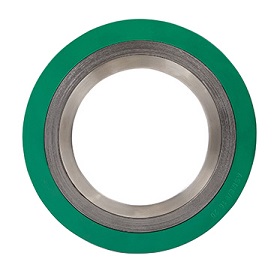
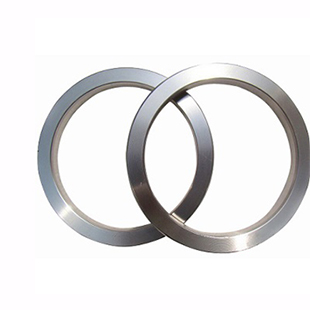
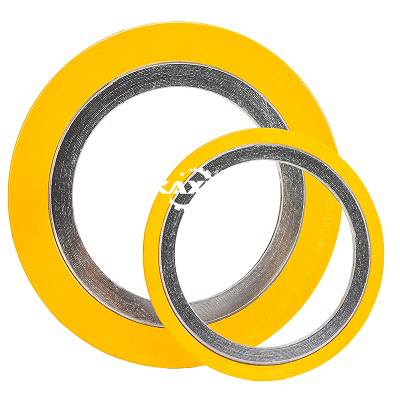
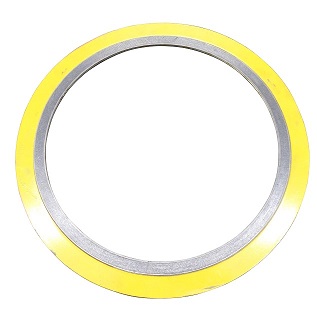
Pressure dictates thickness and reinforcement. For steam pressures under 150 psi, a 1/16" (1.6mm) thick plain rubber sheet may suffice if the material is right. For 150–300 psi, we recommend 1/8" (3.2mm) with a fabric insertion. For above 300 psi, our factory supplies rubber gaskets with stainless steel insert rings or camprofile style with an elastomer sealing layer. Extrusion is a real risk: higher pressure pushes the gasket into the flange gap.
Let’s look at a typical selection table we provide to engineers:
| Steam condition | Pressure (psig) | Recommended material | Durometer (Shore A) | Note |
| Low-pressure heating steam | 0-50 | Premium EPDM | 70 | ensure no oil mist |
| Process steam saturated | 50-150 | Peroxide EPDM / CSM | 75-80 | reinforced preferred |
| High-pressure saturated | 150-250 | FKM or HNBR | 80 | fabric reinforced |
| Superheated, clean | 250+ | FKM / high-temp silicone | 85 | metal-reinforced |
Notice that we didn't include standard gaskets. Because in steam, "standard" is a gamble. Our factory tests every batch of steam-grade rubber gaskets in our autoclave to validate performance. We've seen 200 psi steam destroy a gasket in two hours if the compound is wrong. That's why our rubber formulations are specifically tailored for hydrolysis resistance, not just dry heat aging.
If your steam line has amines (for corrosion control), EPDM may soften. In that case, a special amine-resistant compound (like certain FKM or IIR grades) is needed. If the steam is wet with occasional chlorides, don't use standard stainless steel inserts—they can crack. Use hastelloy or coated options from our factory. Always cross-check the medium; a simple water steam can become aggressive if boiler treatment chemicals are present.
Selecting the right rubber gasket for steam lines is a process of elimination. Start with the maximum operating temperature plus a safety margin. Then verify the pressure rating and select the appropriate thickness/reinforcement. Finally, check the chemical exposure (oils, amines, chlorides) to shortlist materials like premium EPDM, FKM, or specialized blends. Never compromise by using commodity rubber sheets—they will fail and cost you ten times more in downtime.
At Kaxite, our factory has been formulating steam-resistant compounds for two decades. We produce rubber gaskets that withstand thermal cycling, pressure spikes, and aggressive condensate. Whether you need 1.5mm EPDM sheets or custom-cut FKM gaskets for superheated steam, our engineering team can deliver with full material traceability and test reports.
Send us your operating parameters—temperature, pressure, flange type, and medium. Our team will recommend the optimal rubber gasket material, often with samples for qualification. Don't let a leaking gasket shut down your line.
Ningbo Kaxite Sealing Materials Co., Ltd. — sealing reliability since 2003.