
Inside the heart of a refinery's fluid catalytic cracking unit, temperatures regularly exceed 650°C. The flanges connecting the reactor to the regenerator are subjected to not only intense heat but also the relentless stress of thermal cycling—the repeated expansion and contraction that occurs as the unit is brought online, shut down, and brought back online again. In these extreme environments, ordinary gaskets fail within weeks. But there is one type of sealing solution that has proven its reliability in these punishing conditions: the Double Jacketed Gasket. These are not simple gaskets; they are engineered systems, designed to accommodate movement, resist corrosion, and maintain a tight seal even as the flange faces expand and contract. This article will dissect the engineering principles and design features that enable Double Jacketed Gaskets to withstand the combined assault of high temperature and thermal cycling.
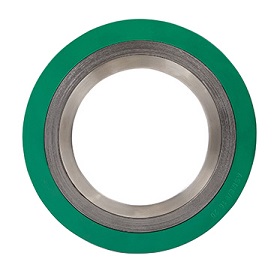
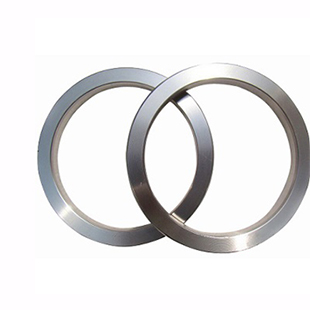
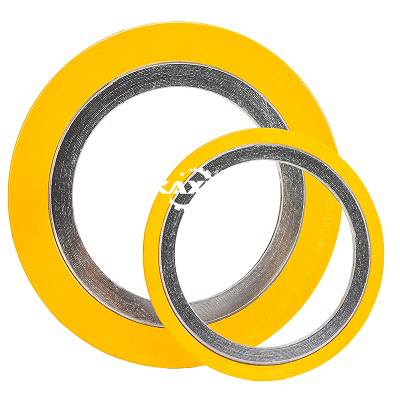
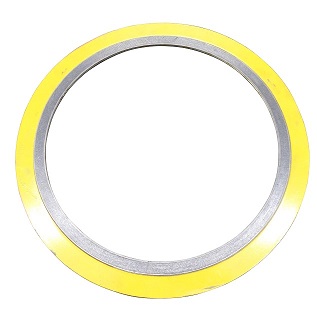
Unlike standard flat gaskets, a Double Jacketed Gasket is a composite structure. It consists of a flexible, compressible filler material—typically graphite, PTFE, or ceramic fiber—encased in a metal jacket. The jacket is formed from two pieces of metal (hence "double jacketed") that are welded or crimped together at the outer edge, enclosing the filler. This design provides an extraordinary combination of properties: the metal jacket acts as a protective shield, resisting high temperatures, pressure, and corrosion, while the filler provides the compressibility needed to create a tight seal against the flange faces. The result is a gasket that can withstand temperatures from cryogenic lows to over 1000°C, depending on the materials selected, and that can flex to absorb the movement caused by thermal cycling without losing its sealing force. In this article, we will explore the materials, design, manufacturing, and application of Double Jacketed Gaskets, providing a comprehensive guide to this essential component of industrial sealing.
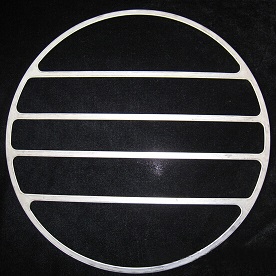
A Double Jacketed Gasket is a specialized sealing component designed for use in high-pressure, high-temperature, and corrosive applications. Its construction is significantly more complex than a standard flat gasket, which is why it offers superior performance in demanding environments. The fundamental structure of a Double Jacketed Gasket is a three-layer composite: a soft, compressible filler core, encapsulated by a metal jacket. But the term "double" does not simply refer to the two halves of the jacket; it indicates that the jacket is formed from two separate metal components (usually an inner and outer jacket) that are welded or crimped together. This design provides a higher degree of protection and sealing compared to single-jacketed variants.
The manufacturing process of a Double Jacketed Gasket is a meticulous sequence of operations that must be carefully controlled. It begins with the selection of the jacket material, which is chosen based on the application's requirements for temperature, pressure, and chemical resistance. Common jacket materials include stainless steel (304, 316, 321), Inconel, Monel, and titanium. The selected metal is then die-cut or laser-cut into precise shapes, typically two halves: an inner and an outer jacket. The filler material—which can be flexible graphite, PTFE, ceramic fiber, or a mica-based material—is then cut or punched to the same dimensions. The filler is placed between the inner and outer jacket halves, and the assembly is welded or crimped together along the outer edge. The weld must be continuous and free of defects to ensure the gasket remains sealed and that the filler is protected from the process fluid. The final step is to lap the gasket surfaces to achieve the required flatness and surface finish.
The geometry of a Double Jacketed Gasket is not arbitrary. The design features a central sealing ring that is raised slightly above the surrounding flange faces, allowing it to be the primary sealing element. This design concentrates the sealing force on a narrow, controlled area, ensuring high stress at the sealing surface, which is critical for effective sealing. The filler material, encased within the jacket, provides the compressive resilience needed to maintain that stress even as the bolt load changes due to temperature fluctuations. Our factory at Ningbo Kaxite Sealing Materials Co., Ltd specializes in the precision manufacturing of Double Jacketed Gaskets, employing advanced welding and machining techniques to ensure consistent quality and performance.
Thermal cycling is a silent killer of industrial seals. As a flange joint is heated, the flange, bolts, and gasket all expand at different rates, causing the stress on the gasket to change. When the joint cools, the contraction creates gaps that can allow leakage. Over repeated cycles, these stresses can cause a gasket to lose its seal. The Double Jacketed Gasket is engineered to overcome this challenge. Its design is not merely a response to thermal cycling; it is an active compensation mechanism. The key is the combination of the metal jacket and the compressible filler. The jacket acts as a spring that can accommodate the movements caused by thermal expansion and contraction, maintaining a consistent sealing force.
Here's a breakdown of how the Double Jacketed Gasket works its magic:
To illustrate the advantage of the Double Jacketed Gasket, consider a test scenario where two gaskets—a standard flat graphite gasket and a Double Jacketed Gasket—are subjected to the same thermal cycling profile. The flat graphite gasket shows significant relaxation after the first cycle, losing up to 30% of its initial stress. After 10 cycles, the stress has dropped to the point where leakage is inevitable. The Double Jacketed Gasket, however, retains over 85% of its initial stress after 10 cycles, maintaining a reliable seal. This performance advantage is not just theoretical; it is validated by extensive testing and field experience in refineries, petrochemical plants, and power generation facilities around the world. Our factory's Double Jacketed Gaskets are designed and manufactured to meet the highest standards of thermal cycling performance, providing our customers with the reliability they need for their most demanding applications.
The material selection for a Double Jacketed Gasket is a critical engineering decision that directly determines the gasket's ability to perform in a given environment. The choice of jacket and filler material depends on the specific conditions: the operating temperature, pressure, chemical environment, and the need for resistance to corrosion or oxidation. There is no single "best" material; the optimal material is determined by the application's requirements. The selection process involves balancing the properties of various metals and fillers to achieve the desired performance, including strength, flexibility, and chemical resistance.
Jacket Materials: The jacket is the primary barrier against the process media and the environment. It must be strong enough to withstand the pressure, resistant to corrosion, and able to maintain its mechanical properties at the operating temperature. Common jacket materials include:
Filler Materials: The filler is the sealing element, filling the space between the jacket and the flange faces. It provides the compressibility needed to create a seal and maintain stress. Common filler materials include:
The following table provides a comparison of the key characteristics of various jacket and filler materials for Double Jacketed Gaskets.
| Material | Type | Max Continuous Temp (°C) | Key Properties | Typical Applications |
| 304 SS | Jacket | 870 | Good corrosion resistance, cost-effective | General industrial |
| 316 SS | Jacket | 870 | Superior corrosion resistance | Chemical, marine |
| 321 SS | Jacket | 900 | Intergranular corrosion resistance | High temperature |
| Inconel | Jacket | 1000+ | High-temperature strength, oxidation resistance | Aerospace, furnace |
| Graphite | Filler | 650 | Excellent sealability, high compressibility | Refinery, steam |
| PTFE | Filler | 260 | Chemical inertness, low friction | Chemical, pharmaceutical |
| Mica | Filler | 1000 | High-temperature resistance, inert | High-temperature furnace |
| Ceramic Fiber | Filler | 1200 | Exceptional heat resistance | Extreme high-temperature |
Our factory at Kaxite works closely with customers to select the optimal combination of jacket and filler materials, drawing on our extensive experience with a wide range of industrial applications. We understand that the "right" material is not always the most expensive or exotic one; it is the one that meets the specific performance requirements of the application at a reasonable cost.
The filler material inside a Double Jacketed Gasket is not just a passive component; it is an active participant in the sealing process, and its selection profoundly affects the gasket's performance under thermal cycling. The filler's thermal conductivity, compressibility, and resistance to creep are all critical factors. The filler acts as a thermal buffer, and its behavior determines how stress is distributed across the gasket as temperatures change.
The most common filler materials for high-temperature Double Jacketed Gaskets are flexible graphite and mica. Flexible graphite is a remarkable material. It is highly compressible, allowing it to conform to uneven flange surfaces and create a tight seal. It is also an excellent conductor of heat, which can be an advantage in many applications, as it helps to ensure a uniform temperature across the gasket, reducing the risk of hot spots. However, the high thermal conductivity also means that the graphite can conduct heat away from the flange, which may be a disadvantage in some applications. Its thermal cycling resistance is excellent, with negligible relaxation over multiple cycles.
Mica is another popular filler for high-temperature applications, particularly where temperatures exceed the limit of graphite. Mica is a mineral that forms thin, flat sheets, which gives it a high compressibility and a low coefficient of friction. It is an excellent electrical insulator and has a low thermal conductivity, making it a good choice for applications where heat dissipation from the gasket is a concern. Mica is also inert to most chemicals and has a high melting point, making it suitable for the most extreme high-temperature environments. However, mica can be more susceptible to blow-out under high pressure than graphite, and it is more sensitive to moisture, which can cause swelling and performance degradation in some applications.
Other filler options include ceramic fiber and PTFE, each offering a specific set of properties. Ceramic fiber provides the highest temperature resistance and is often used in applications where temperatures exceed 1000°C, but it is relatively fragile and requires careful handling during installation. PTFE offers excellent chemical resistance and a very low coefficient of friction, making it ideal for chemical processing applications, but its temperature limit of 260°C restricts its use to lower-temperature applications. The choice of filler material is a critical element in the design of a Double Jacketed Gasket, and we at Kaxite provide expert guidance to help our customers select the most suitable option for their specific application.
To illustrate the impact of filler material on thermal cycling performance, consider a typical thermal cycling test conducted on three Double Jacketed Gaskets, each with a different filler: flexible graphite, mica, and PTFE. The gaskets are subjected to 50 cycles from 20°C to their respective maximum operating temperatures. The graphite-filled gasket maintains a consistent sealing stress, with a relaxation of less than 15%. The mica-filled gasket shows slightly higher relaxation, around 20%, but still maintains a reliable seal. The PTFE-filled gasket exhibits a more significant relaxation, over 30%, as the material softens and flows at higher temperatures. This test highlights the importance of selecting a filler that is matched to the thermal demands of the application. For high-temperature applications with frequent thermal cycling, flexible graphite is often the best choice, providing a reliable seal with excellent resistance to relaxation. The table below summarizes the key thermal performance characteristics of the various filler materials.
| Filler Material | Max Continuous Temperature | Thermal Conductivity (W/m·K) | Thermal Cycling Performance | Key Advantage |
| Flexible Graphite | 650°C | 50-100 | Excellent | Conforms to flange surfaces; high compressibility; excellent sealing |
| Mica | 1000°C | 0.5-1.0 | Good | High-temperature resistance; chemical inertness |
| Ceramic Fiber | 1200°C | 0.1-0.2 | Good | Very high-temperature resistance |
| PTFE | 260°C | 0.2-0.3 | Moderate | Chemical inertness; low friction |
| Non-Asbestos | 500°C | 0.2-0.4 | Good | Cost-effective alternative to asbestos |
To ensure the reliable performance of a Double Jacketed Gasket in a specific application, engineers must consider a range of technical specifications. These specifications define the gasket's dimensional characteristics, material properties, and performance under specific conditions. The correct specification of the gasket is essential for achieving the desired sealing performance and ensuring the safety and integrity of the flange joint. The key specifications include dimensions (inner diameter, outer diameter, thickness), material specifications (jacket and filler material), pressure rating, and temperature rating.
The dimensions of a Double Jacketed Gasket are critical. The inner diameter (ID) and outer diameter (OD) must match the flange dimensions, with the gasket designed to fit within the bolt circle. The thickness of the gasket is also important, as it affects the compression and the required bolt load. A typical Double Jacketed Gasket is 3-4 mm thick, but this can vary depending on the application and the size of the flange. The pressure rating of the gasket is determined by its ability to withstand the internal pressure without leaking or failing. The temperature rating is determined by the material's ability to withstand the operating temperature without losing its sealing properties.
Our factory at Ningbo Kaxite Sealing Materials Co., Ltd manufactures Double Jacketed Gaskets according to a wide range of international standards, including ASME B16.20, DIN EN 12560, and BS 3381. These standards define the dimensions, materials, and testing requirements for gaskets used in flanged joints. We also offer custom-designed gaskets for non-standard applications. The following table provides the key technical specifications for a standard Double Jacketed Gasket based on ASME B16.20.
| Specification | Value | Notes |
| Standard | ASME B16.20 | Metallic Gaskets for Pipe Flanges |
| Nominal Pipe Size (NPS) | 1/2" to 24" | Custom sizes also available |
| Pressure Class | 150, 300, 600, 900, 1500, 2500 | Class rating determined by flange design |
| Gasket Thickness | 3.0 mm - 4.5 mm | Thickness depends on size and pressure class |
| Jacket Material | 304SS, 316SS, 321SS, Inconel, Monel, Hastelloy | Selection based on application |
| Filler Material | Flexible Graphite, PTFE, Mica, Ceramic Fiber | Selection based on temperature and chemical environment |
| Surface Finish | Ra 0.8 - 1.6 µm | Lapped finish for optimal sealing |
| Leakage Rate (ASTM F37) | < 0.05 mL/min | Typical performance with proper installation |
| Temperature Range | -250°C to +1200°C | Depends on material selection |
In addition to these standard specifications, engineers should also consider the gasket's recovery characteristics (its ability to "spring back" after compression) and its resistance to creep relaxation. These properties are particularly important in applications with thermal cycling, where the gasket must maintain its sealing force over many cycles. Our factory performs comprehensive testing on our Double Jacketed Gaskets, including compression tests, recovery tests, and thermal cycling tests, to ensure that they meet the highest standards of performance and reliability.
Question 1: What is the primary advantage of a double jacketed gasket over a single jacketed gasket?
Answer: The primary advantage of a double jacketed gasket over a single jacketed gasket is its superior resistance to thermal cycling and high-temperature creep. The double jacket design provides a more robust spring-like action, maintaining a consistent sealing force even as the flange joint expands and contracts due to temperature changes. This makes the double jacketed gasket the preferred choice for applications with significant temperature fluctuations, such as those found in refinery and petrochemical plants. Our factory at Ningbo Kaxite Sealing Materials Co., Ltd specializes in the manufacture of double jacketed gaskets for these demanding applications.
Question 2: Can a double jacketed gasket be reused after being subjected to high temperature?
Answer: Generally, we do not recommend reusing a Double Jacketed Gasket that has been subjected to high temperature or high pressure. The gasket material undergoes compression and deformation during use, and the filler may lose its elasticity. Reusing a gasket can lead to a loss of sealing performance and potential leakage. The industry best practice is to replace the gasket whenever the flange joint is opened, regardless of its apparent condition. This ensures a reliable seal and minimizes the risk of a leak during operation.
Question 3: What factors should be considered when selecting the jacket material for a double jacketed gasket?
Answer: The selection of the jacket material depends on several factors: the operating temperature, the chemical environment (the fluids being sealed), the pressure, and the need for resistance to corrosion or oxidation. For high-temperature applications, materials such as 321 stainless steel or Inconel may be required. For applications involving highly corrosive chemicals, materials such as Hastelloy or Monel may be necessary. It is important to select a jacket material that is compatible with the process fluid and can withstand the thermal stress without degrading. Our factory's technical team can provide guidance on the selection of the appropriate jacket material for your specific application.
Question 4: How does thermal cycling affect the bolt load required on a double jacketed gasket?
Answer: Thermal cycling causes the flange and bolt materials to expand and contract at different rates, which can change the bolt load on the gasket. As the temperature increases, the bolts may elongate, reducing the load on the gasket. As the temperature decreases, the bolts may contract, increasing the load. A properly designed Double Jacketed Gasket is able to accommodate these changes in bolt load by maintaining a consistent sealing stress through its spring-like action. However, it is important to ensure that the initial bolt load is sufficient to maintain the seal throughout the thermal cycle. Our factory's gasket design incorporates a spring-back characteristic that compensates for bolt relaxation and ensures a tight seal.
Question 5: What is the typical failure mode of a double jacketed gasket, and how can it be prevented?
Answer: The most common failure mode of a Double Jacketed Gasket is loss of seal due to creep relaxation. This occurs when the filler material loses its elasticity over time, reducing the gasket's sealing force. This is often a result of sustained high temperature and pressure. The gasket can also fail due to damage to the jacket from corrosion or handling, or due to improper installation, such as uneven bolting. To prevent failure, it is important to select the correct gasket materials for the application, to install the gasket correctly (using proper torque procedures), and to follow the manufacturer's recommendations for torque and installation. Regular inspection of the gasket and the flange joint can help to detect early signs of trouble and prevent a catastrophic failure.
Double Jacketed Gaskets represent a sophisticated solution to the demanding sealing challenges posed by high temperature and thermal cycling. Their unique design, combining a metal jacket with a compressible filler, provides the spring-like behavior needed to accommodate the expansion and contraction of flange joints, maintaining a reliable seal even in the most severe conditions. The careful selection of jacket and filler materials allows these gaskets to be tailored to specific applications, ensuring optimal performance in a wide range of environments. From the high-temperature furnaces of steel mills to the corrosive processes of chemical plants, Double Jacketed Gaskets have proven their ability to provide a safe and reliable seal, minimizing the risk of leaks and ensuring the safe operation of critical equipment.
The key to maximizing the performance and lifespan of a Double Jacketed Gasket lies in selecting the right combination of materials and specifications for the specific application. This requires a thorough understanding of the operating conditions, including temperature, pressure, chemical exposure, and thermal cycling. By working with an experienced manufacturer and following best practices for installation and maintenance, engineers can ensure that their Double Jacketed Gaskets deliver reliable service for years to come.
Contact Ningbo Kaxite Sealing Materials Co., Ltd today to discuss your Double Jacketed Gasket requirements and learn how our expert team can help you select the optimal sealing solution for your high-temperature and thermal cycling applications.