
A maintenance technician tightens the gland on a valve stem because a small drip has appeared. He tightens it a little more, then a little more, until the drip stops. Three weeks later, the valve is hard to operate, the stem is scored, and the packing has extruded. The technician did not understand that gland adjustment is not a simple "tighten until it stops leaking" procedure. It is a precision operation that determines whether the PTFE Packing will perform as designed or fail prematurely. For a procurement manager, the performance of a PTFE Packing is not only a matter of the material specification. It is also a matter of how the packing is installed and adjusted in the field. The best packing in the world will fail if the gland is over-tightened or under-tightened.
This guide is written for buyers who are sourcing PTFE Packing for valves, pumps, and other equipment. We will explain why gland adjustment matters, the physics of packing compression, the consequences of over-tightening and under-tightening, the correct adjustment procedure, the tools and measurements that support proper adjustment, and the criteria for evaluating a packing supplier. We will also provide detailed product parameters from our factory at Ningbo Kaxite Sealing Materials Co., Ltd. Whether you are equipping a refinery, a chemical plant, or a power station, this guide will help you understand the role of gland adjustment in PTFE Packing performance.
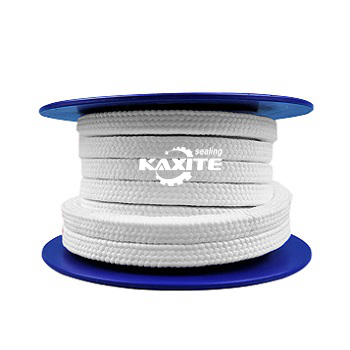
Gland adjustment is the process of tightening the gland follower against the packing rings inside a stuffing box. The gland follower is a metal ring that compresses the packing, forcing it to expand radially and press against the stem and the bore of the stuffing box. This radial pressure is what creates the seal. The amount of compression is controlled by the torque applied to the gland bolts. Too little compression, and the packing will not seal. Too much compression, and the packing will generate excessive friction, heat, and wear. The correct adjustment creates a seal that is just tight enough to prevent leakage without causing excessive friction. The table below summarizes the role of the gland and the packing.
| Component | Function | Effect of Adjustment |
| Gland Follower | Compresses the packing | Controls the radial pressure on the stem |
| Gland Bolts | Apply torque to the follower | Determines the compression force |
| Packing Rings | Form the seal | Deform under compression to fill the space |
| Stem | Moving part | Friction from the packing affects operation |
| Stuffing Box | Houses the packing | Provides the bore against which the packing seals |
At Ningbo Kaxite Sealing Materials Co., Ltd., our factory manufactures PTFE Packing products that are designed to perform optimally within a specified compression range. We provide our customers with installation guidelines that include the recommended gland adjustment procedure. Our goal is to help our customers achieve reliable sealing performance with minimal maintenance.
Compression force is the key variable in PTFE Packing performance. When the gland is tightened, the packing rings are compressed axially. Because the packing material is nearly incompressible in volume, the axial compression forces the material to expand radially. This radial expansion presses the packing against the stem and the stuffing box bore, creating the seal. The relationship between compression force and sealing performance is not linear. At low compression, the seal is insufficient, and leakage occurs. At moderate compression, the seal is effective, and friction is acceptable. At high compression, the seal is tight, but friction and heat increase rapidly, leading to wear and failure. The table below summarizes the effect of compression on packing performance.
| Compression Level | Sealing Performance | Friction and Heat | Result |
| Low | Insufficient | Low | Leakage |
| Moderate | Effective | Acceptable | Reliable sealing |
| High | Very tight | High | Accelerated wear and heat |
| Excessive | Over-compressed | Very high | Packing extrusion, stem scoring |
At our factory, we design our PTFE Packing products to provide a wide operating window between the minimum compression required for sealing and the maximum compression that causes excessive friction. We also provide compression recommendations based on the stem diameter, the pressure, and the temperature. Our goal is to help our customers achieve the optimal compression for their specific application.
Over-tightening the gland is the most common cause of PTFE Packing failure. When the gland is tightened too much, the compression force exceeds the material's ability to deform elastically. The packing becomes hard and loses its resilience. The friction between the packing and the stem increases dramatically, generating heat that can degrade the PTFE and damage the stem. The high radial pressure can cause the packing to extrude into the clearance gap between the stem and the stuffing box, leading to loss of sealing and potential damage to the equipment. The table below summarizes the consequences of over-tightening.
| Consequence | Cause | Effect |
| Increased Friction | High radial pressure | Hard to operate valve, higher torque |
| Heat Generation | Friction between packing and stem | PTFE degradation, stem scoring |
| Packing Extrusion | Pressure exceeds material strength | Loss of seal, packing damage |
| Stem Wear | Abrasive action of hard packing | Stem replacement required |
| Shortened Packing Life | Combined effects of heat and wear | Frequent replacement, downtime |
At Ningbo Kaxite Sealing Materials Co., Ltd., our factory provides PTFE Packing products with high compressive strength and low friction characteristics to reduce the risk of over-tightening damage. We also provide clear installation instructions that specify the maximum gland torque for each packing size. Our goal is to help our customers avoid the common mistake of over-tightening.
Under-tightening the gland is less common than over-tightening, but it is equally problematic. When the gland is not tightened enough, the compression force is insufficient to expand the packing radially against the stem. The seal is incomplete, and leakage occurs. The leakage may be a slow drip or a continuous stream, depending on the pressure and the packing condition. In addition to leakage, under-tightening can cause the packing to move or vibrate, leading to uneven wear and premature failure. The table below summarizes the consequences of under-tightening.
| Consequence | Cause | Effect |
| Leakage | Insufficient radial pressure | Product loss, safety hazard |
| Packing Movement | Loose packing in stuffing box | Uneven wear, vibration |
| Contamination Ingress | Leakage path allows air and dirt | Packing degradation |
| Uneven Compression | Gland not square | Localized wear, leakage |
At our factory, we design our PTFE Packing products to provide reliable sealing at the minimum recommended compression. We also provide guidance on the correct gland adjustment procedure to help our customers achieve a leak-free seal without over-tightening. Our goal is to help our customers avoid both under-tightening and over-tightening.
Correct gland adjustment is a systematic procedure that requires the right tools and a careful approach. The first step is to ensure that the stuffing box is clean and that the packing rings are installed correctly. The second step is to tighten the gland bolts by hand until the follower contacts the packing. The third step is to tighten the bolts evenly, in a cross pattern, to the recommended torque. The fourth step is to operate the valve or pump and observe the leakage. A slight weep is normal during the break-in period. The fifth step is to tighten the bolts in small increments until the leakage is reduced to an acceptable level. The sixth step is to re-check the adjustment after the break-in period. The table below summarizes this procedure.
| Step | Action | Notes |
| 1 | Clean the stuffing box and install packing | Ensure rings are staggered and seated |
| 2 | Hand-tighten the gland bolts | Follower contacts the packing |
| 3 | Tighten evenly in a cross pattern | Use a torque wrench |
| 4 | Operate and observe leakage | Some weep is normal during break-in |
| 5 | Tighten in small increments | Reduce leakage to acceptable level |
| 6 | Re-check after break-in | Adjust as needed |
At Kaxite, our factory provides detailed installation and adjustment guidelines for our PTFE Packing products. We also offer training and technical support to help our customers achieve correct gland adjustment. Our goal is to help our customers maximize the performance and life of their packing.
Evaluating a supplier of PTFE Packing requires a focus on material quality, compression characteristics, friction properties, and technical support. The supplier must use high-quality PTFE materials that provide consistent compression and sealing performance. They must provide data on the compression range and the friction characteristics of their packing. And they must provide technical support to help you select and install the right packing for your application. The table below summarizes the evaluation criteria.
| Evaluation Criterion | What to Look For | Why It Matters |
| Material Quality | High-purity PTFE, consistent density | Ensures reliable sealing and compression |
| Compression Data | Recommended compression range | Supports correct gland adjustment |
| Friction Properties | Low friction coefficient | Reduces heat and wear |
| Technical Support | Installation guidelines, training | Helps achieve correct adjustment |
| Project Experience | References in similar applications | Demonstrates capability and reliability |
At our factory, we have been producing PTFE Packing for over a decade. We use high-purity PTFE and provide compression and friction data for our products. Our technical team is available to assist with selection, installation, and gland adjustment. We invite you to evaluate us against these criteria and to consider us as your partner for PTFE Packing.
The following table provides the key product parameters for our PTFE Packing. These packings are suitable for valves, pumps, and other equipment in chemical, petrochemical, and power applications. Our factory can also produce custom packing to meet specific requirements.
| Parameter | Specification Range | Notes |
| Size Range | 3mm - 25mm | Square cross-section |
| Material | Pure PTFE, PTFE with lubricant, PTFE with graphite | Selected for application |
| Temperature Range | -200°C to +260°C | Depends on material grade |
| Pressure Range | Up to 200 bar | Depends on stem speed and size |
| pH Range | 0 - 14 | Except molten alkali metals |
| Friction Coefficient | 0.05 - 0.10 | Low friction, reduced stem wear |
| Compression Range | 15% - 30% | Recommended for reliable sealing |
| MOQ | 10 kg | Negotiable for large orders |
| Lead Time | 1 - 3 weeks | Depends on quantity and customization |
At our factory, we manufacture our PTFE Packing to meet these specifications and more. We can customize the material, size, and packaging to suit your specific requirements. Our quality control system includes inspection of raw materials, in-process inspection, and final inspection before shipment. Our goal is to provide our customers with high-quality PTFE Packing that performs reliably when correctly adjusted.
Question 1: How tight should the gland be on a PTFE packing?
Answer: The gland should be tight enough to prevent visible leakage but not so tight that the valve or pump becomes difficult to operate. The correct adjustment is achieved by tightening the gland bolts evenly in small increments while observing the leakage. A slight weep is normal during the break-in period. The recommended compression range for most PTFE packings is 15% to 30% of the packing height. Our factory provides specific torque recommendations for each packing size.
Question 2: What happens if the gland is over-tightened?
Answer: Over-tightening the gland causes excessive friction and heat, which can degrade the PTFE packing and score the stem. The high radial pressure can also cause the packing to extrude into the clearance gap, leading to loss of sealing and equipment damage. Over-tightening is the most common cause of premature packing failure.
Question 3: What happens if the gland is under-tightened?
Answer: Under-tightening the gland results in insufficient radial pressure, causing leakage. The leakage may be a slow drip or a continuous stream, depending on the pressure. Under-tightening can also cause the packing to move or vibrate, leading to uneven wear. It is important to tighten the gland evenly and in small increments to achieve the correct compression.
Question 4: How often should the gland be adjusted?
Answer: The gland should be checked and adjusted after the initial break-in period, typically after the first few hours of operation. After that, the gland should be checked during routine maintenance or whenever leakage is observed. The frequency depends on the application, the operating conditions, and the packing material. Our factory can provide specific recommendations for your application.
Question 5: Can the gland be adjusted while the equipment is running?
Answer: In some cases, the gland can be adjusted while the equipment is running, but this should only be done by trained personnel using the correct tools and following safety procedures. Adjusting the gland while the equipment is running allows the technician to observe the effect on leakage immediately. However, for high-pressure or hazardous applications, it may be necessary to shut down the equipment before adjusting the gland.
Proper gland adjustment is essential for PTFE Packing performance because it controls the compression force that creates the seal. Too little compression causes leakage. Too much compression causes friction, heat, and premature failure. The correct adjustment achieves a balance between sealing and friction, extending the life of the packing and the equipment. At Ningbo Kaxite Sealing Materials Co., Ltd., our factory manufactures PTFE Packing products that are designed to perform optimally within the recommended compression range. We provide installation guidelines, torque recommendations, and technical support to help our customers achieve correct gland adjustment.
Whether you are sourcing packing for a refinery, a chemical plant, or a power station, we invite you to contact us to discuss your requirements. We can provide samples, technical data, and customized solutions. Our commitment to quality and customer satisfaction has made us a trusted partner for sealing applications around the world.
Contact Ningbo Kaxite Sealing Materials Co., Ltd. today to discuss your PTFE Packing requirements and discover how our products and technical support can help you achieve reliable sealing performance.